Coronavirus Pandemic Plunges World Economy Into the Unknown
RIO DE JANEIRO, BRAZIL – Comparing the present day with the most traumatic events of the past is quite tempting. The wounds of September 2008, when the financial sector collapsed, taking the whole economy with it, are still so close in time and so present in the collective mind that returning to that time is inevitable.
Even the European Central Bank (ECB), in a harsh call to capitals for coordination and a heavy hand, resorted to this comparison to raise awareness and call governments to the frontline.

Yes, the coronavirus has caused the stock markets to plummet in recent weeks. Yes, the always dreaded volatility indices are up in the clouds. Yes, everything reminds us of that thousand-head hydra. And yes, the world economy has stepped into inhospitable terrain and will have to wait months to see the full extent of the blow.
But we are facing something different, and we will still see if it is more or less serious: no recession (which is already the baseline scenario for everyone in Europe, including Brussels) is the same as the previous one.
Faced with the demand shock of the Great Recession -2008 was, above all, the bursting of a bubble and the collapse of a hypertrophied and poorly regulated banking sector, which triggered a general panic and shook consumption – this is a hybrid crisis.
“At first, when the coronavirus started hitting China, it was a very specific supply chain impact,” says Ángel Talavera, Oxford Economics’ head of analysis for Europe. On the other hand, its landing on the Old Continent “escalated the scenario to a different magnitude: it is now also a very sharp demand shock”.
Unlike a long decade ago, as all major analytical institutions now reiterate, banks are better controlled and capitalized. As a result, the risk of contagion to the financial world is lower. “But beware: if this happens, it would in fact be the mother of all battles,” warns José Juan Ruiz, former chief economist of the Inter-American Development Bank (IDB).
Dusk has quickened, night has descended too early on the economy, and the world is and will be sailing for weeks with virtually no points of reference. Three months ago, the great global concern was the trade war between the United States and China, but today no one recalls that: five letters (Covid) and two numbers (19) are monopolizing everything.
Some economists, like Kenneth Rogoff and Ruiz, now perceive traces of the 1970s crisis, when the oil embargo in the Gulf countries quadrupled the price of a barrel and ruined the engine room of Western economies.
Others, like Joan Roses, head of the Economic History Department at the London School of Economics, see – with all due precautions – more resemblances to the 1929 crash: “Like now, there was an interruption in production, the stock market plummeted and there was surplus supply. The lesson to be learned from that time is the operation: if you impoverish your neighbor, you end up impoverishing yourself too,” Roses says over the phone.
“The uncertainty over the magnitude of the crisis triggered by the coronavirus does not exempt governments: in fact, it forces them to use, preferably in a concerted effort, the arsenal of countercyclical policy instruments,” says Juan Carlos Moreno Brid, of the National Autonomous University of Mexico (UNAM).
One of the major differences of this crisis is that the impact is sequential: like a tsunami, the virus first struck China, then reached Iran and South Korea, and now affects Italy and the remaining countries of Western Europe, already officially declared the epicenter of the epidemic. “There is no synchronization, and this, as an economic historian, is something I have never seen,” says Moreno Brid.
This factor makes it harder to escape. “It may extend its duration, it creates additional trade issues and points out that we need international coordination: there is no way to act in isolation.”

Although the Covid-19 has so far been particularly virulent among the world’s seven major economic powers, as Paul Donovan, chief economist at Swiss investment bank UBS points out, it will continue to strike “different countries, in different ways and at different times”.
There are some -or a few- clear issues at that point. The earlier projections are of little importance from the moment the phenomenon, which began as just another flu in the eyes of the West, turned into something much more serious.
“All [the projections] are way off. To offer numbers to the crisis is risky, because in a few days they will already be obsolete. With the backlog of data in place, until we have a number for the whole month of March to guide us, it would almost be like tarot,” Talavera acknowledges.
“Circumstances change so fast that it is impossible to rely on any estimate,” says David Wilcox, director of research at the US Federal Reserve until 2018 and one of the closest advisors to the last three presidents of the institution. “Where are we going?” asked a few days ago Claudio Borio, head of the Monetary and Economic department at BIS, the central bank coordinator.
Today “only one thing is clear: the financial markets will continue to dance at the pace of the news about the coronavirus and the authorities’ response”.
Any measure to contain the epidemic, in particular those of the magnitude implemented in recent days, implies short-circuiting the economy for some time. It is the logical price to pay: health is the priority. And it is also a real proof of resistance to growth, a metal that has proved too brittle in recent times.
There will be an impact, it will be strong and (it seems) temporary. Like a natural disaster. It will last as long as the virus lasts, between two to five months, according to an assessment by the Spanish health authorities. And then, yes, it will be time to lift the carpets and see what is underneath; to account for the damage, presumably deep.
Meanwhile, economists seem to be resigned to one of their worst nightmares: to sounding out the ground for a much longer period than they would like. And that is very much like that obscure September in 2008 — a strenuous battle that took a world with low defenses by storm.
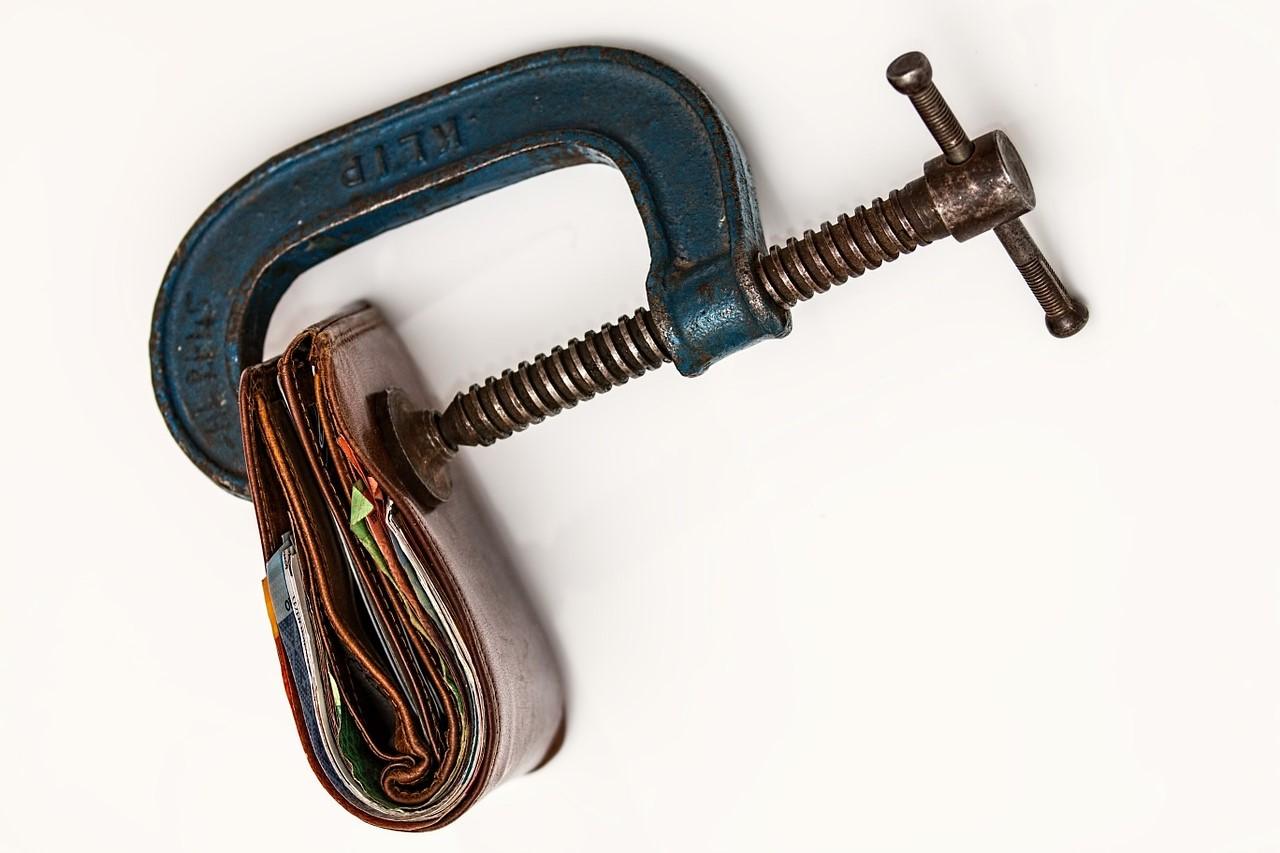
Keeping the 2008 ghost out of sight can be a bit of a relief. And in part it is. However, as Richard Baldwin and Beatrice Weder di Mauro of the University Institute of Advanced International Studies in Geneva claim, the virus is being particularly damaging to the very fabric of the economy (“the list of the ten most affected nations is virtually identical to that of the ten countries with the highest GDP in the world, making it clear that [the Covid-19] has the potential to derail the world economy),” they write.
And at the major analysts’ tables, a shipwreck like that year is not under discussion. We know that the blow will be hard, albeit temporary, although there is a lingering doubt as to its duration: we started talking about weeks, then months, and after its coming to Europe, the debate is about the number of calendar quarters of stagnation of economic activity. Discounting recession, the longer the state of exception lasts, the greater its virulence will be.
However, at second glance, concerns are different: there are virtually no anchor points or precedents to resort to when drawing up an economic policy response. The monetary powder is wet, with interest rates floored, and demanding a significant amount of creativity.
The fiscal plan, burdened by accumulated liabilities, requires a complete overhaul of guidelines, at least on a European scale. Yet, as Harvard University professor Gregory Mankiw wrote on Friday, “there are times to worry about growing public debt, but this is not one of them”.
Moreover, expansion is slowing down and in a very mature stage: before coronavirus, there had been nearly 130 consecutive months of growth in the US, about four times above the historical average.
Source: El Pais
More: Brazil news in English, every day from The Rio Times.
Live Market IntelligenceBrazil — Live Market Board
Rio Times · Live Market Intelligence
Brazil — Live Market Board
-1.15%
204,120.12
-1.15%
69,370.40
-1.25%
10,780.31
-1.88%
3,017,221
—
2,528.42
-1.25%
59,561.23
-4.26%
| Instrument | Last | Change | YoY | Prev. | High | Low | Volume |
|---|---|---|---|---|---|---|---|
| IBOV | 204,120.12 | -1.15% | +21.85% | 206,495.23 | 168,310 | 167,142 | — |
| USD/BRL | 5.16 | +0.01% | -5.13% | 5.16 | 5.18 | 5.14 | — |
| SELIC | 14.00% | — | — | — | — | — | |
| PETR4 | 41.64 | -0.05% | +35.19% | 41.66 | 41.97 | 41.15 | 41,499,400 |
| VALE3 | 72.97 | +0.83% | +30.75% | 72.37 | 73.54 | 72.66 | 17,658,000 |
| ITUB4 | 38.60 | -1.03% | +4.57% | 39.00 | 39.34 | 38.39 | 29,487,800 |
| BBDC4 | 16.85 | +0.36% | +3.50% | 16.79 | 16.90 | 16.67 | 19,416,900 |
| BBAS3 | 19.37 | +0.47% | +0.73% | 19.28 | 19.44 | 19.16 | 11,069,200 |
| B3SA3 | 14.26 | -0.21% | +12.73% | 14.29 | 14.47 | 14.11 | 33,037,800 |
| ABEV3 | 14.89 | -0.80% | +21.91% | 15.01 | 15.07 | 14.81 | 16,453,100 |
| WEGE3 | 47.59 | +0.49% | +29.99% | 47.36 | 48.08 | 47.36 | 3,364,600 |
| PRIO3 | 59.14 | -0.19% | +50.67% | 59.25 | 59.81 | 58.74 | 3,325,600 |
| SUZB3 | 41.33 | +2.35% | -23.55% | 40.38 | 41.48 | 40.35 | 3,914,900 |
| RENT3 | 34.68 | -0.09% | +0.84% | 34.71 | 34.96 | 34.35 | 7,979,100 |
| AZZA3 | 15.89 | -2.63% | -53.76% | 16.32 | 16.42 | 15.82 | 1,330,300 |
| CSNA3 | 4.30 | +0.47% | -42.65% | 4.28 | 4.41 | 4.26 | 10,076,100 |
| GGBR4 | 24.69 | +2.19% | +51.38% | 24.16 | 24.85 | 24.18 | 7,047,600 |
| ENEV3 | 24.21 | -1.38% | +70.49% | 24.55 | 24.64 | 23.99 | 9,297,000 |
This article was produced by The Rio Times’ automated newsroom system. How we use AI · Report an error · Editorial responsibility: Matthias Camenzind, Editor-in-Chief