Rivals Circle Enel’s São Paulo Grid as Lawyers Back Its Removal
eEnergy
Key Facts
—The opinion. Federal lawyers attached to the regulator rejected Enel’s appeal on July 10, finding no legal defect in the decision that opened termination proceedings.
—The asset. The former Eletropaulo serves approximately 7.5 million customer units across 24 municipalities. The contract runs to 2028.
—The buyers. Equatorial, Neoenergia (Iberdrola) and CPFL (State Grid) have begun internal studies, with no banks mandated and no sale signalled.
—The number in dispute. The regulator says 67% of customers were restored within 24 hours of the December 2025 storm. Enel says 80.2%.
—The history. Enel paid R$5.5bn ($1.07bn) for control in 2018 and has been fined more than R$320m ($62m) since.
—The precedent. Two distributors have changed hands this way already: Enel Goiás to Equatorial in 2022, Amazonas Energia to Âmbar in 2024.
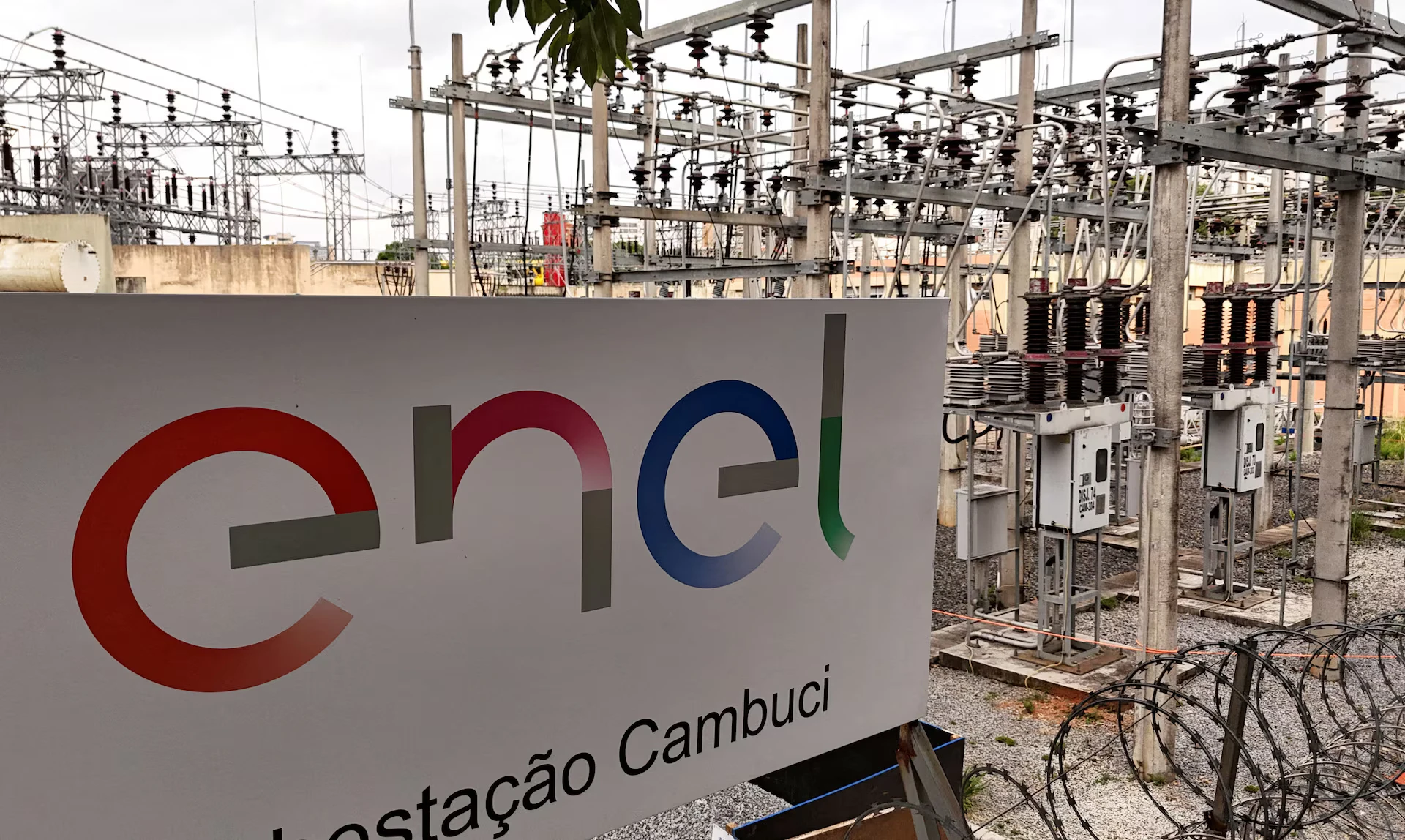
The Enel São Paulo concession is now a contest between a regulator that wants the Italians out and an owner that has decided not to leave.
Government lawyers dismissed the company’s appeal last Friday. Rivals began studying the books within days.
The asset in question keeps the lights on for the largest metropolitan economy in the southern hemisphere. That is why this is not a routine regulatory file.
What the Enel São Paulo concession fight is about
Caducidade is the forfeiture of a concession before its term, decreed when a company is found to have failed seriously and repeatedly. It is the harshest instrument in a Brazilian concession contract and is almost never used.
On April 7 the regulator’s board voted unanimously to open the process. It also suspended its review of whether to renew the contract at all.
The regulator’s own account of that decision is blunt. It found the company had failed to reach satisfactory performance and stayed below the average of other distributors in comparable storms.
The trigger was a run of severe weather in 2023, 2024 and 2025. The December 2025 event left millions of homes dark for days.
Enel filed a recovery plan. Technical staff judged the measures insufficient, and the board agreed.
Thirteen percentage points, and why they no longer matter
The company’s central argument was arithmetic. The regulator counted sixty-seven percent of affected customers restored within twenty-four hours of the December storm; Enel put the figure at eighty point two percent.
That is a gap of thirteen points, and it turns entirely on method. The regulator uses what it calls simultaneous peak; Enel wants a different calculation.
The federal prosecutor attached to the regulator, Marcelo Escalante Gonçalves, rejected that on July 10. He found the agency had applied the same method consistently to Enel and to other distributors, so the disagreement was evidentiary rather than legal.
The more damaging finding came next. Even if Enel’s own percentage were accepted in full, the opinion said, the decision would stand.
That is because the case never rested on one number. Emergency response times, interruptions beyond twenty-four hours, contingency planning, field-crew productivity and network recovery structure were each judged sufficient on their own.
The opinion also holds that inadequate service need not mean breaching a specific regulatory index. That reading widens what the regulator may consider, and it is the part with consequences beyond this case.
Who wants it, and what they would be buying
Three groups have started internal work on the asset, according to Brazil Journal: Equatorial, Neoenergia, controlled by Spain’s Iberdrola, and CPFL, owned by China’s State Grid.
No bank has been mandated, because there is no sale. Enel has signalled nothing of the kind.
The comparison everyone reaches for is Goiás, where Enel sold to Equatorial in 2022 under similar pressure. People close to the company say this time is different, and that the Italians are prepared for a long court fight.
Enel is also weighing taking the matter to the federal audit court. That would add a second institutional front to a case already running through the regulator.
The price history explains some of the stubbornness. Enel won a bidding war against Neoenergia in 2018 and paid five and a half billion reais, about one billion dollars, for control of Eletropaulo.
The regulator’s director-general has said the only negotiated outcome he sees is a transfer of control, which the agency itself would have to approve. The mines and energy ministry, meanwhile, is holding renewal not just in São Paulo but in Ceará and Rio as well.
He has also said elections do not touch the agency’s timetable. That is a pointed remark in a year when the governor of São Paulo has spent two years demanding the contract be torn up.
There is a quieter question underneath the politics. The concession area covers about four and a half thousand square kilometres of the densest demand in Brazil, and storms have grown more violent across three consecutive years.
Whoever holds this licence in 2029 inherits that physics along with the customers. A change of owner resets the recovery plan; it does not rebuild the network.
Will Enel actually lose the Enel São Paulo concession?
Not soon, and not automatically. The regulator can only recommend forfeiture to the mines and energy ministry, which decides, and the company has signalled it will contest each step and may go to the courts and the federal audit court as well.
What happens to customers if the concession is terminated?
Supply does not stop, because the law provides for temporary intervention, a provisional operator or a new tender. The likelier path, on the regulator’s own account, is a transfer of control to another distributor that takes on a fresh recovery plan.
Why does this matter to investors outside Brazil?
Several Brazilian distribution concessions expire between 2026 and 2031, and the government has tied renewal to quality and financial performance. How this case resolves sets the price of poor service for every foreign utility holding a Brazilian licence.
Connected Coverage
Brazil Raises Ethanol to 32% and Walls Off Biodiesel Imports
Brazil Fiscal Squeeze Deepens as Finance Chief Warns on Spending
Brazil’s Congress Waves Through $2.4bn in Off-Budget Spending
More: Brazil news in English, every day from The Rio Times.
Frequently Asked Questions
What is caducidade and why is it being used against Enel?
Caducidade is the forfeiture of a concession before its term, used when a company has failed seriously and repeatedly. The regulator opened the process because it found Enel’s performance unsatisfactory and below the average of other distributors in comparable storms.
What happens to electricity supply if Enel loses the concession?
Supply does not stop, because the law provides for temporary intervention, a provisional operator or a new tender. The regulator sees a transfer of control to another distributor as the likelier path.
Which companies are interested in taking over the Enel São Paulo grid?
Equatorial, Neoenergia (controlled by Spain’s Iberdrola) and CPFL (owned by China’s State Grid) have begun internal studies on the asset. No bank has been mandated and no sale has been signalled by Enel.
This article was produced by The Rio Times’ automated newsroom system. How we use AI · Report an error · Editorial responsibility: Matthias Camenzind, Editor-in-Chief
Living in or visiting São Paulo? See this month's events and our São Paulo city guide with rents, safety and upcoming concerts.