Brazil Truckers Call Off Strike After Senate Passes Freight Law
Infrastructure
Key Facts
—The vote. Brazil’s Senate passed MP 1.343/2026 on July 14 by voice vote, two days before it would have lapsed. It goes to the president for signature.
—What dropped out. The R$5,000 ($975) monthly pay floor for long-haul drivers, added by deputies, was struck as foreign to the decree’s original subject.
—The strike. Drivers had begun stoppages on July 13 in São Paulo, Goiás, Santa Catarina and Pernambuco. They stood down after the vote.
—What shippers face. Repeat underpayment by shippers can bring fines of R$1 million to R$10 million per operation and suspension of the right to contract new freight; RNTRC suspension for drivers ranges from 5–30 days (cautelar) or 15–45 days (reincidência).
—Cash terms. Freight must be paid within 30 working days, with a minimum 70% advance for self-employed hauliers.
—Why it matters. Trucks move roughly 60% of Brazilian freight, and the 2018 stoppage emptied shelves and grounded flights within days.
The Brazil freight law cleared the Senate on Tuesday night with two days to spare, and the strike that was meant to force it evaporated the same evening.
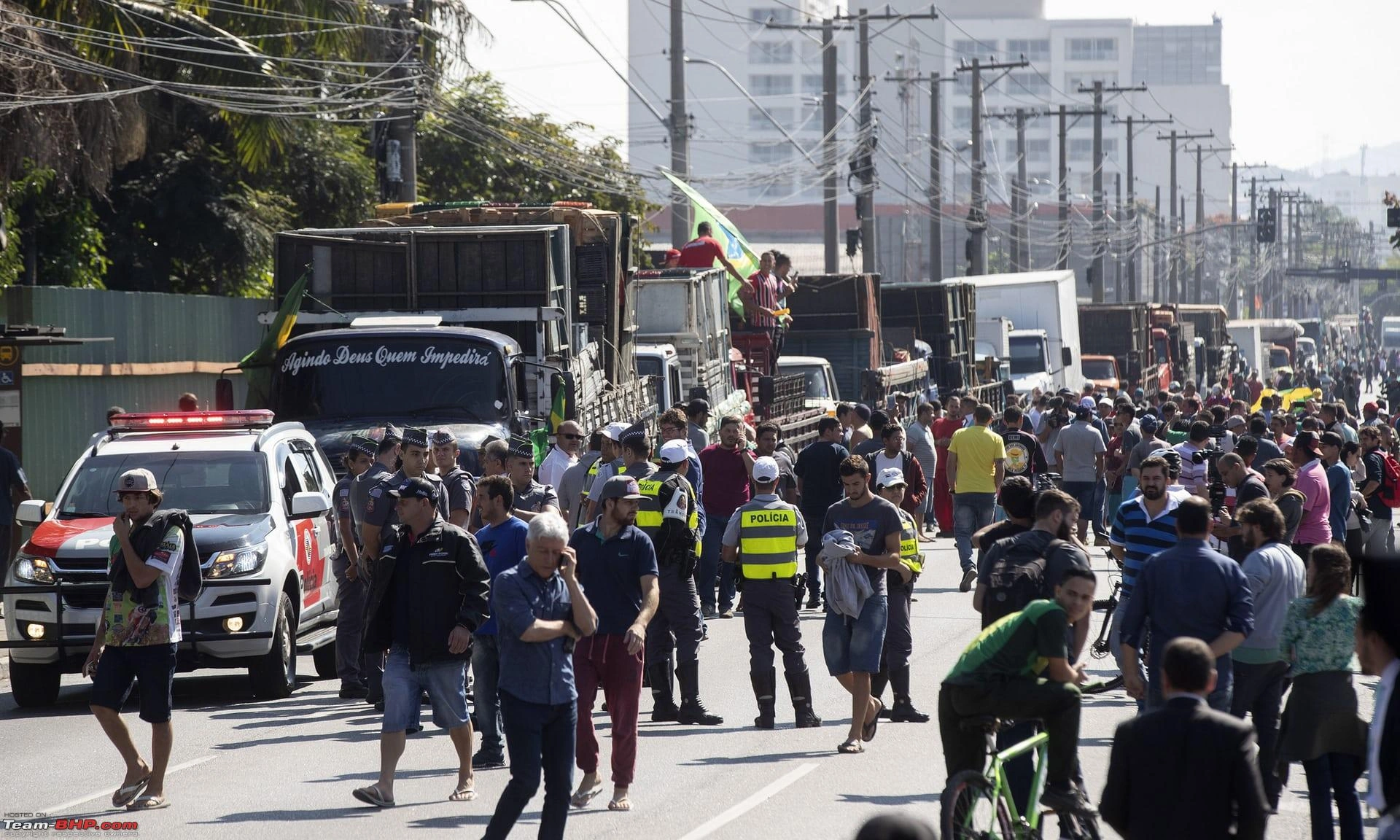
Truckers had parked up on Monday in four states. By Tuesday evening the leaders had stood the movement down.
What they won is real but narrower than the headline suggested. The pay floor that drove much of the coverage is not in the text that passed. Our reporting has shown that Brazilian trucker stoppages have repeatedly forced government concessions since at least 2015, and the pattern held again here: the credible threat of disruption, rather than the formal demand, delivered the political urgency to pass the decree before expiry.
How the Brazil freight law got through
A medida provisória is a decree with immediate force of law that dies unless Congress confirms it within one hundred and twenty days. This one had been in force since March and was due to expire on Thursday.
It had sat untouched in the Senate since June 30. That stall is what put trucks across highway shoulders on Monday morning.
The deal took about ten hours to build, according to Senate president Davi Alcolumbre, and involved the government, the opposition, the rapporteur and the drivers’ own representatives.
The mechanism mattered as much as the politics. Because the amended decree became a conversion bill, any change to its substance would have sent it back to the lower house, and there was no time for that.
So the pay floor was removed as a suppression rather than an amendment. That procedural distinction is the only reason the law exists today.
The floor that moved rather than died
The five-thousand-real monthly floor, about nine hundred and seventy-five dollars, was never in the government’s original decree. A joint committee of senators and deputies inserted it, and the lower house kept it.
The R$5,000 monthly pay floor for long-haul drivers, added by deputies, was struck as foreign to the decree’s original subject. Bagattoli argued the floor would have hurt thousands of small haulage firms.
The detail most accounts skip is what replaced it. The final text still creates a national pay floor for long-haul employed drivers — it simply sets no number, leaving collective bargaining to fix the figure.
Long distance is defined precisely, as operations keeping a driver away for more than twenty-four hours. So the fight over the number has not ended; it has moved from Congress to the bargaining table.
What shippers and farm exporters actually get
For anyone moving soy, sugar or containers, the operative change is enforcement of the minimum freight table rather than driver pay. Firms that repeatedly pay below the floor — more than four infractions in six months — can have their haulage registration suspended.
Fines for repeat offenders run from one million to ten million reais per operation, and the right to contract new freight can be suspended. RNTRC suspension for drivers ranges from 5–30 days (cautelar) or 15–45 days (reincidência).
Payment terms tighten too. Freight must be settled within thirty working days, and self-employed hauliers must receive at least seventy percent up front.
The pricing table itself gets a new rhythm. It will be revised every six months, and whenever fuel moves five percent or more the regulator must publish new values within three working days.
That fuel trigger is the clause to watch this year. It wires the freight table directly to a diesel price that Congress has just voted ten billion reais to subsidise through December.
Weight enforcement also eases. For trucks up to seventy-four tonnes, checks will look first at total weight rather than axle by axle, with per-axle measurement triggered only past a five percent tolerance.
The amnesty, and the veto to watch
The text also pardons truckers fined for blocking roads around the 2022 election, a clause the government never wrote and deputies added. A second amnesty converts past freight-underpayment fines into warnings.
Neither amnesty covers fraud, forged documents or deliberate concealment, and money already paid is not refunded. The government’s congressional leader has signalled the president will veto the blockade amnesty while keeping the freight floor.
Drivers stood down anyway, before knowing the outcome of that veto. That is the part worth filing away for the next dispute. The sequence mirrors earlier standoffs our archive has tracked: in 2015 truckers lifted blockades after a government meeting, and in 2018 they ended an eight-day strike only after the Temer administration yielded on diesel prices. Each time, the movement extracted enough to claim victory and return to the roads, leaving the hardest questions for later.
Does the Brazil freight law raise costs for exporters?
Not through the pay floor, which was removed, but through enforcement of the existing minimum freight table, which now carries suspension of a firm’s haulage registration as a penalty. The tighter payment terms, thirty working days with a seventy percent advance for self-employed drivers, are the more immediate working-capital effect for shippers.
Is the R$5,000 pay floor gone for good?
The number is gone from the law, but the obligation to have a floor is not. The final text says collective agreements will set the pay floor for long-haul employed drivers, which moves the negotiation from Congress to unions and employers.
Why should a foreign resident in Brazil care?
Because trucks carry roughly sixty percent of everything that moves in Brazil, and the 2018 stoppage emptied supermarkets and grounded flights within a week. A freight dispute settled in the Senate is a supply chain that keeps running.
Frequently Asked Questions
What happened to the R$5,000 monthly pay floor for long-haul drivers?
The R$5,000 monthly pay floor was struck from the final text because it was considered foreign to the decree's original subject.
What penalties do shippers face for repeat underpayment?
Repeat underpayment can bring fines ranging from R$100,000 to R$1 million and suspension of the national haulage registry for up to 24 months.
What are the cash terms for freight payment under the new law?
Freight must be paid within 30 working days, and self-employed hauliers must receive a minimum 70 percent advance.
This article was produced by The Rio Times’ automated newsroom system. How we use AI · Report an error
Read More from The Rio Times