Key Facts
— — President Petro signed Decree 0264 imposing a 35% tariff on 14 categories of steel and metal products from countries without free trade agreements with Colombia — up from 0-10% previously
— — The measure targets China, Russia, Turkey, and India, which together account for over 80-90% of imports in several categories, with Chinese steel priced up to 42% below market rates
— — Colombia’s steel sector represents 10% of industrial GDP, employs 45,000 workers, and supports 25,000 suppliers — but imports in some product lines surged over 290% while prices kept falling
A new Colombia steel tariff of 35% on imports from countries without free trade agreements took effect on March 16, marking the sharpest protectionist turn in the country’s trade policy in years. President Gustavo Petro signed Decree 0264 alongside Trade Minister Diana Marcela Morales and Finance Minister Germán Ávila Plazas.
The Rio Times, the Latin American financial news outlet, examines why Bogotá is joining a region-wide pushback against cheap Chinese steel and what the decree means for construction costs, trade relations, and 45,000 jobs in Colombia’s industrial heartland.
What the Colombia Steel Tariff Covers
The decree raises duties on 14 tariff subheadings covering bars, profiles, tubes, wire, barbed wire, nails, staples, and other iron, steel, and aluminum products. Previous tariffs on these goods ranged from 0% to 10%, making the jump to 35% — the maximum permitted under WTO rules — a dramatic escalation.
The measure applies only to imports from countries with which Colombia has no active trade agreement. That means China, Russia, Turkey, and India are the primary targets. Countries with existing FTAs — including the United States, the European Union, Mexico, Chile, and Andean Community members — are exempt.
In 2025, imports of the affected products totaled 134,929 tonnes worth $124.6 million. The decree will take effect 15 days after publication in the official gazette — around April 1 — and will last one year before a mandatory review.
Why Bogotá Acted Now
The government’s analysis of January 2022 to August 2025 trade data found that imports from non-FTA countries dominated 80-90% of several product categories, with a sustained downward trend in CIF values. Some subheadings saw import volumes surge over 290% year-on-year while prices kept falling — a pattern consistent with dumping.
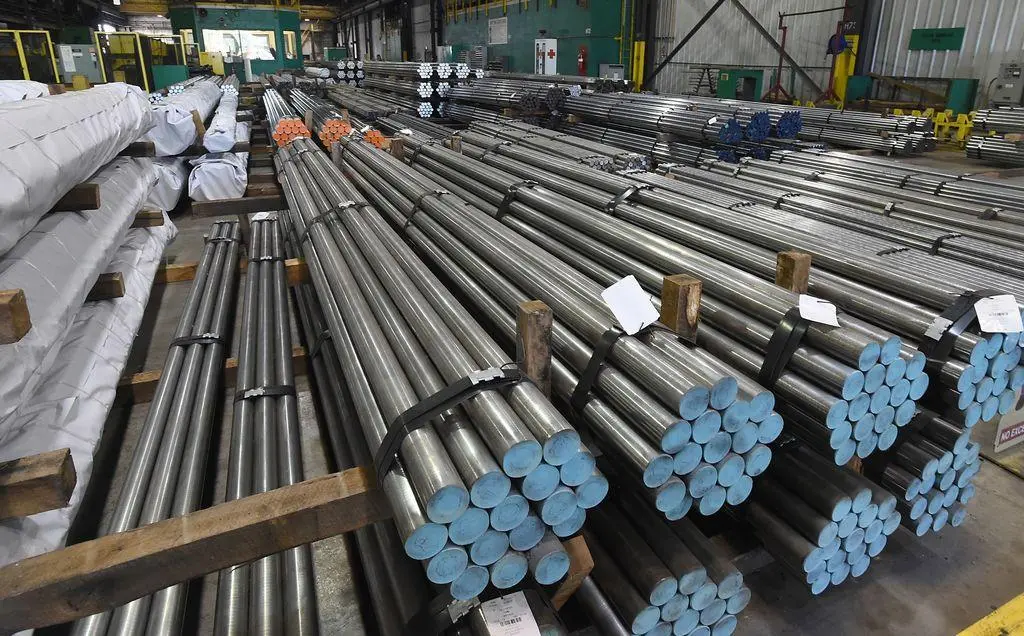
Colombian steelmakers say Chinese products are priced up to 42% below market rates, making fair competition impossible. China alone produces 53.3% of the world’s steel — roughly 1.005 billion tonnes out of a global total of 1.884 billion — giving it overwhelming capacity to flood smaller markets when domestic demand weakens.
Minister Morales framed the decision as corrective rather than restrictive: “This seeks to restore conditions of fair competition against practices linked to overproduction and the placement of goods at artificially low prices.” The decree also includes additional subheadings as a preventive measure to stop importers from switching to similar ungravitated products to evade the tariff.
A Regional Pattern, Not an Isolated Move
Colombia is not acting alone. Mexico, Chile, and Brazil have all raised steel tariffs in recent years as Chinese exports to Latin America surged from 80,500 tonnes in 2000 to nearly 10 million tonnes annually — worth roughly $8.5 billion. The regional steel industry estimates that 1.4 million jobs across Latin America are threatened by Chinese overcapacity.
The timing also reflects Petro’s broader reindustrialization push under CONPES 4129, which aims to diversify Colombia beyond oil and coal dependency. The steel and metalworking sector supplies essential inputs for construction, infrastructure, energy, transportation, and the energy transition — precisely the areas where the government is trying to build domestic capacity.
The decree also highlights an often-overlooked dimension: Colombia’s steel industry recycles more than 1.2 million tonnes of scrap metal annually, making it a cornerstone of the circular economy. Whether the tariff achieves its goal of shielding that ecosystem or simply raises construction costs for an economy already under pressure will be the test when the mandatory review arrives in twelve months.
This article was produced by The Rio Times’ automated newsroom system. How we use AI · Report an error · Editorial responsibility: Matthias Camenzind, Editor-in-Chief
Read More from The Rio Times