Chinese car brands squeeze Nissan, GM and Volkswagen in Mexico
Mexico · BUSINESS
Key Facts
- —Market shift Chinese brands rose from 12.5% of Mexico’s car sales in 2024 to 15% in 2025.
- —Pressure Nissan fell from 25% to 16% share in a decade; GM went from 19% to 13%.
- —2026 pace First-half sales hit a record 754,394 units, up 5.3% year on year.
- —Diplomacy Foreign Secretary Velasco closed a South Korea visit covering technology, security and investment.
- —Investment Over 100 US executives joined the 100 Summit in Mexico City from 25 to 27 August.
Mexico’s car market is being remade from within, just as the country sells itself as North America’s investment refuge.
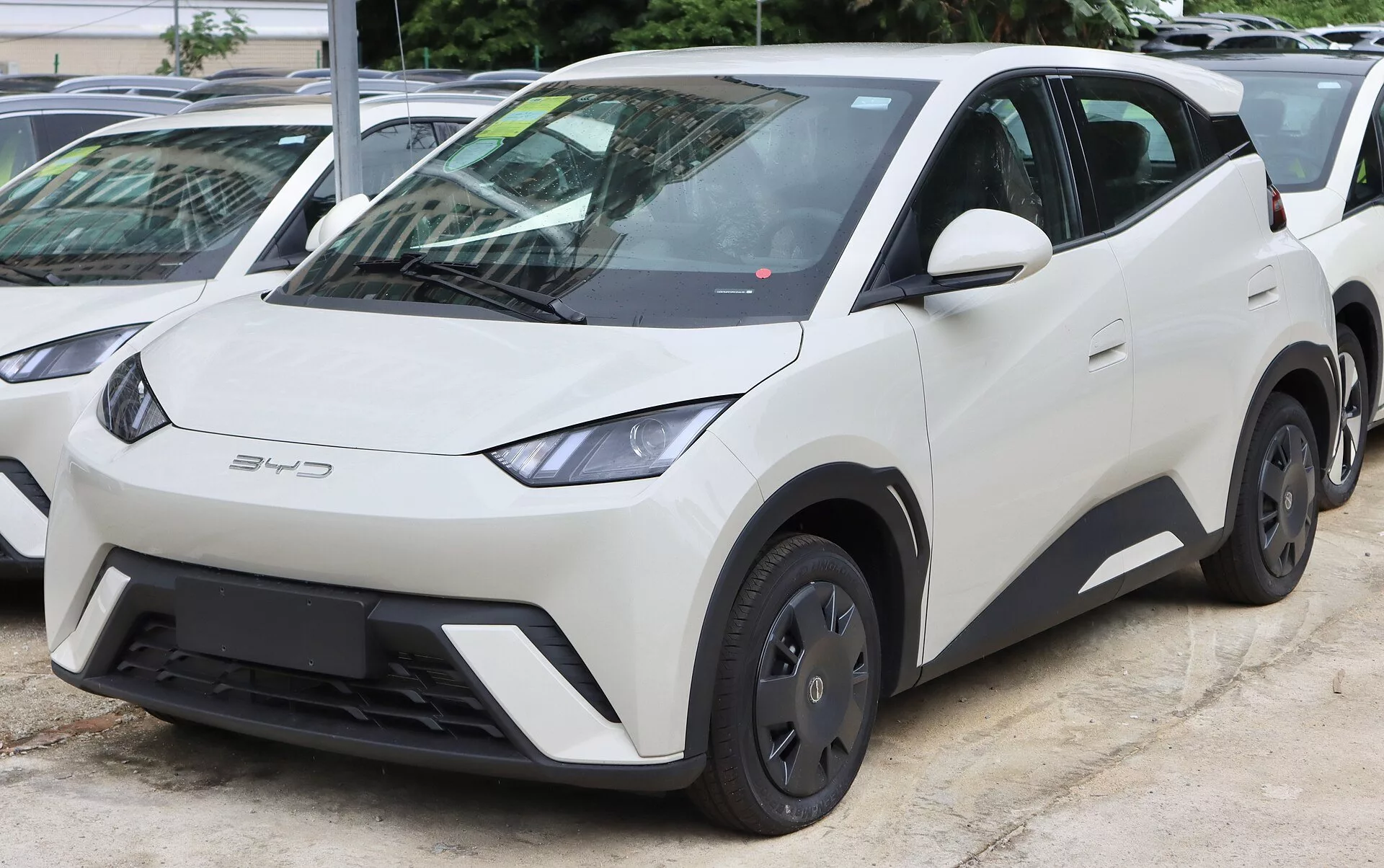
Chinese car brands are redrawing Mexico’s new-car market, data published through Tuesday 25 August 2026 show. Two of every three cars sold between January and July were imports, and nearly one in four was Chinese-built. The gains come straight from Nissan, General Motors and Volkswagen, even after a 50% tariff on Chinese cars. The same week, Mexico deepened ties with South Korea and hosted US executives at the 100 Summit.
Chinese car brands redraw the sales map
Dealers’ association AMDA says Chinese car brands rose from 12.5% of national sales in 2024 to 15% in 2025. The market itself sold about 1.6 million new cars last year, up 5% over 2024.
The gains came at the expense of the historic leaders of the Mexican market. Nissan’s share slipped from 17% to 16% last year, even though its sales grew 7%.
Over a decade, Nissan has fallen from 25% of the market to 16%. General Motors dropped from 19% to 13%, and Volkswagen from 13% to 11%, AMDA figures show.
Ford, sixth in sales in 2016, ended 2025 in ninth place. BYD is already the seventh-best-selling brand in Mexico, and MG ranks eleventh.
The momentum held into 2026, with the best first half since INEGI records began in 2005. Dealers sold 754,394 cars from January to June, up 5.3% year on year, beating the 2017 mark.
Chinese car brands held about 16% of the market in the first quarter of 2026, AMDA-based estimates show. Counting every vehicle built in China, whatever the brand, the share reaches 22.8% of January-to-July sales, an analysis of INEGI records by Cluster Industrial shows.
That analysis counts 201,460 China-built vehicles sold from January to July, making China the number-one origin of cars sold in Mexico, ahead of Brazil and India. Built in China does not always mean a Chinese brand: General Motors alone sold about 79,913 China-made vehicles in the period.
Brazil supplied 76,540 vehicles and India 67,777 in the same period. The United States, once the dominant source, fell to fourth with 64,687 units.
Winners, losers and a 50% tariff
Not all Chinese car brands are winning the race. Early arrivals Motornation, MG and Chirey saw sales fall 27.7%, 19% and 24% in 2025.
BYD grew 87% last year, Changan 184%, Geely 237%, GAC 114% and Zeekr 431%. ‘They hit everyone, but mainly the biggest, like Nissan, GM and Volkswagen,’ AMDA’s Guillermo Rosales said.
Rosales calls the shift a recomposition with multiple vectors. He notes the newcomers also took share from Chinese rivals that arrived first.
Premium marques are feeling it too, with Mercedes-Benz, Audi and Volvo selling less in 2025. Only BMW escaped the decline among the traditional luxury brands.
Price remains the Chinese advantage, according to consultancy Kaso y Asociados. Chinese SUVs averaged about 534,000 pesos, some US$28,700 at 18.6 per dollar, against 724,000 pesos for rivals.
Mexico’s 50% tariff on cars from countries without a trade deal narrowed that 26% gap this year. Yet Chinese car brands keep advancing, absorbing duties, adjusting prices or using stockpiled inventory.
S&P Global Mobility’s Guido Vildozo calls the Chinese cost edge structural. No traditional manufacturer can match it across electric and combustion lines, he says.
Dealers say financing and equipment per peso also drive showroom traffic. Chinese models pack driver assistance and connectivity once reserved for higher trims.
Mexico and South Korea deepen cooperation
Foreign Secretary Roberto Velasco Álvarez ended a two-day working visit to South Korea on Tuesday. He met authorities, academic institutions and companies to strengthen the bilateral relationship.
The agenda covered aerospace engineering, artificial intelligence and governance. Security cooperation and investment promotion completed the programme, officials said.
The visit fits Mexico’s push to diversify its technology and capital partners. That diversification matters as the USMCA review cycle gets formally under way.
South Korea is already a significant investor in Mexican manufacturing and electronics. Deeper ties could bring more supplier development in strategic sectors.
Officials framed the trip as preparation for deeper industrial cooperation. No specific investment figure was announced during the visit.
Mexico and South Korea have maintained diplomatic relations for over six decades. Both sides say they want that relationship to become more strategic.
For Mexican industry, Korean technology partnerships could complement North American supply chains. That message echoes through the week’s other business diplomacy.
US executives fly in for the 100 Summit
More than 100 US executives, investors and entrepreneurs gathered in Mexico City from Tuesday. The second 100 Summit, organized by USMEXA, runs from 25 to 27 August.
The trade mission targets investment projects, supplier development and new supply chains. Delegates come from advanced manufacturing, aerospace, clean technology, semiconductors and agrifood.
The 2025 edition produced over US$1 billion in announced bilateral deals, participants reported. That figure is self-reported and not an independent measure of realized investment.
USMEXA founder Henry Moth says delegates seek long-term alliances and stronger supply chains. Meetings with federal and state governments are on the agenda.
The summit comes as companies brace for changes in tariffs and rules of origin. For Mexico, the test is turning interest into capacity, technology transfer and skilled jobs.
Organizers say the goal is moving from dialogue to concrete business opportunities. Nearshoring now means building local suppliers, not only relocating Asian production.
Sponsors include ServiceNow and several consulting firms. Attendance alone is a signal; executed projects are the metric that counts.
The question is how Mexico climbs from assembly platform to higher-value work. Summit organizers pose that question explicitly in this year’s programme.
Sheinbaum stays optimistic as US–Canada talks collapse
President Claudia Sheinbaum said Monday she is optimistic Mexico can reach a trade deal with Washington. She spoke after US negotiations with Canada collapsed into mutual tariff threats.
‘As President Trump said, we hope to reach an agreement with the US,’ she told reporters. ‘I’m optimistic an agreement can be reached.’
Economy Minister Marcelo Ebrard remains in Washington leading the Mexican negotiating team. He seeks relief from 50% US tariffs on steel and aluminum and 25% duties on cars.
The US–Canada rupture is severe, with Trump promising to double Canadian auto tariffs next year. A 50% levy hit about US$20 billion of Canadian goods, and Ottawa retaliates from 8 September.
The six-year-old USMCA entered its formal annual review phase last month. Bloomberg Economics analyst Jimena Zúñiga says the breakdown could strengthen Mexico’s hand in talks.
Washington may resist opening a second trade front before the midterm elections, she wrote.
More: Latin America news in English, every day from The Rio Times.
Frequently Asked Questions
How much of Mexico’s car market do Chinese car brands hold?
Chinese car brands held 15% of sales in 2025, up from 12.5% in 2024, according to AMDA. They held about 16% in early 2026, while all China-built vehicles reached 22.8% of January-to-July sales.
Has Mexico’s 50% tariff stopped Chinese cars?
Not so far, as sales kept rising through the first half of 2026. Analysts say brands can absorb part of the duty, raise prices gradually or draw on inventory.
What is the 100 Summit held in Mexico City?
It is a USMEXA trade mission bringing over 100 US executives to Mexico City from 25 to 27 August. The 2025 edition reported more than US$1 billion in announced bilateral business deals.
Connected Coverage
Mexico Informality Drove 82% of Job Growth in Second Quarter
Brazil Overtakes Mexico as Latin America’s Top FDI Destination in 2026
Sources
This article was produced by The Rio Times’ automated newsroom system. How we use AI · Report an error · Editorial responsibility: Matthias Camenzind, Editor-in-Chief