Chile Senator Bianchi Tells US Envoy to Leave on Sunday

POLITICS · CHILE
Key Facts
- —The country Chile is a close US trade partner and a major copper producer, governed since March by conservative President José Antonio Kast.
- —Why it matters The senator now demanding the US ambassador’s exit is one of the votes Kast’s allies need to pass their security reform in the Senate.
- —Why now US envoy Judd’s remarks on the Strait of Magellan and Antarctica have drawn a widening backlash for almost a week.
- —What happened On Sunday 11 October, independent Senator Karim Bianchi said Judd should leave Chile “rapidly” and called him unwelcome, while backing the reform.
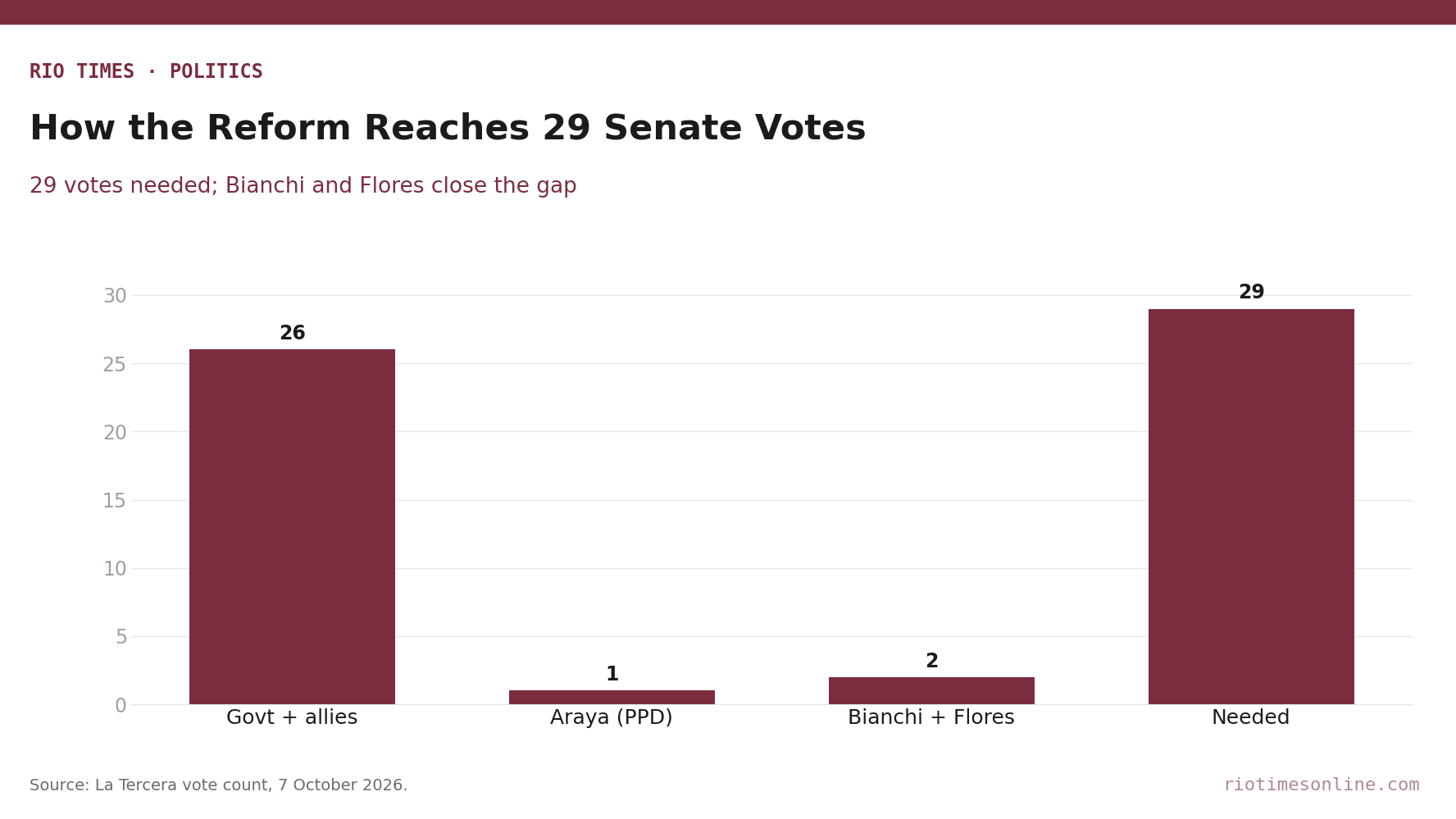
- —The numbers The reform needs 29 Senate votes. Government parties, allies and one co-sponsor supply 27, so Bianchi and one other opposition senator are decisive.
- —What it means for you Expulsion remains unlikely, since only the government can act. The row adds noise to Chile’s tariff talks with Washington.
- —Still open Whether the Foreign Ministry acts, whether Washington responds, and when the Senate votes on the reform.
A Chilean senator whose vote the government needs on crime said on Sunday that the US envoy Judd should leave the country. Karim Bianchi, an independent who chairs the Senate’s public security committee, made the call on Canal 13’s programme Mesa Central. For US readers, it shows the row over Ambassador Brandon Judd spreading beyond the left. It comes as Chile negotiates lower US tariffs on its exports.
“As far as I am concerned, he can pack his bags and go, quickly. I think he is an unwelcome person in our country,” Bianchi said, according to Teletrece, Canal 13’s news service.
In the same interview he defended his support for the security reform that President José Antonio Kast’s government backs. Kast is a conservative who took office in March.
What Bianchi Said About the US Envoy
Bianchi represents Magallanes, Chile’s southernmost region, which borders the Strait of Magellan. He called the US envoy Judd’s recent remarks on both “provocative” and “insulting,” according to Teletrece and BioBioChile.
“Chile does not need any godfather for this,” he said, according to BioBioChile and La Tercera. “Our sovereignty is not worth one centimetre less than that of the United States.”
He also put the question to Washington. “If the president of the United States does not remove this ambassador, it means he endorses this position,” he said, according to Teletrece.
Bianchi drew a line between partnership and obedience. The United States can be a strategic partner, he said. But Chile will “never” become “a kind of colony,” according to Teletrece. He accepted that diplomatic measures are for the executive to decide, according to BioBioChile and La Tercera.
Judd, whom President Donald Trump nominated, set off the latest row on Wednesday 7 October with remarks on the Strait of Magellan. He later sought to clarify them, as we reported in US Envoy to Chile Clarifies Magellan Strait Remark. He had also said no part of Antarctica belongs to Chile. Deputies then sought his exit, as covered in Chile Deputies Target US Envoy After 2 Sovereignty Rows.
Why His Vote on the Security Reform Matters
The reform is a constitutional amendment on crime. Five senators from across the spectrum put it forward this month. The government agreed to drop its own bill, sent on Monday 17 August, La Tercera reported.
The sponsors are Pedro Araya of the centre-left PPD and Andrés Longton of the centre-right National Renewal. Arturo Squella of Kast’s Republican Party, Bianchi and Iván Flores of the Christian Democrats complete the group. Security Minister Martín Arrau said the text covers organised crime, prison separation and changes to states of exception.
A constitutional reform needs 29 votes in the Senate. The government’s 26 senators and allies plus Araya leave the sponsors two short, so Bianchi and Flores supply the margin, according to La Tercera.
Bianchi said on Sunday that he still has doubts about the text. He backs it, he said, because the debate has frozen about 30 security bills waiting in his committee. “I am blocked by the constitutional agenda,” he said, according to La Tercera and BioBioChile.
He wants the talks to include a change to Law 18.216, which governs non-custodial sentences. His aim is to bar more crimes from those sentences, among them kidnapping for ransom and arms trafficking. He said he would accept the political cost of working with the government.
He also pressed for money for his region. “Where is the budget for Magallanes, for maritime control of the strait?” he asked, according to La Tercera. Without it, he warned, the strait could become a drug-trafficking corridor.
Communist Leader Joins the Call
Bianchi was not alone on Sunday. Lautaro Carmona, president of the left-wing Communist Party, backed a request by 14 opposition deputies. They want Judd declared persona non grata, Diario Universidad de Chile reported.
Speaking on TVN’s programme Estado Nacional, Carmona said Judd “is repeatedly challenging the established authority” in Chile. “We are not protectorates,” he said. He added that a firm reaction would not mean breaking relations with Washington.
What It Means for You
For investors and exporters, the trade talks still matter more than the war of words. Chile is negotiating with Washington to cut US tariffs on goods such as salmon, wine and fruit. No link between those talks and the dispute has been announced.
Judd himself said on 7 October that the talks would “end up going very well,” according to The Clinic. Paula Estévez, Chile’s undersecretary for international economic relations, has warned that not every product will return to a zero tariff.
The stabiliser is that expelling an ambassador is a decision for Kast’s government alone, and it has announced no step. Bianchi’s anger also has not changed his vote: he still backs the reform the government wants.
The risk is political. Criticism of the US envoy Judd now runs from the Communists to an independent senator the government relies on. That makes the issue harder for Kast to keep quiet.
Bianchi also warned of a separate dispute with Argentina over a Chilean ship meant to carry food from Punta Arenas to the Falkland Islands. If Argentina blocks it, he said, Chile should block Argentine trucks in return, according to Teletrece.
What Is Not Known
It is not known whether the Foreign Ministry will take any formal step against the envoy Judd. It said on 8 October that it was weighing a protest note, and it has announced none since. The US Embassy had not answered Bianchi in the reports we reviewed.
No date has been set for a Senate floor vote on the security reform. It is also unclear whether Bianchi’s changes to Law 18.216 will be part of the deal.
Frequently Asked Questions
Who is Karim Bianchi?
An independent senator for Magallanes, Chile’s southernmost region, who chairs the Senate’s public security committee. He is one of five sponsors of the current security reform.
Can Chile’s Congress expel the US ambassador?
No. Lawmakers can only ask. Declaring a diplomat persona non grata is a decision for the government, which has announced no such step.
Does the row change Bianchi’s vote on the security reform?
No. On Sunday he said he still backs the reform, mainly to free about 30 security bills that are stuck in his committee.
Sources: Teletrece (Canal 13), 11 October 2026; BioBioChile, 11 October 2026; La Tercera, 11 October 2026; La Tercera, 7 October 2026; The Clinic, 7 October 2026; Diario Universidad de Chile, 11 October 2026.
This article was produced by The Rio Times’ automated newsroom system. How we use AI · Report an error · Editorial responsibility: Matthias Camenzind, Editor-in-Chief