IBOV 206,505.98 ▼ 0.18% IPSA 10,940.53 ▼ 0.23% IPC MEX 66,790.35 ▼ 0.26% MERVAL 2,835,843 — 0.00% COLCAP 2,582.29 ▲ 0.46% BVL PERÚ 60,511.74 ▼ 1.60% USD/BRL5.06▲ 0.55% USD/MXN18.58▲ 0.42% USD/CLP986.03▲ 0.10% USD/COP3,171▼ 0.55% USD/PEN3.44▲ 0.19% USD/ARS1,515▲ 0.12% USD/UYU40.24▲ 3.34% USD/PYG5,668▲ 2.52% USD/BOB11.60▲ 1.74% USD/DOP61.15▲ 0.03% USD/CRC449.12▲ 1.86% USD/GTQ7.64▲ 3.19% USD/HNL26.86▲ 0.35% USD/NIO36.62▼ 0.07% USD/VES876.92▼ 0.13% USD/PAB1.00— 0.00% USD/BZD2.00— 0.00% USD/JMD 157.28 — 0.00% USD/TTD6.75▲ 2.44% EUR/BRL5.67▲ 0.81% BRENT 88.88 ▼ 0.03% WTI 83.11 ▼ 0.11% IRON ORE 161.91 — — COPPER 6.61 ▲ 0.03% GOLD 4,461 ▲ 1.78% SILVER 65.59 ▲ 1.26% SOY 1,184 ▲ 3.20% CORN 480.50 ▲ 10.02% WHEAT 655.00 ▲ 3.93% COFFEE 317.25 ▼ 5.51% SUGAR 16.43 ▼ 1.79% ORANGE JUICE 138.55 ▼ 0.47% COTTON 85.03 ▲ 2.33% COCOA 5,719 ▲ 3.18% BEEF 223.60 ▼ 3.93% CATTLE 339.10 ▼ 3.16% LITHIUM 75.20 ▲ 1.47% PETR4 41.64 ▼ 0.05% VALE3 72.97 ▲ 0.83% ITUB4 38.60 ▼ 1.03% BBDC4 16.85 ▲ 0.36% ABEV3 14.89 ▼ 0.80% BBAS3 19.37 ▲ 0.47% B3SA3 14.26 ▼ 0.21% WEGE3 47.59 ▲ 0.49% PRIO3 59.14 ▼ 0.19% SUZB3 41.33 ▲ 2.35% RENT3 34.68 ▼ 0.09% AZZA3 15.89 ▼ 2.63% CSAN3 3.22 ▼ 1.83% RAIZ4 0.25 — 0.00% PCAR3 2.75 ▼ 0.36% GMAT3 3.65 ▼ 1.08% PSSA3 48.13 ▼ 0.54% CVCB3 1.33 ▼ 2.92% POSI3 3.36 ▲ 2.44% SLCE3 13.34 ▲ 0.30% NATU3 8.14 ▼ 0.73% IBOV 206,505.98 ▼ 0.18% IPSA 10,940.53 ▼ 0.23% IPC MEX 66,790.35 ▼ 0.26% MERVAL 2,835,843 — 0.00% COLCAP 2,582.29 ▲ 0.46% BVL PERÚ 60,511.74 ▼ 1.60% USD/BRL 5.16 ▲ 0.01% USD/MXN 17.06 ▼ 0.24% USD/CLP 913.98 ▲ 0.04% USD/COP 3,140 ▲ 0.03% USD/PEN 3.36 ▼ 0.66% USD/ARS 1,493 ▲ 0.10% USD/UYU 40.27 ▲ 1.24% USD/PYG 5,939 ▲ 1.68% USD/BOB 11.64 ▼ 0.76% USD/DOP 58.34 ▲ 1.25% USD/CRC 445.92 ▲ 0.89% USD/GTQ 7.62 ▲ 2.21% USD/HNL 26.79 ▲ 1.57% USD/NIO 36.62 ▲ 0.69% USD/VES 762.44 ▼ 0.13% USD/PAB 1.00 — 0.00% USD/BZD 2.00 — 0.00% USD/JMD 157.28 — 0.00% USD/TTD 6.70 ▲ 0.61% EUR/BRL 5.95 ▲ 1.01% BRENT 88.88 ▼ 0.03% WTI 83.11 ▼ 0.11% IRON ORE 161.91 — — COPPER 6.61 ▲ 0.03% GOLD 4,461 ▲ 1.78% SILVER 65.59 ▲ 1.26% SOY 1,184 ▲ 3.20% CORN 480.50 ▲ 10.02% WHEAT 655.00 ▲ 3.93% COFFEE 317.25 ▼ 5.51% SUGAR 16.43 ▼ 1.79% ORANGE JUICE 138.55 ▼ 0.47% COTTON 85.03 ▲ 2.33% COCOA 5,719 ▲ 3.18% BEEF 223.60 ▼ 3.93% CATTLE 339.10 ▼ 3.16% LITHIUM 75.20 ▲ 1.47% PETR4 41.64 ▼ 0.05% VALE3 72.97 ▲ 0.83% ITUB4 38.60 ▼ 1.03% BBDC4 16.85 ▲ 0.36% ABEV3 14.89 ▼ 0.80% BBAS3 19.37 ▲ 0.47% B3SA3 14.26 ▼ 0.21% WEGE3 47.59 ▲ 0.49% PRIO3 59.14 ▼ 0.19% SUZB3 41.33 ▲ 2.35% RENT3 34.68 ▼ 0.09% AZZA3 15.89 ▼ 2.63% CSAN3 3.22 ▼ 1.83% RAIZ4 0.25 — 0.00% PCAR3 2.75 ▼ 0.36% GMAT3 3.65 ▼ 1.08% PSSA3 48.13 ▼ 0.54% CVCB3 1.33 ▼ 2.92% POSI3 3.36 ▲ 2.44% SLCE3 13.34 ▲ 0.30% NATU3 8.14 ▼ 0.73%
since 2009
Thursday, October 15, 2026

Brazil’s Biggest Labor Fight in a Generation Is Also Its Most Dangerous Election Weapon

By · February 24, 2026 · 3 min read
Key Points
— Brazil’s Congress is advancing a constitutional amendment to end the “6×1” work schedule — six days on, one off — and reduce the workweek from 44 to 36 hours over five years, with no pay cuts. The Senate committee already approved it; the House is now debating it.
— Polling shows 72 percent of Brazilians support the change, including 57 percent of Bolsonaro voters — creating a political trap where even the right struggles to oppose a measure its own base wants.
— Business groups are pushing back with a counter-proposal: tie any workweek reduction to payroll tax relief, replacing the 20 percent employer contribution with a 1.4 percent levy on revenue — reopening a fight that nearly split the government and the Supreme Court in 2024.

The Proposal That Unites Workers and Divides the Opposition

Brazil’s constitution has set a 44-hour workweek since 1988 — unchanged for 37 years. Millions of retail, restaurant, and service workers operate on a “6×1” schedule: six days on, one off. The proposal now in Congress would phase that down to 36 hours over five years and guarantee two consecutive rest days, with no salary reduction.

This is part of The Rio Times’ daily coverage of Brazil politics and Latin American financial news.

The Senate committee approved the measure in December. In the House, two versions are in play: a four-day week from Erika Hilton (PSOL) and a decade-long phase-down from Reginaldo Lopes (PT). The government’s consensus target is 40 hours.

Why the Right Cannot Simply Say No

A Quaest poll found 72 percent of Brazilians favor ending 6×1 — including 57 percent of Bolsonaro supporters and 73 percent of independents. An AP Exata analysis of 62,000 social media posts confirmed the pattern: 55.8 percent of right-leaning profiles support the measure.
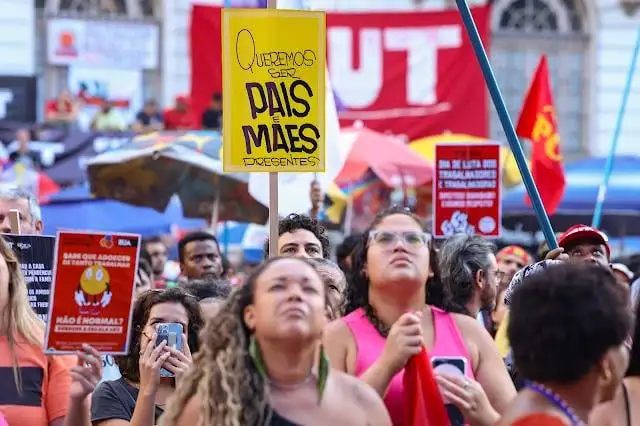
Brazil’s Biggest Labor Fight in a Generation Is Also Its Most Dangerous Election Weapon.

That creates an electoral minefield. Lula’s allies see the proposal as a reelection showpiece ahead of 2026. But opposing it carries costs for the right — Senator Flávio Bolsonaro risks alienating the center he needs in a runoff. The PL party has not taken a formal position, with its House leader saying they will “evaluate with great caution.”

The Business Counter-Offer: Tax Relief for Shorter Hours

Two congressional blocs — the Entrepreneurship Front and the Free Market Front, with a combined 465 members — are pushing a deal: accept shorter hours, but pair it with payroll tax relief. Their proposal would replace the 20 percent employer social security contribution with a 1.4 percent levy on gross revenue.

Payroll tax relief is politically explosive. A previous exemption covering 17 sectors and 9 million workers was suspended by the Supreme Court, then settled by a compromise phasing it out by 2028. Reopening that deal would pit Congress against the Finance Ministry again.

Over 60 Industry Groups Mobilize

More than 60 industry associations are organizing a joint manifesto warning of job losses. Their alternative: flexible hour banks, overtime options, and sector-specific scheduling rather than a constitutional mandate. The CNI has called for separating the debate from the electoral calendar.

Why This Matters Beyond Brazil

The 6×1 debate is the rare fight where economics, electoral strategy, and class politics collide in real time. A Quaest survey found 70 percent of federal deputies oppose the change — including 55 percent of Lula’s own coalition. The gap between what voters want and what legislators will deliver may define Brazil’s 2026 elections.

For more context, read Brazil’s Morning Call and the USD/BRL exchange rate report.

This article was drafted with automated assistance and reviewed before publication. How we use AI · Report an error · Editorial responsibility: Matthias Camenzind, Editor-in-Chief

Read More from The Rio Times

RT
Ask Rio Times
17 years of Latin America reporting, on demand.
Open the full Ask Rio Times →

The LatAm Brief

One email, every weekday morning. What moved in Latin American markets, politics and expat life.

Yesterday’s subject line: “US lifts sanctions on Venezuela's Jorge Rodríguez”

Free. We send a confirmation link first — nothing arrives until you click it. Unsubscribe with one click in any edition. If you stop opening us for 30 days we stop sending by ourselves, as we assume the interest is no longer there. See our privacy policy. We never share your email.

The Rio Times · Power Map
See who really holds power in Latin America
Click to open the Power Map →

Rotate for Best Experience

This report is optimized for landscape viewing. Rotate your phone for the full experience.