Brazilian Real Strengthens Against Dollar Amid Global Trade Uncertainty
The Brazilian real closed at R$5.7060 per US dollar on February 14, 2025, marking a 0.77% drop in the dollar’s value against the real.
This decline followed a volatile trading session influenced by global trade tensions and economic data. The exchange rate, reported by the Federal Reserve, reflected a strengthening real as markets digested recent developments.
The day began with the dollar showing weakness, driven by U.S. President Donald Trump’s announcement of potential new tariffs on wood and forest products.
While the threat of tariffs initially spiked risk aversion, markets calmed when Trump clarified that implementation would not be immediate. This reassured investors and reduced demand for the dollar as a safe haven.
Meanwhile, U.S. economic data added pressure on the dollar. Weaker-than-expected retail sales and industrial production numbers dampened expectations for aggressive Federal Reserve rate hikes.
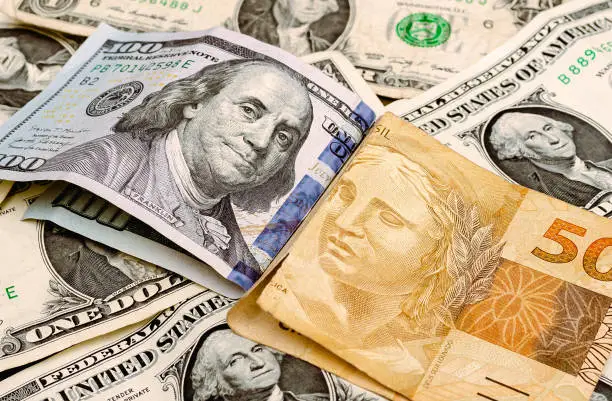
This shift in sentiment contributed to a global sell-off of the dollar, with the US Dollar Index dropping 0.73% to 106.40. Domestically, Brazil’s economic calendar offered little new information, but speculative net positions in the real suggested growing confidence among investors.
Brazilian Real Gains Amid Global Sentiment Shift
Analysts noted that capital inflows into emerging markets increased as global sentiment improved. Lucas Almeida of AVG Capital observed that while protectionist U.S. policies tend to strengthen the dollar short-term, they also redirect capital flows to currencies like the real.
The USD/BRL pair showed significant intraday volatility, reaching a high of R$5.7975 before falling to an intraday low of R$5.6934. The pair’s technical indicators pointed toward bearish momentum, with the exchange rate breaking below its 20-day moving average at R$5.81.
Trading volumes remained robust as investors repositioned portfolios amid shifting geopolitical risks and economic expectations. Emerging market ETFs saw net inflows, signaling renewed interest in higher-yielding assets like Brazilian bonds and equities.
Despite these gains for the real, analysts warned of continued volatility due to geopolitical uncertainties and potential shifts in U.S. trade policy. Investors will monitor upcoming U.S. inflation data and domestic fiscal reforms in Brazil for further direction.
The Brazilian real’s performance highlights its sensitivity to global events and investor sentiment, underscoring the interconnectedness of emerging markets with broader economic trends.
This article was produced by The Rio Times’ automated newsroom system. How we use AI · Report an error
LatAm Markets: Live Signals → — real-time movers, turnover leaders and FX across Latin America.
Read More from The Rio Times