Brazilian Judiciary Takes Stand Against So-called “Judge of Guarantees”
RIO DE JANEIRO, BRAZIL – The year 2020 began with the Brazilian Judiciary taking a stand against the Judge of guarantees, a new judicial institution, similar to an examining magistrate, recently incorporated into Brazil’s criminal procedure law, whose aim is to ensure that all criminal investigations conducted before trial comply fully with constitutional safeguards of the rights of those being investigated.
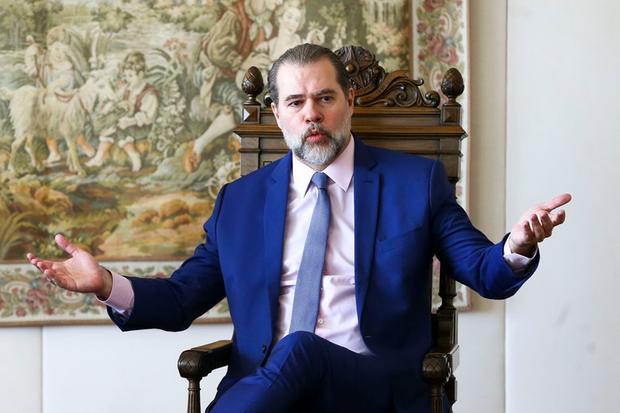
After a number of court actions that challenged the law’s constitutionality, as well as criticism from magistrate bodies, the Presiding Justice of the Supreme Court (STF) Antonio Dias Toffoli, was expected to defer the start date of the measure, originally scheduled for January 23rd.

On Wednesday, January 15th, Toffoli fulfilled these expectations and deferred the deadline to implement the judge of guarantees for six months, until July 2020.
The two major bodies representing Judges; the Brazilian Federal Judges Association (AJUFE) and the Association of Brazilian Magistrates (AMB), as well as the former party of President Jair Bolsonaro, the PSL, have all appealed to the Supreme Court to have the law declared unconstitutional or to have its enforcement deferred.
The rule was voted on late last year as part of the anti-crime package. It was approved by legislators and sanctioned by President Bolsonaro, even though the measure creating the new judgeship had not been included in the original proposal presented by Justice Minister Sérgio Moro and was subject to criticism from him.
It was expected to come into effect on January 23rd, but in recent weeks there has been a consensus in Brasília that this deadline would be impossible to meet. This is because the study that will serve as a basis for deciding how these magistrates will act should have been completed by Wednesday, January 15th, and would still need endorsement by the National Council of Judges (CNJ), which is in recess and will not meet until February 4th.
From a technical standpoint, some critics consider the proposal to be unconstitutional, as it runs against the provisions of the first paragraph of Article 24 of the Federal Constitution. “[There is] a formal unconstitutionality of the contested law because it contemplates both general rules when creating the Judge of guarantees, and rules of procedure,” reads an excerpt from the direct action of unconstitutionality brought by the two judicial lobbies.
According to them, it would not be up to the federal government to decide on specific rules for the operation of other bodies–judges should have autonomy.
In the political sphere, PSL members claim that the president could have vetoed this part of the law approved by Congress, and that the veto would have been upheld. As he did not do so, he has allegedly committed “electoral fraud” by going against one of the pillars of his campaign.
“It’s imprudent of the president. He had the fight against corruption as his banner and ended up creating a fifth judicial level just to protect his sons from investigations”, complained MP Joice Hasselmann, former government leader in Congress.
In practice, each criminal case would now become the responsibility of two judges. One — the so-called “judge of guarantees” — would authorize invasive police investigative procedures, such as breaking banking or tax secrecy, as well as authorizing wiretaps, environmental issues and issuing search and seizure warrants.
The other judge would analyze the charges filed by the police and the prosecutor, after this investigation period has ended, and conduct the trial. It is precisely this requirement to have at least two judges acting in each case that has drawn criticism. “Today, there are no conditions for all cases to have two magistrates. Setting up this structure would take more time. That’s why we asked for a longer period of six months or a year for its enforcement,” AJUFE President Mendes said.
The cost of this new judicial figure is another factor that has sparked debate. There is still no official information regarding the figures. A calculation made by the AMB shows that it could cost R$1.6 billion (US$400 million) annually.
This calculation is based on the number of state and federal courts with only one magistrate (2,116, or 19 percent of the total) multiplied by the average monthly cost of a judge, which is R$47,426 for those in the state courts and R$49,118 for those in the federal courts.
According to critics of the proposal, it would be necessary to either hire a new judge to take turns with their colleague in criminal cases, or to seek an administrative solution such as a rotation of Judges, in which the judge of a neighboring district, or a central magistrate, could play the role of the magistrate of guarantees.

The financial argument sparked complaints in the Brazilian Bar Association, one of the main advocates of the new judicial figure. “Some courts can afford to pay a million reais for a delayed vacation of magistrates. The Judiciary can afford to pay for substitute judges, housing allowances of R$4,000 or to exchange a fleet of official cars. But to set up the judge of guarantees, it can’t?” complains attorney Gustavo Badaró, president of the OAB’s Special Commission on Criminal Procedural Law.
Other points of conflict between lawyers, prosecutors and magistrates are whether the judge of guarantees will act in current cases or only in new ones, as well as the scope of this new figure in appellate courts.
The law does not provide for the judge of guarantees in the state or federal courts of appeal, nor in the superior tribunals, where appeals from lower court sentences are heard, and where authorities with so-called “privileged forum”, such as incumbent legislators, are also judged.
“There can’t be a law that only attends part of the cases,” says Judge Mendes. On the other hand, lawyer Badaró states that “the new law does not prohibit the actions of these magistrates in courts of appeal, it is sufficient to regulate.”
The president of AJUFE admits that within the association there is a group of magistrates who support the proposal, but he believes it should be debated further since it is a significant change to rules that have been in force for almost eight decades, when the Code of Criminal Procedure was enacted.
Among lawyers, the complaints are that there is no need to debate anyything more, only to extend the deadline for the enforcement of the new rule. “That’s not an idea that someone pulled out of the hat today. It’s been debated in Congress since at least 2009,” Badaró added.
Source: El Pais
More: Brazil news in English, every day from The Rio Times.
This article was produced by The Rio Times’ automated newsroom system. How we use AI · Report an error
Read More from The Rio Times