Brazil Powers Up $1 Billion Telescope Project to Explore Southern Skies
Brazil has joined forces with the United States and Chile in a groundbreaking $1 billion project—the Legacy Survey of Space and Time (LSST).
Set to run until 2038, this collaboration aims to map the southern hemisphere’s sky comprehensively.
The initiative, managed by the Vera C. Rubin Observatory, includes a significant contribution from Brazil: 170 professionals from 26 institutions across 12 states, encompassing a diverse group of students, researchers, and technicians.
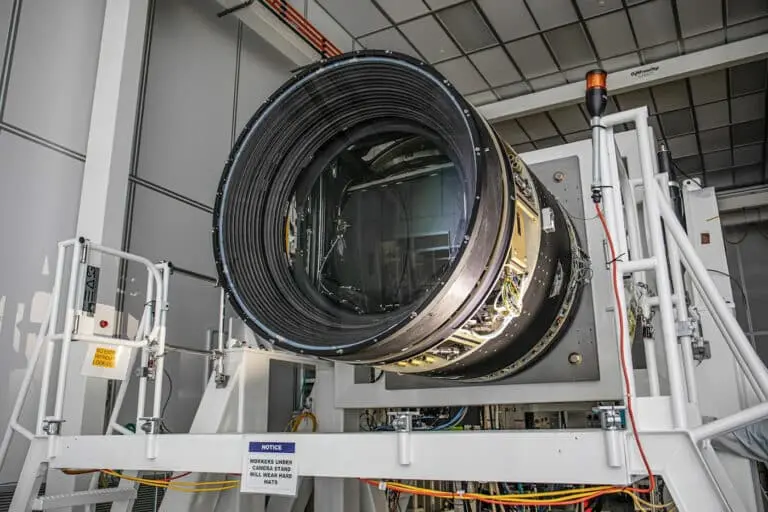
Stationed in Chile, the telescope features an impressive 8.4-meter diameter. The world’s largest digital camera, equipped with an astounding 3.2 billion pixels, resides here.
This high-tech equipment will begin its camera tests next week. Accordingly, it will release the first set of detailed images in September.
Brazil’s involvement extends to overseeing a crucial data center. This center is essential for storing and processing the vast data the telescope will generate.
The development of the Independent Data Access Center (IDAC) began in 2021. It will soon join a global network of similar facilities.
Luiz Nicolaci da Costa, an astrophysicist and director of LineA, emphasized that project data will be available later this year.
Brazil Powers Up $1 Billion Telescope Project to Explore Southern Skies
One of the primary goals of the LSST is to study dark energy. This mysterious component is vital for unlocking secrets of fundamental physics.
With this project, Brazil not only enhances its stature in global scientific research but also boosts its technological prowess.
The country is set to make significant strides in computing and artificial intelligence, driven by the project’s extensive data demands.
The potential breakthroughs from this research could lead to far-reaching impacts across various scientific and technological fields worldwide.
This article was drafted with automated assistance and reviewed before publication. How we use AI · Report an error · Editorial responsibility: Matthias Camenzind, Editor-in-Chief
Read More from The Rio Times