Brazil’s Biggest Port Project Is Almost Done. It May Sit Idle
Brazil · Infrastructure
Key Facts
—The project. A giant new rail hub at the port of Paranaguá is the largest public port works under way in Brazil.
—The size. It cost roughly 650 million reais (about US$125 million) and would add about 24 million tonnes of grain-export capacity a year.
—The progress. The structure itself is about ninety-five percent built and nearly ready.
—The snag. Private terminals are not yet linked to it, so the hub cannot run at full scale.
—The delay. Full operation is now expected around the middle of 2027, not this year.
—The stake. How fast it works shapes the cost of moving Brazilian soy and corn to the world.
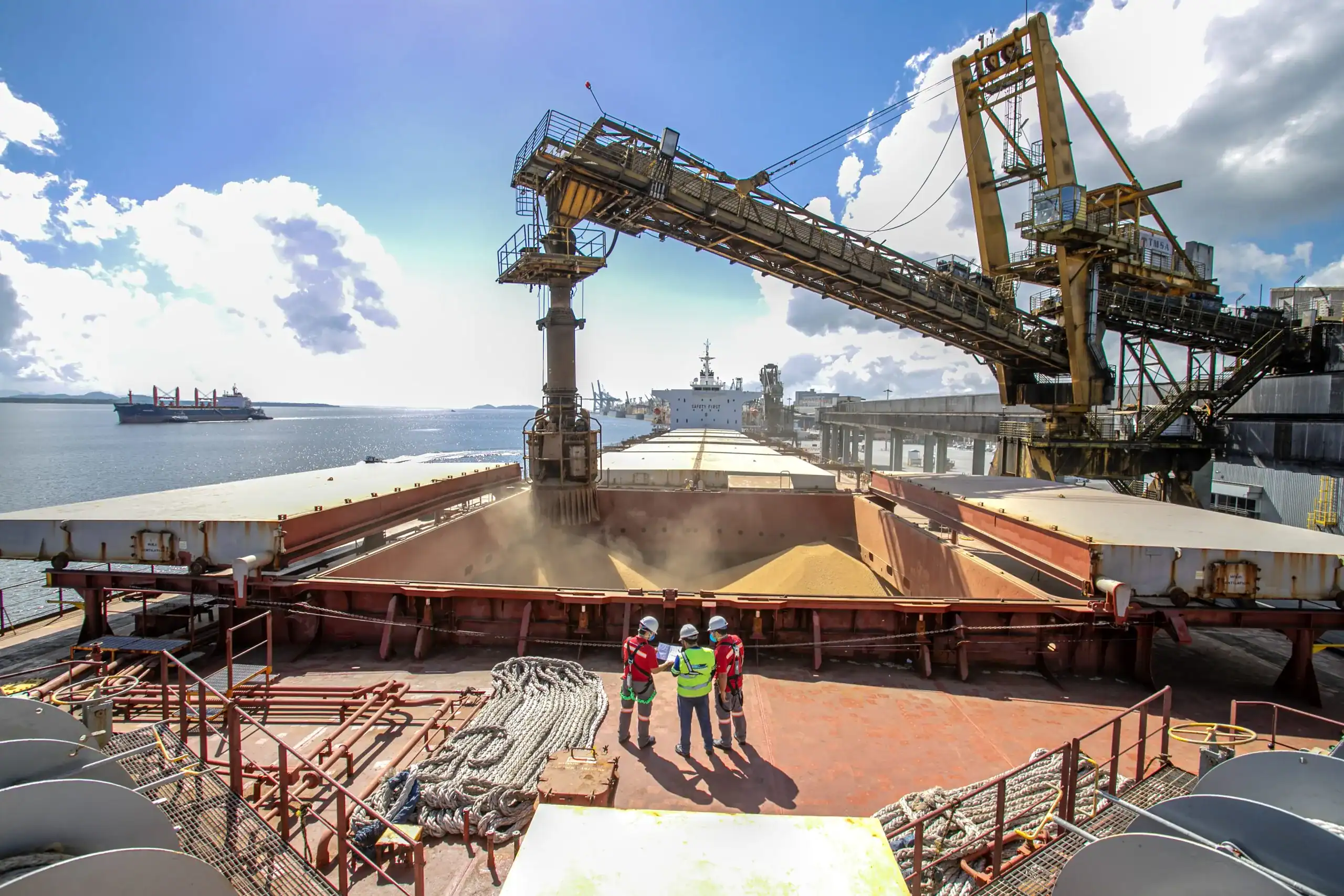
A new Brazil grain port hub the size of dozens of football pitches is almost finished in the south of the country, yet it risks standing half-idle because the private links that would let it run at full speed are running late.
In the southern Brazilian state of Paraná, engineers are putting the finishing touches to a vast new structure at the port of Paranaguá. Its nickname is the Moegão, roughly the “big hopper”, after the funnels used to pour grain.
It is the biggest public port project currently being built in the country. The idea is simple but powerful: gather all the trains arriving with grain into one place and unload them far faster than today.
The numbers are striking. The hub spreads across some 600,000 square metres and could add around 24 million tonnes of export capacity a year.
Why this Brazil grain port matters
Paranaguá is Brazil’s second-busiest port by tonnage and a key gateway for the country’s soybeans and corn. Brazil is the world’s top soybean exporter, so anything that speeds up its ports ripples through global food markets.
Today most grain reaches the port by truck, which is slow, costly and clogs local roads. The new hub is meant to shift much of that onto rail, lifting the railway’s share of incoming grain from roughly a fifth to about half.
The payoff would be real money. The state says the system should cut transport costs by roughly a third and slash the port’s carbon emissions, while letting it load ships far quicker.
How it is supposed to work
The design lets the port unload up to 180 rail wagons at once across three separate lines. That would raise daily capacity by about sixty-three percent, from 550 wagons to 900.
Just as important, it removes a daily headache. Trains will no longer have to perform endless shunting moves to reach eleven different terminals, which today snarls both the rail yard and the town.
The demand is clearly there. Paraná keeps breaking records for soy and animal-protein output, and its east export corridor recently saw its busiest stretch in five decades.
New rail lines are being built to feed the port from the farming interior. The bet is that grain will increasingly roll to the coast on trains rather than grind down the mountain by truck.
The catch nobody advertises
Here is the problem. The public backbone is nearly complete, but it is useless on its own until the privately run terminals connect to it with their own conveyor belts.
Most of those operators are still in the design or licensing stage. Without their links, grain arriving at the hub has nowhere to flow onward to the storage silos.
As a result, the timeline has slipped. Officials now expect the whole system to be fully integrated only by the middle of 2027, more than a year after the main structure is done.
A timing puzzle on the railway
There is an extra wrinkle on the rail side. The company that runs the railway up the coastal mountains holds a concession that expires in early 2027.
With the contract nearing its end, the operator has little reason to pour fresh money into the line right now. That leaves a question mark over how quickly the trains themselves can match the hub’s new speed.
Why outsiders should watch
For commodity traders and food importers, the lesson is a familiar one about Brazil. The country builds impressive infrastructure, but the gap between finishing the concrete and running it at full tilt can be wide.
If the connections fall into place, Paranaguá becomes cheaper and faster, easing a bottleneck that affects buyers as far away as China and Europe. If they stall, a costly public asset sits underused while the harvest keeps growing.
Connected Coverage
For more on how the region moves its harvest, see our reporting on Argentina handing its grain-export river to a private operator and on the shifting balance of Brazil’s grain-export ports.
More: Brazil news in English, every day from The Rio Times.
Frequently Asked Questions
What is the Moegão at Paranaguá?
It is a large new public hub at Brazil’s port of Paranaguá that gathers grain-carrying trains in one place for faster unloading. It is the biggest public port project currently under construction in the country.
Why might the new hub sit idle?
The public structure is nearly finished, but it only works once private terminals connect to it with their own conveyor belts. Most of those operators are still in the planning stage, so full operation is now expected only around mid-2027.
Why does it matter for global markets?
Brazil is the world’s largest soybean exporter, and Paranaguá is one of its main grain gateways. A faster, cheaper port would ease costs for buyers in China and Europe, while delays keep a bottleneck in place.
This article was drafted with automated assistance and reviewed before publication. How we use AI · Report an error · Editorial responsibility: Matthias Camenzind, Editor-in-Chief