Brazil Freezes $20 Million in a New Marielle-Linked Corruption Case
Politics
Key Facts
—The operation. Federal Police launched Operation Emendatio on 9 July. They carried out two preventive-arrest warrants and twenty-one search warrants in the city of Rio de Janeiro.
—The freeze. The Supreme Federal Court authorised asset-blocking measures worth R$100 million ($19.9m). All warrants were issued by that court.
—The alleged scheme. Congressional earmarks were routed to non-profit groups holding federal contracts. That money was then siphoned off through improper payments, front companies and intermediaries.
—The charges. Investigators cite embezzlement of public funds, money laundering and criminal organisation. Overbilling, bid-rigging and undelivered contracts are also suspected.
—The names. Press reports identify former congressman Chiquinho Brazão and his brother Domingos among those investigated. The police statement names nobody.
—The backdrop. In February the Supreme Court sentenced both brothers to seventy-six years. The charge was ordering the 2018 murder of Rio councilwoman Marielle Franco and her driver.
Brazil Federal Police have opened a corruption investigation into congressional money funnelled through Rio charities, freezing about twenty million dollars in assets. The men reported at its centre are already serving seventy-six years for murdering a city councilwoman.
The operation is called Emendatio, a play on emendas parlamentares. Those are the earmarks Brazilian legislators attach to the federal budget to direct money to projects in their home districts.
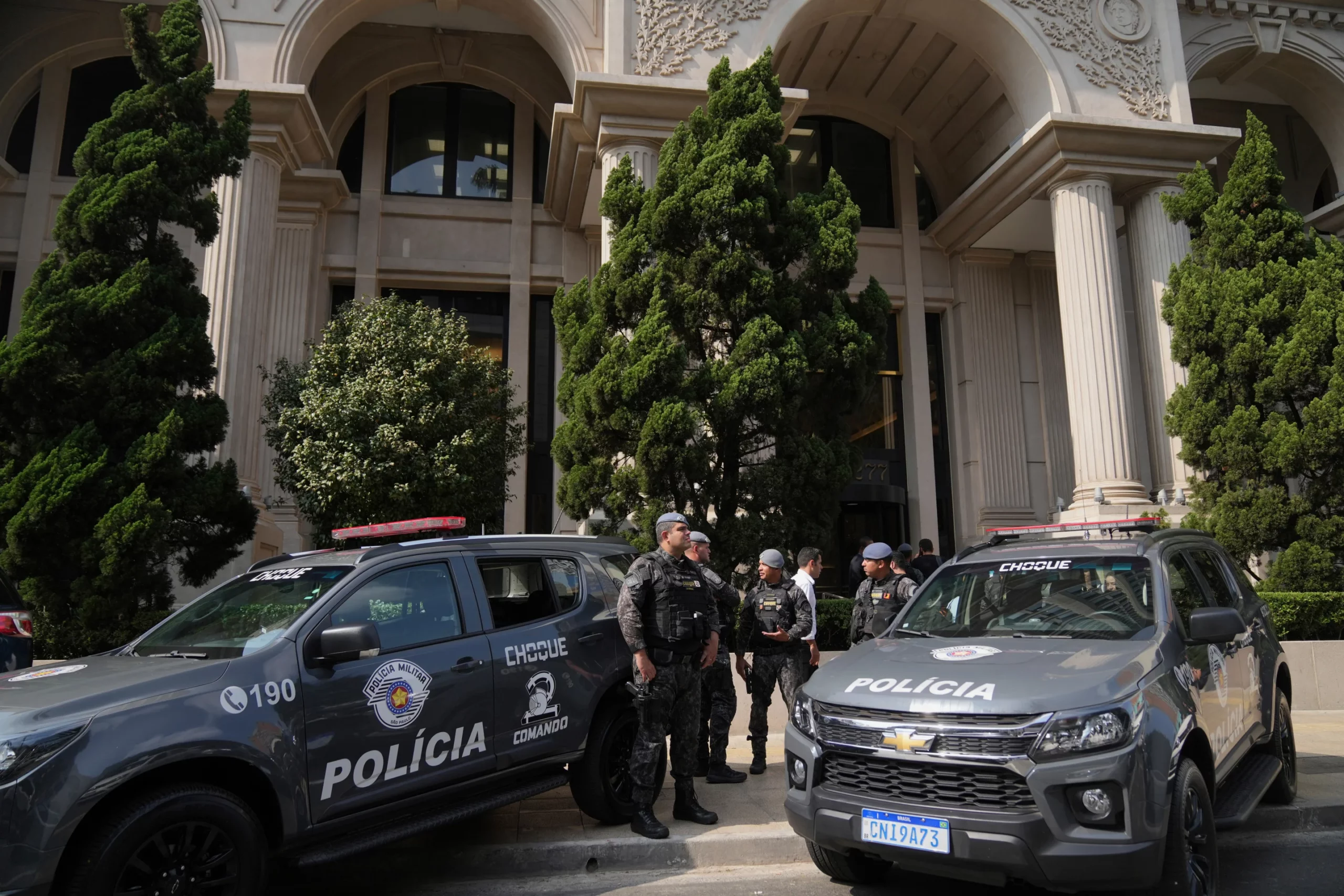
Sixty officers fanned out across Rio on Thursday morning. Two men were arrested and twenty-one premises searched.
Every warrant came from the Supreme Federal Court. It keeps jurisdiction because the case grew out of proceedings against people who once held privileged legal standing.
Brazilian outlets named the two men detained as Raphael da Silva Gonçalves, a former aide to Domingos Brazão, and Robson Calixto Fonseca, a former military policeman already in custody. Both were among those convicted in the Franco case.
One organisation reported to be under scrutiny is the Instituto Carioca de Atividades. According to Estadão, it received at least seven million reais in earmarks directed by Chiquinho Brazão during his term.
The institute is also said to have taken money from other legislators.
What Brazil Federal Police say the money did
According to the force’s own statement, federal earmarks were sent to non-profit civil-society groups that held contracts with federal agencies. Part of that money, investigators say, was then diverted.
The described method is improper payments, interposed companies and arrangements to hide where the money came from and went. Individuals and firms linked to the group allegedly moved funds and concealed assets on its behalf.
Police also suspect the partnerships themselves were rigged. They point to overbilling, collusion among the companies that submitted competing price quotes, and contracts never actually performed.
The statement lists three possible crimes: embezzlement of public funds, money laundering and criminal organisation. It adds that other offences may surface as the inquiry proceeds.
Why does the Supreme Court sign Brazil Federal Police warrants here?
Brazil grants certain officeholders a privileged forum. This means crimes they are accused of are tried by the Supreme Court rather than an ordinary judge.
Chiquinho Brazão was a federal deputy until 2025, and the investigation traces back to that period. The practical effect is that a single justice, Alexandre de Moraes, authorised the searches, the arrests and the asset freeze.
He also presided over the Franco murder case. That is how the two matters connect procedurally rather than evidentially.
A distinction worth keeping
The police statement announcing Emendatio does not name a single suspect. Every identification of the Brazão brothers in this article comes from Brazilian press reporting, not from the force itself, and their lawyers said they had not yet seen the case file.
That reticence matters. A conviction for one crime is not evidence of another, and an investigation is not a verdict.
What is settled is the murder case. In February a Supreme Court panel unanimously convicted Domingos Brazão, a member of Rio’s state audit court, and his brother Chiquinho, a former federal congressman.
They were convicted of ordering the killing of Marielle Franco and her driver Anderson Gomes in March 2018. Each brother received seventy-six years.
Both were convicted of armed criminal organisation, two aggravated homicides and one attempted homicide. Chiquinho is under house arrest with an electronic tag, while Domingos remains in prison.
In June the Supreme Court formed a majority to reject the appeals both men had filed against those convictions. Others were sentenced in the same case.
Among them was Rio’s former civil police chief, Rivaldo Barbosa, for obstructing the very investigation he had been appointed to lead. The two gunmen had already been convicted by a Rio state court in October 2024.
Why does the asset freeze matter more than it looks?
Because in Brazil, convicting the powerful and separating them from their money have long been different things. This publication reported in February that Domingos Brazão kept drawing a state salary of fifty-six thousand reais a month from behind bars.
That came to more than seven hundred and twenty-six thousand reais since his arrest. Set against that, the sum blocked this week is nearly one hundred and thirty-eight times the salary he collected in custody, on our own arithmetic.
Asset recovery, not incarceration, is where this case will actually bite.
What does this mean for foreign donors and NGOs in Brazil?
Congressional earmarks flowing to civil-society organisations are among the least transparent channels in Brazilian public finance. Emendatio alleges that charities holding federal contracts were used as conduits for money that never reached the projects it funded.
For international foundations and companies funding Brazilian non-profits, the practical lesson is clear. A partner’s federal contracts are not a mark of probity, and they may be the opposite.
More: Brazil news in English, every day from The Rio Times.
Frequently Asked Questions
What is Operation Emendatio and what triggered it?
Operation Emendatio is a Federal Police corruption investigation launched on 9 July in Rio de Janeiro. It targets congressional earmarks allegedly funnelled through non-profit groups holding federal contracts.
The scheme is suspected to have siphoned public funds through improper payments, front companies and intermediaries. The charges include embezzlement, money laundering and criminal organisation.
How much money was frozen and who authorised the warrants?
The Supreme Federal Court authorised asset-blocking measures worth R$100 million, equivalent to about $19.9 million. That same court issued all warrants used in the operation, which included two preventive-arrest warrants and twenty-one search warrants.
Who are the men reported to be at the centre of the investigation, and what is their legal history?
Press reports identify former congressman Chiquinho Brazão and his brother Domingos as those investigated, though the official police statement names nobody. In February, the Supreme Court sentenced both brothers to seventy-six years for ordering the 2018 murder of Rio councilwoman Marielle Franco and her driver.
Connected Coverage
Brazil Convicts Masterminds of Marielle Franco’s Murder
STF Convicts Filipe Martins, Deepening Brazil’s Power Struggle
This article was produced by The Rio Times’ automated newsroom system. How we use AI · Report an error · Editorial responsibility: Matthias Camenzind, Editor-in-Chief