Deserts converted into productive oasis in southern Argentina province
RIO DE JANEIRO, BRAZIL – There are, however, large areas of the Mendoza province, known for its wine growing in the mountainous areas, where there is still no water within producers’ reach. As a result, there is a resurgence of systems seeking to reverse the fate of these lands, through new technological developments aimed at advancing towards high-standard precision agriculture.
Nicolás Viramonte, territorial sales manager of Valley, a Valmont Group company dedicated to pivot irrigation, travels the country to change realities and to be the needed bridge to achieve the unthinkable.

Thus, specific results are beginning to appear with this mobile irrigation technology, with the help of private producers developing irrigated crops in areas that are currently deserts, such as in remote areas in the municipalities of San Carlos, in the Uco Valley, and San Rafael, in the southern part of the province.
“In Mendoza we work in areas with productive potential with products such as potatoes and garlic, or further south, with livestock. The area is converted into a living productive system, and there is no doubt that irrigation and pivot irrigation technology, which satisfies this need, will be a good business,” he said.
Pivot irrigation is a mobile system that allows irrigating large areas. It can be circular, movable, corner and lateral.
Mendoza is the province with the largest irrigated area in the country. It has over 350,000 hectares with access to water, representing 25% of Argentina’s total. However, there are regions in the province that are still deserted or at permanent risk due to the water crisis affecting the region for over a decade.
Therefore, optimizing the use of this vital resource is imperative, with the waterproofing of canals but also with the implementation of irrigation efficiency plans, where drip, pressurized and pivot systems stand out. In this respect, in recent years there has been an increase in the demand for these methodologies, together with technology.
In fact, pivot irrigation has become a key support system for precision technologies, achieving greater efficiency, profitability and sustainability. This equipment is now programmable and enables greater interaction between the operator and the control panel, which leads to optimizing the entire process and irrigating according to the crop’s needs.
“Throughout the years, we have witnessed how different areas have developed, the change it produces in the economy and society of the place. Productive systems become much more dynamic, as they require labor, inputs and services, leading to the development of nearby towns. This is why we are certain that irrigation helps the development of towns and cities in the interior,” the expert said.
“I travel through all the country’s irrigated areas. Soon, this desert will become a living productive system that generates food and wealth,” he posted on social media with pictures showing the impact of irrigation on these lands.
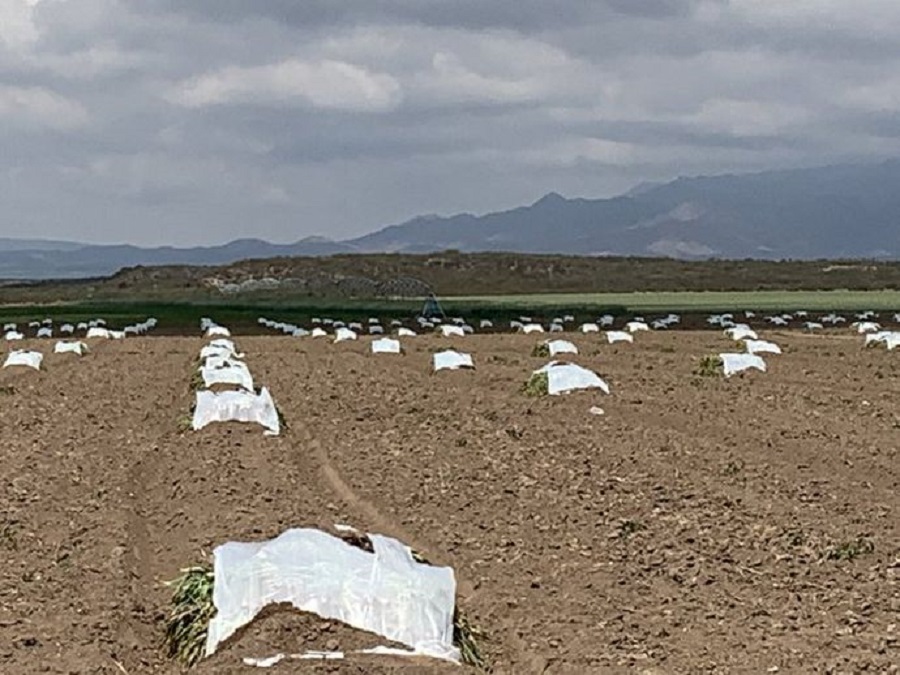
“More of what you see around Mendoza these days: harvested garlic that was irrigated with pivot. Then carrots that are just surfacing and lots for potato in the next few days. In addition to lots producing sorghum seed, alfalfa, tomato, corn, pastures in livestock systems,” Viramonte explained in his posts.
“I am increasingly convinced that pivot irrigation has a great future ahead in our country. This year we made great progress in this direction, together with the producers who are always striving for more,” Viramonte pointed out. “An important growth is coming. We are breaking down production myths,” he said.
With information from La Nacion
More: Argentina news in English, every day from The Rio Times.
Editorial responsibility: Matthias Camenzind, Editor-in-Chief · Editorial standards · Report an error