Analysis: A “lesser” Itamaraty and Brazil’s isolation: the foreign policy legacy of Ernesto Araújo
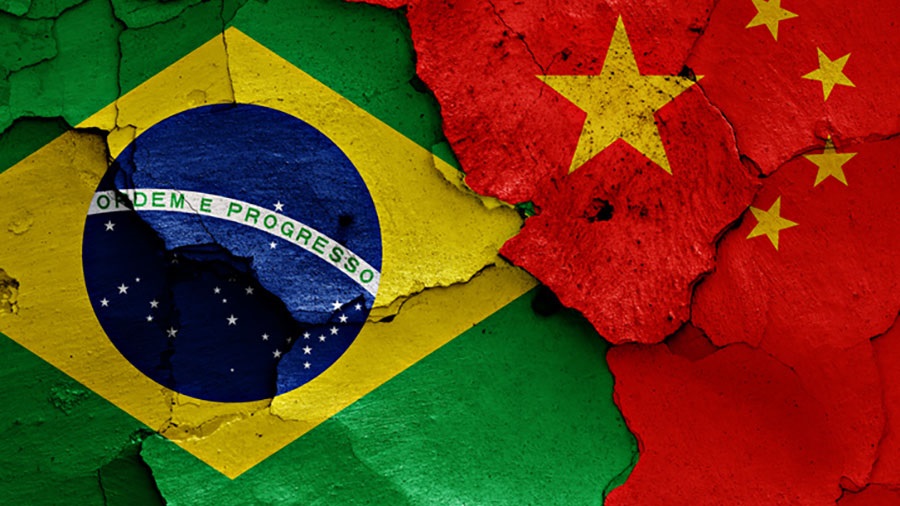
RIO DE JANEIRO, BRAZIL – In the long run, the most enduring consequences of the foreign policy of the last two years will be a “lesser” Itamaraty (Foreign Ministry), with diplomatic action fragmented throughout the world, and an encouragement of prejudice against Chinese inside Brazil.
This is the assessment of some foreign policy analysts heard by BBC News Brazil regarding the legacy of foreign Foreign Minister Ernesto Araújo, who resigned on Monday March 29. He will be replaced by Carlos Alberto Franco França, a career diplomat who was working as a special advisor to the President.

Araújo accumulated months of wear and tear in the chancellor’s office, mainly because of the difficulties Brazil has been facing in importing vaccines against the coronavirus. “I in your place would resign today,” senator Jorge Kajuru (Citizenship-GO) said at one time. “Your Excellency is a great difficulty for Brazil to obtain vaccines from abroad,” declared senator Kátia Abreu (PP-TO).
Later, Araújo would continue the exchange of barbs with Abreu, accusing her of defending the Chinese 5G lobby in Brazil – which further raised the temperature of the clash with the Senate. “We don’t want the president on his knees,” says Kátia Abreu after Senate pressure for Araújo’s exit.
Why did Congress want Araújo’s resignation?
The ‘Trail of Destruction’
Araújo was considered one of the ministers most aligned with the ideological policy of President Jair Bolsonaro.
“Araújo accommodated himself to Bolsonaro – who, by personality trait, is not a doer, is someone who operates on a more abstract and ideological level. Araújo had to accommodate this to a machine that is almost two centuries old (Itamaraty) and has a pragmatic, down-to-earth tradition,” points out Dawisson Belém Lopes, professor of international and comparative politics at UFMG.
The defeats in foreign affairs were successive: Donald Trump, who received the explicit support of the Brazilian government (breaking with a tradition of maintaining an equidistant position in foreign electoral disputes), was defeated by Joe Biden in the USA.
The hostile statements to the Chinese government by Araújo and others close to Bolsonaro (like his son Eduardo) were pointed out as a hindrance in the purchases of vaccine raw materials. And, finally, the international negotiation for ready-made vaccines occurred much later than in most large countries.

In Guilherme Casarões’ opinion, Araújo’s administration was “harmful to Brazil’s interests” and left “trails of destruction” in foreign policy, both in the dismantling of Itamaraty’s structure and in Brazil’s strategic and historical international positioning.
“He became a figure beloved by Bolsonarism, but at the expense of Brazil’s diplomatic tradition,” says Casarões.
“From the military dictatorship to the New Republic (the ministry’s actions) had great traces of continuity, mainly in three aspects: in universalism, that is, the understanding that the country has a vocation to maintain good relations with the world; in regional integration, because Brazil always saw itself as a center of gravity of a collective project of economic development, trade opening, and competitive integration; and multilateralism, a crucial platform of Brazilian insertion into the world community in recent decades – a kind of trademark of Brazil was the search for great agendas that could be made global, such as environment and human rights. Ernesto basically put an end to this,” continues the FGV professor.
“We dramatically reduced the number of strategic partners, abandoned the integration project, and systematically snubbed multilateralism in the last two years.” This would be more in line, says Casarões, with “the short-term interests of Bolsonaro and his family, and with a foreign policy more thought out for the government’s militant support troops, but with little international function; that ended up isolating us in an unprecedented way.”
The religious references commonly made by Araújo have also caught the attention of foreign policy scholars. In a text in his blog, published before his appointment, the now ex-chancellor once stated that “globalism is the economic globalization that has been piloted by cultural Marxism. Essentially, it is an anti-human and anti-Christian system.” In the text, he proposed a political project to “open up to the presence of God in politics and history.”
According to Belém Lopes, from UFMG, speeches of this type show how Araújo’s position was a “point outside the curve” of Brazilian diplomacy, and academic analysis points out that this brings us closer to the diplomacy style of theocratic countries in the Middle East and Africa, than to the Western and Brazilian diplomatic tradition.
Legacies in the long term
According to Oliver Stuenkel, professor of international relations at the Getulio Vargas Foundation (FGV), this break with the principles that have always governed Brazilian diplomacy is not a permanent legacy capable of affecting in the long term Brazil’s relationship with other countries, such as those of Mercosur and Europe – after an eventual future change of government.
“Now Brazil has a very bad reputation because of Bolsonaro, but a future president can change that,” Stuenkel says. “The world wants a strong and prosperous Brazil, the world wants Brazil to do well. It is not so easy and simple to destroy that goodwill toward Brazil,” he says. “That would not be the case in a country with a wartime past, for example, where there are more international misgivings.”
At the same time, Stuenkel opines, some more profound changes caused by Araújo should remain even in a future post-Bolsonaro government: the fragmentation of Brazil’s diplomatic action, with the weakening of Itamaraty, and the use of prejudice against China as a domestic policy weapon.
“These are the main post-Bolsonaro legacies of Araújo, effects of a more lasting character,” explains Stuenkel.
Lesser Itamaraty
Stuenkel opines that Araújo’s goal was never to make foreign policy, but to use his position to make domestic policy – and mobilize militant Bolsonaro supporters on international issues. With this, he says, there was a great weakening of Itamaraty and of Brazil’s more unified diplomatic action.
For Guilherme Casarões, also from FGV, in concrete terms, Araújo’s management “destroyed the Itamaraty bureaucracy itself, which has always been seen as a great asset of the Brazilian government, regardless of party, with very professional, articulate staff, competent in projecting the image of Brazil.”
“From the beginning, Araújo said that foreign policy would be government policy, representing Bolsonaro’s 57 million voters. But that ended up preventing Itamaraty from thinking about foreign policy for the long term, beyond these ideological daydreams.”
“In the pandemic, as foreign policy became very important, other agents became key players and began to fill the vacuum of power and action left by Araújo,” says Stuenkel. “The governors who began to have negotiations abroad and assumed this space are not going to stop maintaining contact with their interlocutors abroad just because the chancellor changed. And even if the government changes, this more fragmented action will continue,” says the international relations professor.
“So Araújo’s main legacy in the long term is a lesser Itamaraty, with a fragmentation of Brazil’s diplomatic action,” says Stuenkel. “When the chancellor is bad, the performance of the governors is a good thing. But it will be much more difficult to unify Brazil’s international direction again in the future.”
Using the bias against China
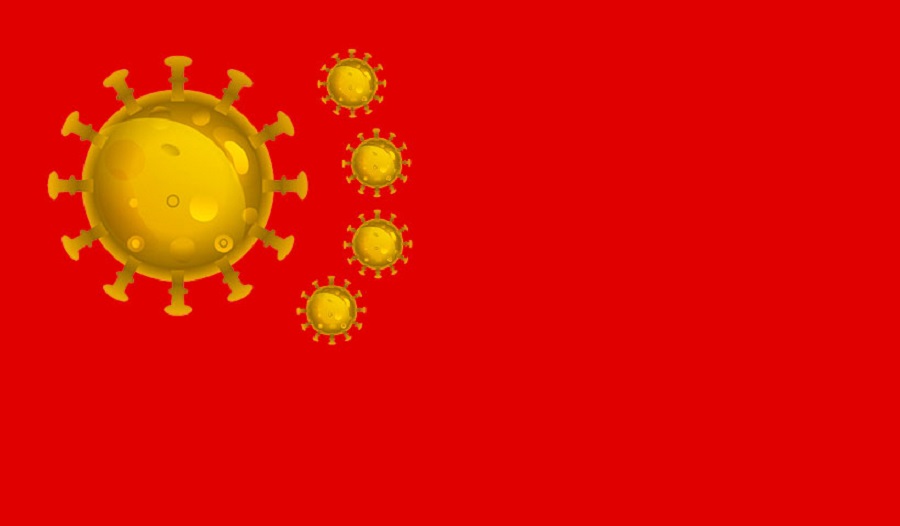
The other long-term change seen by Stuenkel is the use of Sinophobia (the prejudice against China and the Chinese) as an “internal political weapon”. This is because Araújo even referred to the coronavirus as “communavirus,” suggesting that the pandemic was part of a Chinese “globalist” project. Other, similar, anti-China lines were uttered by Eduardo Bolsonaro on Twitter.
“Araújo brought Sinophobia as an internal political tool to mobilize the more radical side of Bolsonaro militants, something that was not done before in Brazil. And even after Bolsonaro, any populist up front could ‘activate’ a portion of the population that is anti-China,” Stuenkel explains.
“It’s a block of voters that as of now is available and can be ‘used’ depending on who takes over. It is something that is not going away quickly even with a different posture of Brazil in diplomacy,” he says. And the political use of an anti-China sentiment in a portion of the population is something that can have a very negative effect on the long-term relationship with the Asian country.
“Our relationship with China is only not worse at the moment because they are much more pragmatic. While our approach with them is ideological, they are practical and are thinking about 5, 10, 20 years from now,” says Carlos Gustavo Poggio, professor of International Relations at PUC (Pontifical Catholic University).
Perspectives for the future chancellor
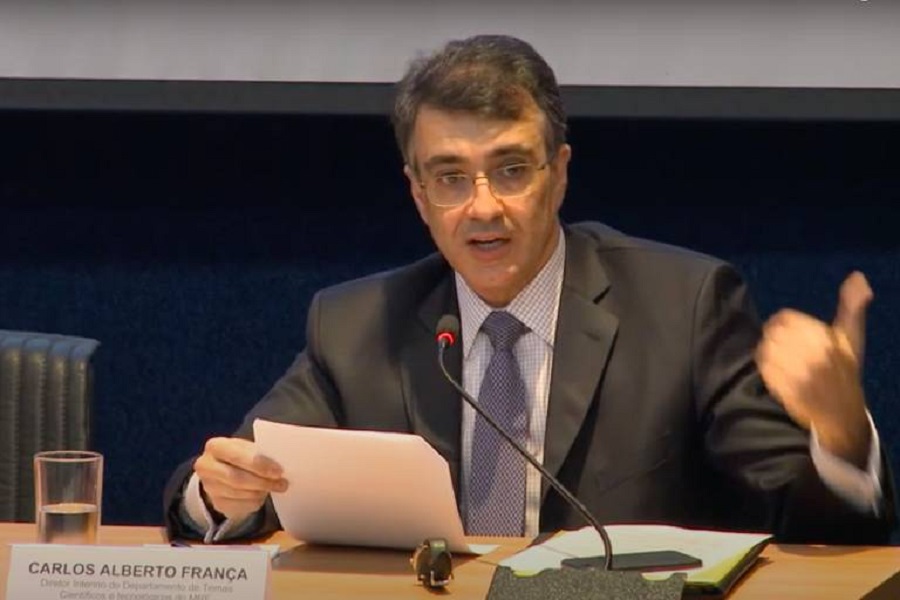
The name of Carlos Alberto Franco França as Ernesto Araújo’s successor was announced on Monday night March 29. Observers interviewed do not see any chances of a major shift in foreign policy – although they deem likely a more restrained performance by the future chancellor.
Stuenkel, from FGV, expects that much of the diplomatic posturing will continue, because it came directly from the president. “Araújo executed Bolsonaro’s vision more than his own actions,” he says.
Carlos Gustavo Poggio, from PUC, thinks that it is possible that the action will be a little more discreet, precisely because of a change in the posture of the president and his sons (who have considerable influence on the directions of foreign policy).
“A more optimistic scenario is that there will be a readjustment of the government’s posture because the pandemic forces the government to be more pragmatic. The state of the pandemic gives less room for this kind of ideological elucubration, such as the idea of ‘globalism’. Reality is setting in because foreign policy is fundamental to health,” says Poggio.
“The costs of an amateurish foreign policy have become clear. The price of that was exacted very early because of the pandemic.” Another possible scenario, he says, is for a more pragmatic minister to bar certain directives from the Planalto that could compromise Brazil’s bilateral relationship with certain countries.
“However, in this case, what may happen is that the minister will become weaker with the president and end up being changed in the future, as happened with former Minister Nelson Teich in the Health portfolio. In this case we would have a scenario of several ministerial changes”, says Poggio.
On Monday, when Araújo’s resignation request had already been made public, some senators reacted on social networks. “The minister’s resignation brings new hope for Brazil, but we cannot exchange six of one for half a dozen of the other,” declared Mara Gabrilli (PSDB-SP). “Denialism and truculence need to give way to respect, unity, and negotiation. We need to rescue the Brazilian state’s history of diplomacy.”
Jean Paul Prates (PT-RN) stated that Araújo “was more like antiminister of Foreign Relations.” “Despite holding an important position, Ernesto Araújo only contributed to strain relations between Brazil and other historically partner nations,” he said.
Source: BBC Brasil
More: Brazil news in English, every day from The Rio Times.
This article was produced by The Rio Times’ automated newsroom system. How we use AI · Report an error · Editorial responsibility: Matthias Camenzind, Editor-in-Chief