Indigenous lobbying group call for direct line with Biden administration in Amazon talks
RIO DE JANEIRO, BRAZIL – The indigenous people want to be included in any debate promoted by the U.S. to negotiate about Brazil’s environment, without the intermediation of the Bolsonaro administration, as would be customary in the diplomatic relationship between the two countries.
Elected with the proposal to face the challenge of climate change, Biden even mentioned the deforestation of the Brazilian Amazon forest as one of his focuses of attention during a debate still in the presidential campaign. Currently, Kerry and his team are organizing a Climate Summit on April 22nd, where Biden intends to seal his global leadership on the issue and extract commitments on the subject from countries like Brazil, whose president, Jair Bolsonaro, has been invited to the event.

It is in this context that the letter from APIB, to which BBC News Brazil had exclusive access, reached the White House and Kerry’s office. In the communication, the indigenous people lobby state that “to ensure and demand that the Brazilian State makes use of its environmental legislation and its various protection agencies again, it is essential to include Indigenous Peoples at the negotiating and strategy-making table.”
Signed by Sônia Guajajara, national coordinator of APIB, the letter lists as problems of the Bolsonaro administration not only the increase in deforestation since 2019, but the support for bills that would allow mining on indigenous land, the end of land demarcation processes, the lack of actions to remove invaders from lands already demarcated and the weakening of environmental enforcement agencies.
The letter questions the real commitment of the Brazilian government with eventual goals agreed upon with the Biden administration. “The death project of the Bolsonaro government proposes the legalization of socio-environmental crimes and the discontinuation of policies to protect the Amazon forest,” say the group in the letter.
According to the report, Brazilian indigenous groups are liaising with environmental conservation NGOs in both Brazil and the US to arrange a meeting with the U.S. chief executive before any announcement of collaboration between the countries is made in April. When consulted about the APIB initiative, Itamaraty said it was unaware of the content of the letter, but said it “recognizes their full right to make their demands and proposals known.”
The Ministry of Foreign Affairs stressed, however, that “it should be remembered that the official bilateral dialogue takes place between representatives of the respective governments, which will always be attentive and receptive to the concerns and contributions of sectors of both societies.”
The Environment Ministry did not respond to BBC News Brazil.
The relationship between Brazil and the United States went through troubled months during the campaign and the transition period of the American government. On one side, Brazilian President Jair Bolsonaro publicly expressed predilection for Republican Donald Trump and even spoke of fraud in Biden’s election, besides taking weeks to congratulate him on his victory.
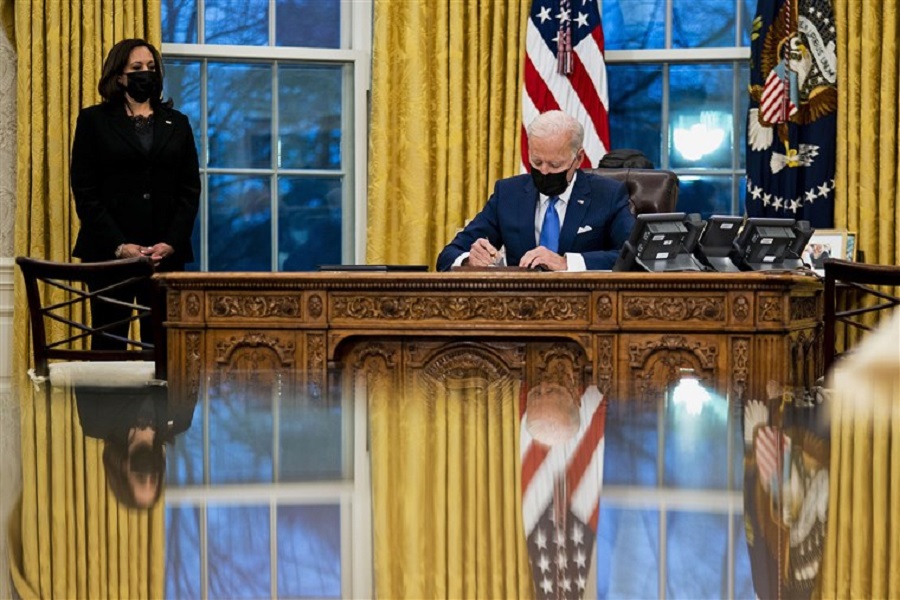
On the other, the then-Democratic candidate made it clear that he would start questioning the Brazilian government about the preservation of the Amazon, allying himself with the leaders of European countries, who, after signing the free trade agreement between Mercosur and the European Union, stopped the progress of the treaty’s implementation by claiming concerns about Brazil’s current environmental policy.
“The rainforests of Brazil are being destroyed. More carbon is absorbed in that forest than is emitted by the United States. I will make sure that several countries get together and say (to Brazil), ‘Here is $20 billion (or R$115 billion). Stop destroying the forest,'” Biden said in a debate with Trump later in 2020.
The Brazilian government’s response was immediate. Bolsonaro stated that Brazilian sovereignty was not for sale. And the environment minister, Ricardo Salles, took to Twitter to ironize: “Just one question: is Biden’s $20 billion aid per year?”
But after the inauguration of the Biden administration and especially in recent weeks, the tone changed. Brazilian ministers and representatives of the Democratic administration have held a series of conversations in which the central topic is the U.S. government’s climate program, launched in January, which provides for the use of “market mechanisms” to promote the preservation of the Amazon.
Leading the initiative on the American side are the Treasury Department, the State Department and the U.S. Agency for International Development (USAID), in addition to the Special Climate Envoy, John Kerry. They are the ones responsible for creating a project, which includes clear counterparts, so that the US will start financing forest conservation in Brazil.
And, despite the initial negative response, the Brazilian government has made it clear that it is interested in environmental programs that involve money for forest services in the country.
Talks have taken place between the Brazilian economy minister, Paulo Guedes, and the US treasury secretary, Janet Yellen, between Biden’s Secretary of State, Anthony Blinken, and Chancellor Ernesto Araújo, and between Kerry, Araújo and Salles.
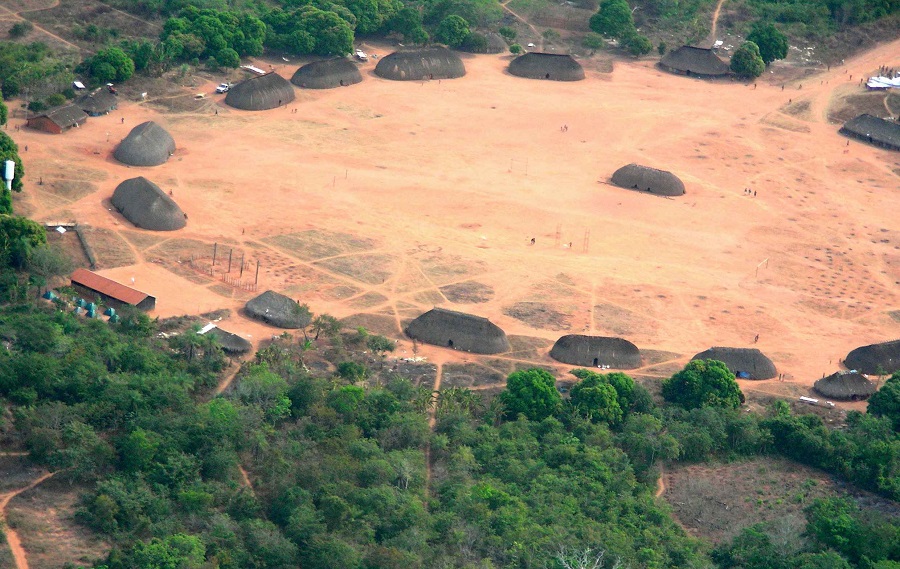
And if the intense agenda between Brazilians and Americans has not yet resulted in announcements of concrete measures, the indigenous Brazilians argue that it has been used by the Brazilian administration to suggest that the bad feeling between Brazil and the US on environmental issues is behind us, but without this representing a shift in Bolsonaro’s position on the issue.
After questioning data on deforestation in Brazil and saying that global warming was actually “climate alarmism” derived from Marxist ideologies, Foreign Minister Ernesto Araújo said three weeks ago at a Council of the Americas event that “something that was considered an impediment (to the good relationship between Brazil and the U.S.) is totally out of the way.”
“Now we are working together as key partners for a successful COP-26 and full implementation of the climate agreements.” COP-26, the UN climate conference, will take place in November 2021 in the UK.
Last Saturday, March 27, under intense and open pressure to leave his post, Araújo took to Twitter to say that “President Biden’s invitation to Bolsonaro for the Climate Summit reflects Brazil’s capacity and determination to build a modern environmental agenda together with the US, including investment, technology, job creation, and vision for the future. We are already working towards this.”
“What we have seen is that there was this recent conversation between Ricardo Salles, Ernesto Araújo, and John Kerry, that led Brazil’s government to say that the problems with the Americans in relation to the environment were solved. And our understanding is that this government does not act with the truth”, Dinamam Tuxá, executive coordinator of the Articulation of Indigenous Peoples of Brazil (APIB) and one of those responsible for drafting the letter to the US government, told BBC News Brazil.
“In their discourse, they try to sell an image that is not what we perceive in practice. Until the present moment there hasn’t even been a dialogue between this government and the indigenous peoples to try to put together a strategy to confront the invasions of our lands. What we want is not speeches, it is action, inspection. That is why the presence of indigenous people in the decision-making of any measure for the Amazon by the American government is legitimate”, continues Tuxá.
In the letter, the indigenous group also say that the conservationist interests of the native peoples and the Americans coincide, citing monitoring data from the National Institute for Space Research (INPE), which show that demarcated areas are the least affected by deforestation.
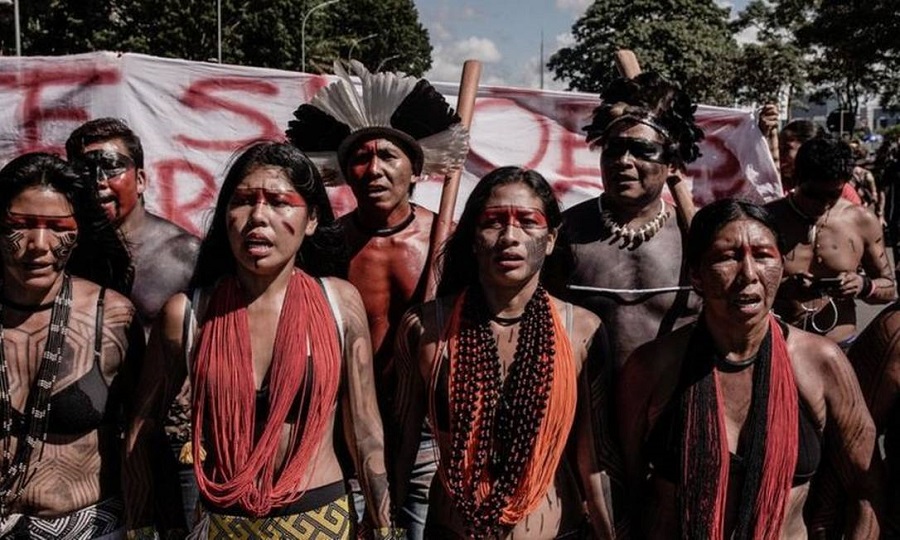
In addition, they personally demand John Kerry’s commitment to the indigenous people, remembering that in October last year, in a speech honoring the leader Alessandra Munduruku, Kerry placed himself as a public ally to the indigenous cause.
For sources in American diplomacy heard privately, although the Democrats have already publicly demonstrated varying degrees of “hostility” to the Bolsonaro government, and sympathy for groups that oppose it, such as indigenous groups, the need to get Brazil to commit to ambitious climate and environmental goals, priority zero of the Biden administration, forces Kerry and the State Department to act cautiously in opening channels with leaders outside the government structure.
It is a fine balance between exerting maximum pressure without, however, causing offense to the Bolsonaro administration.
A week ago, in an interview with the British magazine The Economist, Kerry made comments on the subject. He said that he will not “just dictate” what Brazil should do, but will work together with the country to find solutions. Still, the Climate Envoy recognizes that it won’t be easy, since it is “a government that has felt aggrieved by the way it has been approached so far.”
BBC News Brazil contacted John Kerry’s office, who confirmed the receipt of the letter from the indigenous Brazilian group, currently under evaluation by his team. Kerry, however, declined to comment on the matter.
Source: BBC Brasil
More: Brazil news in English, every day from The Rio Times.
This article was produced by The Rio Times’ automated newsroom system. How we use AI · Report an error · Editorial responsibility: Matthias Camenzind, Editor-in-Chief