Colombia: the political deal that could save President Petro’s health care reform
The replacement of the Entidades Prestadoras de Salud, private companies of the Colombian Public Health System, is one of the key and most resisted points of the health reform presented by the Government of Gustavo Petro.
However, they will continue to operate thanks to a political agreement that pacts their permanence in the country’s healthcare system.
One of the most controversial points of the health reform is the elimination of the Entidades Promotoras de Salud (EPS), private companies responsible for the affiliation and registration of beneficiaries, as well as for managing the provision of health services.
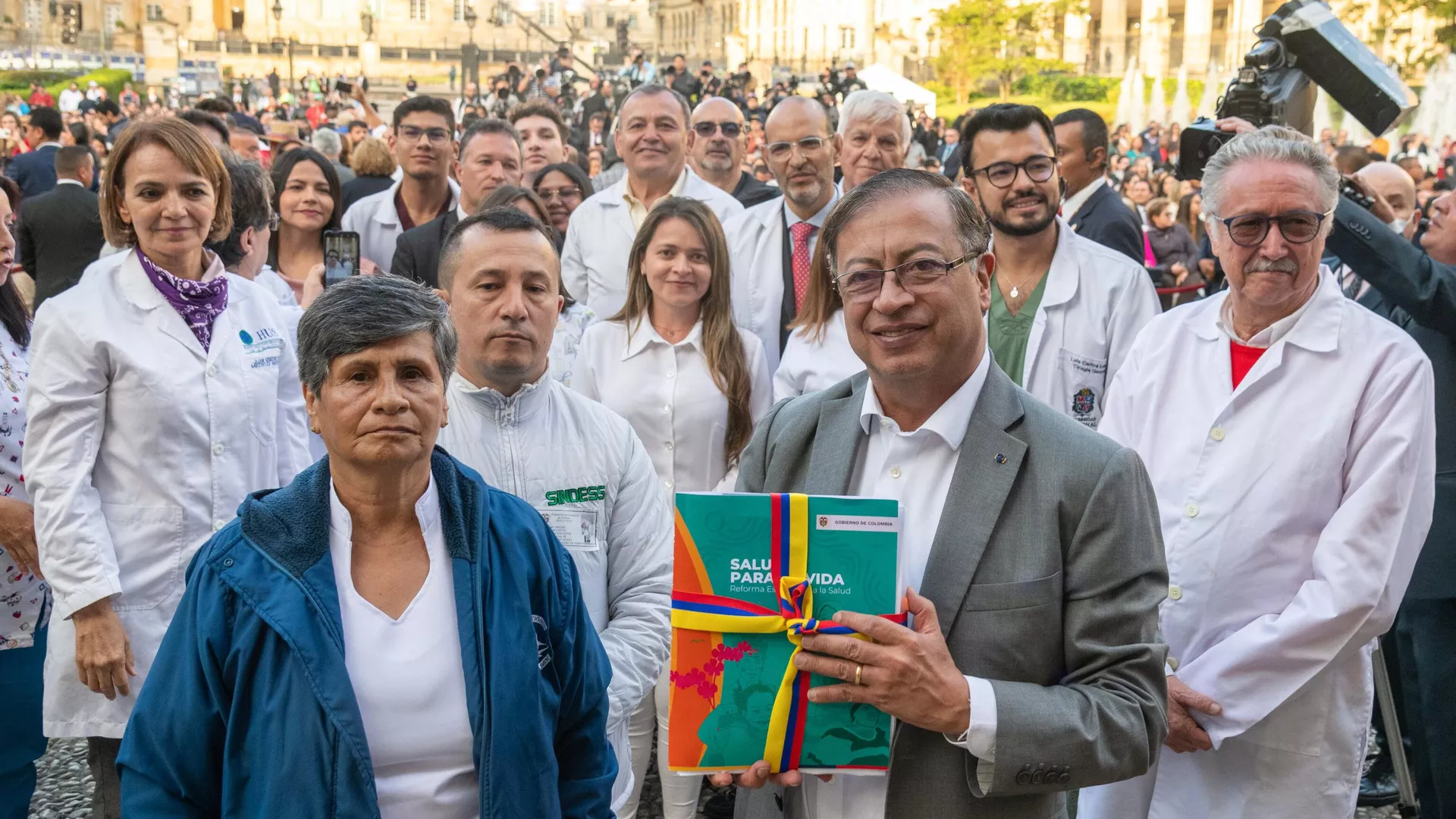
The disengagement of the EPSs proposed by the health reform issued by the Casa de Nariño, the seat of the Colombian executive power, put on alert the defenders of the private system of access to health and the role of administrators that falls on these entities.
The opposition said the health reform limits the freedom of choice between a public, private, or mixed system.
The disappearance of the EPS was pointed out as the stumbling block that risks the legislative rejection of the reform.
To save the initiative, the Colombian government resolved to keep the EPSs alive, following a political agreement from a meeting held on March 15 at the Casa de Nariño in Bogota.
In this meeting, Petro met with Senator Efraín Cepeda, from the Conservative Party, and with the former Governor of Valle del Cauca (east) Dilian Francisca Toro, from the Union for the People Party, political conglomerates of the ruling party that warned that they would not support an initiative that would eliminate the EPS.
As a result of this position, these pro-government political forces, together with the Liberal Party, had previously drafted a new proposal with changes to the reform bill, including the maintenance of the EPSs and their coexistence with the proposed new health system.
Petro’s administration would have accepted the proposal to maintain the EPS.
However, “the function of making payments and auditing accounts would remain in the exclusive hands of a public entity, the Administradora de los Recursos del Sistema General de Seguridad Social en Salud (Adres), which would become one of the most important figures of the health model in Colombia,” noted the Bogota daily El Tiempo.
After the meeting with Petro in Casa de Nariño, Senator Cepeda explained that the main point of the rescue of the EPSs is that the system users can choose which entity manages their health coverage, whether public or private, or mixed.
David Racero, president of the House of Representatives, announced on social networks that the reform continues in its legislative process.
“We have white smoke. The health reform is gaining more and more strength in a concerted manner. We will have a mixed public-private system”.
According to El Tiempo, the private health system will be articulated through the EPSs, now referred to as Gestoras de Salud y Vida, which will receive 5% of the resources for their administration.
The public system will comprise all public hospitals in the country, becoming Primary Health Care Centers (CAPS).
Dilian Francisca Toro of the Partido de la Unión por la Gente assured that they would support most of the reform articles, according to the Colombian newspaper.
With information from Sputnik
More: Colombia news in English, every day from The Rio Times.
Editorial responsibility: Matthias Camenzind, Editor-in-Chief · Editorial standards · Report an error