Agreement with Brazil Compromises Paraguay’s President one Year After Taking Office
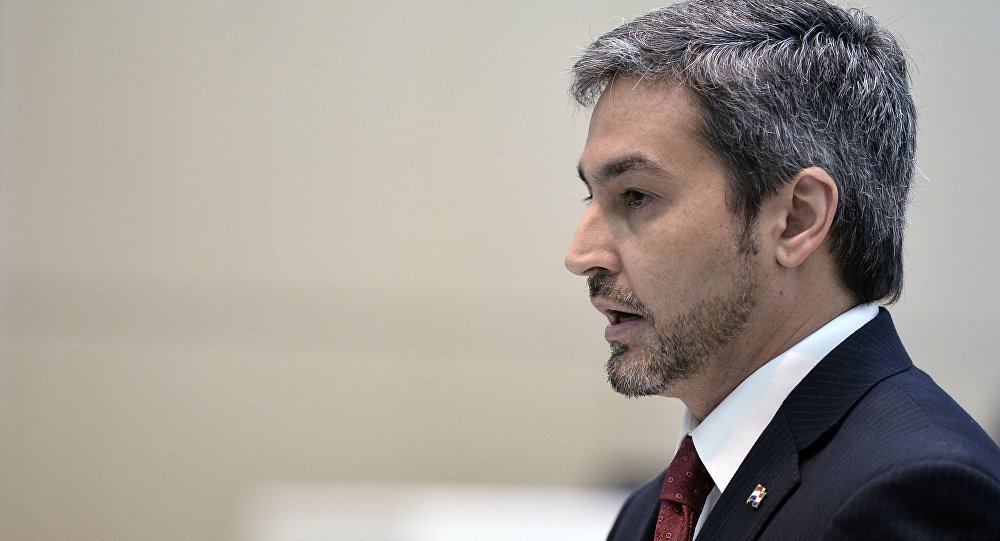
RIO DE JANEIRO, BRAZIL – Paraguay’s right-wing president and close ally of Jair Bolsonaro, Mario Abdo Benítez, is suffering his most significant political problem since he became president a year ago, as a result of an energy agreement with Brazil that the opposition has denounced for its alleged secrecy and as a handover of national sovereignty.

The bilateral protocol signed in May became public knowledge last week; abruptly so, since it was announced together with the resignation of Pedro Ferreira, president of Administración Nacional de Electricidad (National Electricity Administration — Ande).
Ferreira is said to have refused to sign the protocol, which sets new terms for the annual contracting of power from the Itaipu hydroelectric plant, shared by Paraguay and Brazil.
The technical manager of Ande, Fabin Cáceres, also resigned, after he too had refused to sign the protocol.
Cáceres told local media that the Ande technicians had been removed from the negotiations with Brazil’s state-owned Eletrobras, and replaced by representatives of the Ministry of Foreign Affairs. He added that the agreement would entail additional costs for Paraguay of US$250 million.
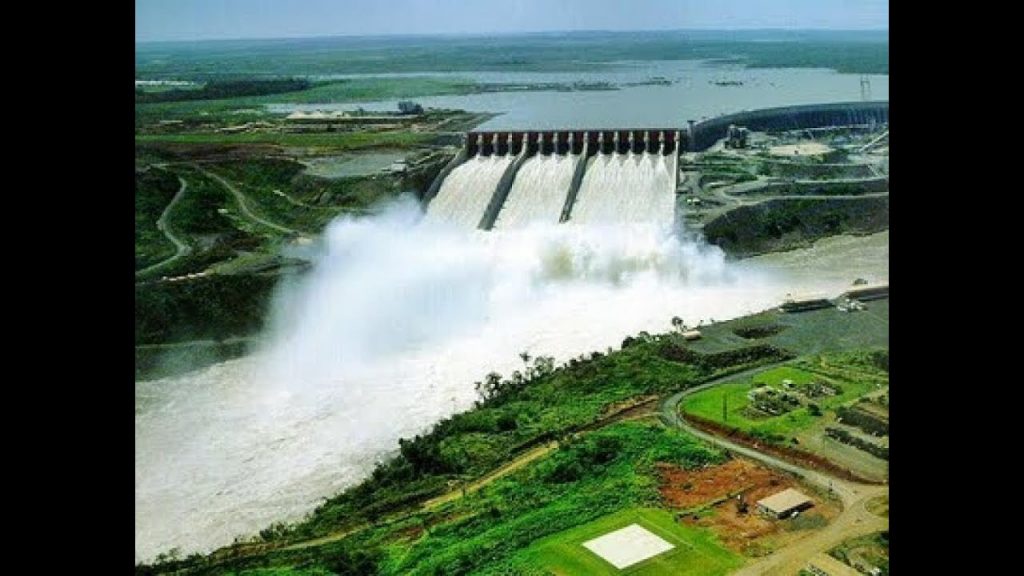
The opposition immediately reacted to a sensitive issue for the population — the Itaipu hydroelectric plant, the world’s largest generator of renewable, clean energy, the construction of which demanded flooding a large portion of the Paraguayan side and where most of the energy produced goes to Brazil.
The agreement was also uncovered when Abdo Benítez’s government was preparing for the renegotiation of Annex C of the Itaipu Treaty in 2023, regarding the price of energy that Paraguay sells at cost price to Brazil.
The Liberal Party, the largest in the opposition, has charged Abdo Benítez, of the conservative Colorado Party, with being servile towards his government’s counterpart, Jair Bolsonaro, and with signing an agreement that is “extortionous” and “outrageous” to the rights of Paraguayans.
Senators from the left-wing Guasu Front expressed the prospect of impeaching the president because the protocol was signed secretly, without informing Congress or the population.
The opposition was critical of Paraguay’s ambassador to Brazil, Hugo Saguier, who led the negotiations on the controversial agreement in May.
Saguier not only denied that there had been a “renunciation of sovereignty,” but also guaranteed that the protocol is “the first great triumph of Paraguay in the negotiation with Brazil aimed at achieving the commitment for 2023.”
However, both Paraguay’s Foreign Minister Luis Alberto Castiglioni, and its ambassador to Brazil Hugo Saguier Caballero resigned on Monday, July 29th, in the wake of the fallout from the secret energy deal with Brazil.
The government further argues that failure to report these negotiations is common, since they take place annually between Ande and Eletrobras as part of the purchase of power from the Itaipu power plant.
However, due to a demand made by the Brazilians, a schedule was included with the contracting of power from the plant up through 2022, something that had not been done until now, as Paraguay set this figure every year.
The annual average power amounts are increased over that period from 1,370 megawatts (MW) in 2019 to 1,924 MW in 2022, which also entails higher spending when Paraguay buys more megawatts.
Itaipu produces six times as much power as the Hoover Dam; it is ten times as heavy and eighteen times the size.
The opposition has succeeded in bringing to its terrain a battle revolving around the alleged surrender of energy sovereignty.
This discussion has been forwarded to the Senate, which held an extraordinary session on Friday, during which harsh criticism of the government was voiced, mainly over the “secrecy” of negotiations.
In this regard, attention was drawn to the fact that Abdo Benítez made no mention of this agreement on July 1st when he appeared before Congress to submit the first Government report.
Senators agreed on the establishment of an investigatory committee and to hold a hearing on Monday, calling Foreign Minister Luis Alberto Castiglioni, the new director of Ande, Alcides Jiménez, and the director of Itaipu’s Paraguayan side, José Alberto Alderete.
This is less than a month away from Abdo Benítez’s first year as president. In his campaign, he had pledged transparency and made a commitment that Paraguay would conduct the decisive renegotiation of Itaipu with Brazil on an equal footing.
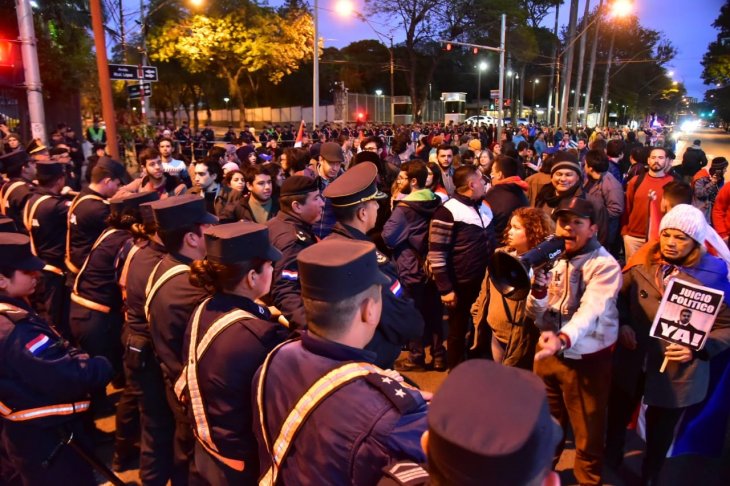
New demonstrations against the agreement to purchase power from the Itaipu plant will be held this week. Different sectors announced protests and demanded that the authorities review the bilateral protocol signed by the representatives of Paraguay and Brazil.
Key Facts
— Deep Dive
— For the complete picture, read our in-depth guide: Paraguay: Washington's Most Valued Ally in Latin America
More: Brazil news in English, every day from The Rio Times.
Editorial responsibility: Matthias Camenzind, Editor-in-Chief · Editorial standards · Report an error