Brazil’s Cancer Giant Has $24m in Cash and $680m Due This Year

Corporate Distress
Key Facts
—The gap. On March 31 the company held R$124m ($24m) in cash against R$3.5bn ($680m) of short-term financial obligations.
—The ask. Financial creditors are being pushed toward a write-off of 40 to 50 percent on R$3.3bn ($640m) of debt.
—The bank. R$430.9m ($84m) of company cash was trapped in deposits at Banco Master, which held 20 percent of its shares.
—The quarter. First-quarter net loss reached R$438.7m ($85m), more than triple a year earlier, on revenue down over 22 percent.
—The exception. A R$1.05bn ($204m) debt to its drug distributor sits outside the filing entirely.
—The clock. Brazilian law gives ninety non-extendable days to convert one third of creditor consent into a majority.
The largest Brazil cancer network is about to ask a court to bless a restructuring of six hundred and forty million dollars in debt. Its lenders are being told to expect to lose up to half of it.
Oncoclínicas treats cancer patients across dozens of Brazilian cities and calls itself Latin America’s biggest oncology platform. It is preparing to file for an out-of-court restructuring within days.
The number that explains everything sits in the March accounts. Cash and equivalents came to a hundred and twenty-four million reais, against short-term financial obligations of three and a half billion.
That is coverage of three and a half percent. For every hundred euros falling due within the year, the company held three and a half.
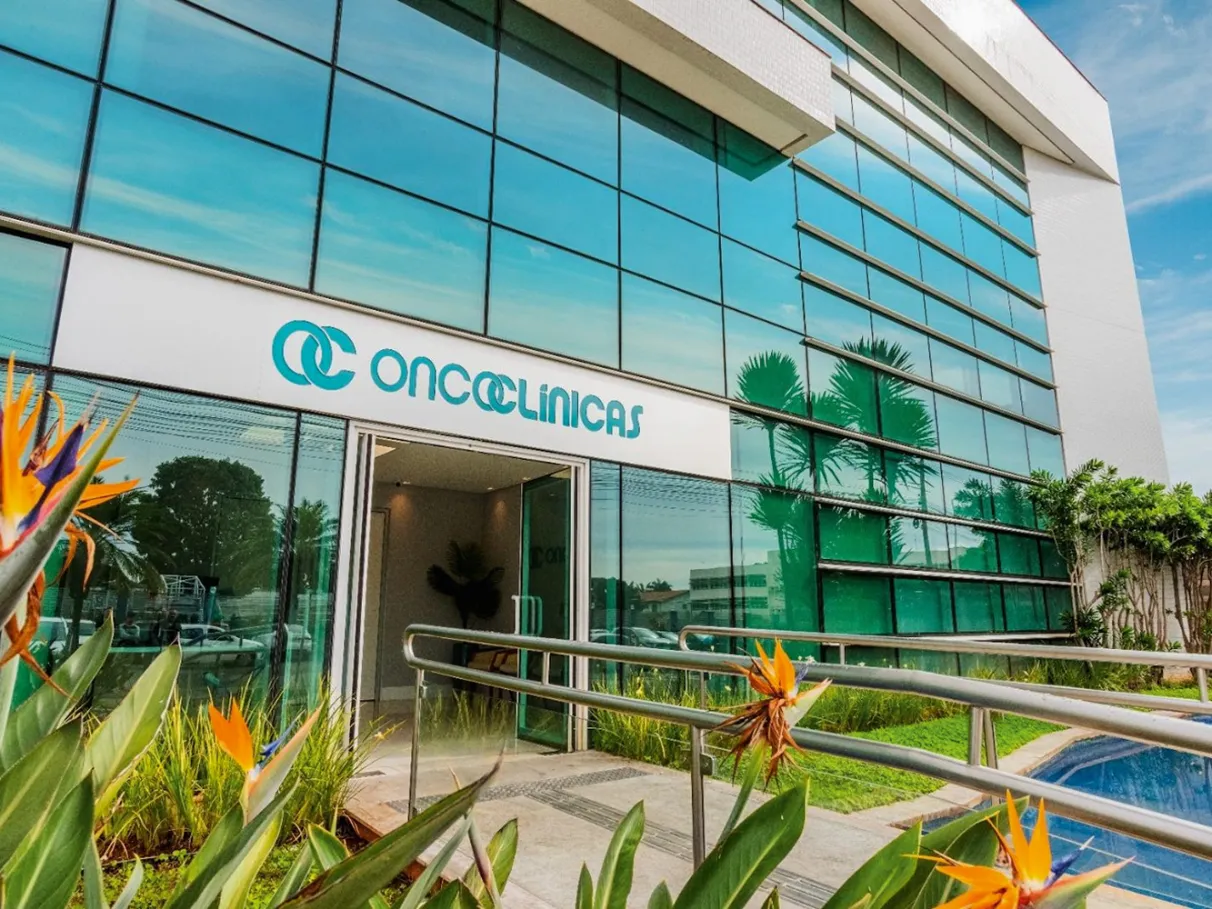
How the Brazil cancer network ran out of money
The company listed on the São Paulo exchange in 2021 and spent the following years buying clinics and hospitals, some of them well outside oncology. The debt grew faster than the cash the assets threw off.
Then two blows landed that had nothing to do with treating cancer. Oncoclínicas held four hundred and thirty million reais in certificates of deposit at Banco Master, a mid-sized lender that has since been wound up.
Master was not merely the bank. Through investment funds it also held roughly a fifth of Oncoclínicas itself, so the failure took out a shareholder and a deposit at the same stroke.
The second blow came from a health insurer, Unimed-Ferj, which stopped paying what it owed. Between them the two events drained the working capital that a chemotherapy business needs to buy drugs.
Yet our reporting has shown that the roots of the crisis reach deeper than these two shocks. Oncoclínicas had already been burning through cash for two years, its debt burden swelling to roughly R$3 billion after a post-IPO acquisition spree that stretched far beyond oncology. The Banco Master and Unimed-Ferj events accelerated a collapse that was already in motion, exposing a balance sheet that had left almost no margin for error.
The sums involved are almost comically matched. The money tied up at Master comes to roughly ninety-eight percent of the loss the company then reported for the first quarter.
Patients felt it before investors did
From March the clinics began running short of medicines. The company said so itself in its accounts, attributing the supply failure directly to the cash squeeze.
By April it had gone to the São Paulo courts for an injunction freezing creditor claims for sixty days. It borrowed a hundred and fifty million reais from Lumina Capital simply to restart drug purchases.
A rescue by the insurer Porto Seguro and the diagnostics group Fleury was negotiated in March and expired a month later without agreement. Chairman Marcelo Gasparino then resigned in April, and under Brazilian board-election rules his departure dissolved the entire board with him.
Quarterly figures confirmed the trajectory. The loss more than tripled to four hundred and thirty-nine million reais, revenue fell more than a fifth, and adjusted operating earnings swung from positive to negative.
What creditors are actually being offered
Talks with banks, bondholders and holders of securitised receivables are reported to be heading toward a write-off of forty to fifty percent. Applied to the three point three billion reais inside the filing, that would be a cut of between one and a third and one and two thirds billion.
Holders of property-backed receivables, issued through the securitiser True and now sitting with Opea, hold close to half the liabilities. They will decide this.
One creditor is being spared. The drug distributor Oncoprod, owed about R$1.05bn, is included among the creditor claims referenced in the restructuring coverage, because a chemotherapy chain that cannot buy chemotherapy has no business.
Instead of a haircut it is expected to accept longer payment terms. Suppliers of essential goods routinely get treated better than banks in these processes, for reasons that are practical rather than moral.
The ninety-day clock on the Brazil cancer network
The mechanism being used is worth understanding, because it is not bankruptcy. An out-of-court restructuring lets a company negotiate directly with classes of creditors and then ask a judge to make the deal binding on the holdouts.
Under the 2020 reform of Brazil’s insolvency law, a company may file with the consent of creditors holding just one third of the affected claims. It then has ninety days, which cannot be extended, to reach a majority.
Miss that deadline and the statute allows the whole thing to be converted into a full judicial reorganisation. The filing is therefore a countdown rather than a resolution.
Oncoclínicas is expected to follow the path taken by the fuel group Raízen and the retailer GPA, submitting a preliminary plan with no payment terms attached. That buys protection from enforcement while the real numbers are still being argued over.
What is happening to the Brazil cancer network?
Oncoclínicas is preparing to file for an out-of-court restructuring covering about three point three billion reais of debt, roughly six hundred and forty million dollars. Financial creditors are being asked to accept a write-off of forty to fifty percent of what they are owed.
Why did the company run out of cash?
An aggressive acquisition spree after its 2021 listing left it overextended, and two shocks then drained its liquidity. It lost access to four hundred and thirty million reais deposited at Banco Master, which failed while also owning a fifth of the company, and a health insurer defaulted on payments owed.
Will patients lose access to treatment?
The restructuring is designed to avoid that, since the drug distributor is deliberately excluded from the write-off and offered longer payment terms instead. Clinics did run short of medicines from March onward, which is precisely what the filing is meant to stop from recurring.
More: Brazil news in English, every day from The Rio Times.
Frequently Asked Questions
How much cash did Oncoclínicas have compared to its short-term obligations?
As of March 31, Oncoclínicas held R$124m ($24m) in cash against R$3.5bn ($680m) in short-term financial obligations, representing coverage of just 3.5 percent. In other words, for every hundred reais falling due within the year, the company held only three and a half reais.
What are financial creditors being asked to accept in the restructuring?
Financial creditors are being pushed toward a write-off of 40 to 50 percent on R$3.3bn ($640m) of debt. Oncoclínicas is preparing to file for an out-of-court restructuring within days and will ask a court to approve the arrangement.
What is the legal deadline Oncoclínicas faces to complete its restructuring?
Brazilian law gives the company ninety non-extendable days to convert one third of creditor consent into a majority. Notably, a R$1.05bn ($204m) debt owed to its drug distributor sits entirely outside the restructuring filing.
This article was produced by The Rio Times’ automated newsroom system. How we use AI · Report an error · Editorial responsibility: Matthias Camenzind, Editor-in-Chief
LatAm Markets: Live Signals → — real-time movers, turnover leaders and FX across Latin America.