How Cargill operates a US$20 billion business in Brazil
The immense view through the glass windows of the eighth floor of a commercial building on Avenida Doutor Chucri Zaidan, in the south zone of São Paulo, overlooks the Tietê River and its intense movement of cars and trucks, no matter the hour or day of the week.
Slightly formal, the room comprises a work table, a meeting table, and a small dark wood sideboard, where a liter of soy oil, a glass of tomato extract, a chocolate bar, and some trophies are kept.
A shiny row of miniatures stands out from the set.

They are six Stock Car cars, a very popular racing category in several countries, filled with logos, including those of Cargill.
This American multinational food company is present in 70 countries and has been operating in Brazil since 1965.
“They are very nice, right? And we are sponsors of these races,” says Paulo Sousa, who turns 55 in January, president of Cargill in Brazil and leader of the agricultural commodities division in South America, as he picks up one of the carts.
Cargill’s race is no mere decorative comparative figure in today’s food and bioenergy production landscape.
It exists and can be measured by the number of ships operating worldwide, taking in and taking out grains and other commodities.
Any time, any day, you ask how many ships are plying the seas for the company, the answer will always be the same: between 650 and 700 vessels.
In this race, “our main commitment is to food safety,” guarantees Sousa.
“Because of our size and global presence, we have weight and importance in providing access to food in a constant and low-cost manner. This is the social function that drives us more than anything else.”
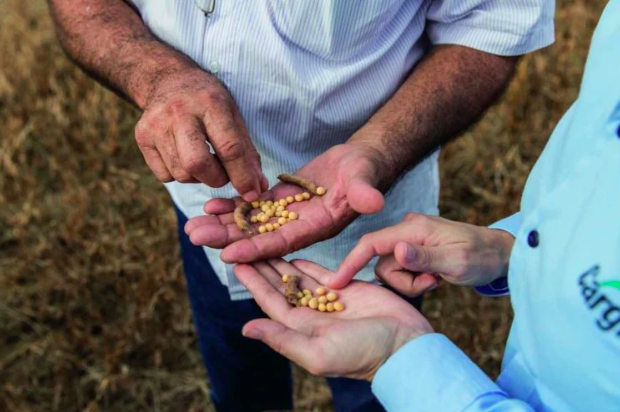
In 2021, Cargill’s revenue in Brazil reached an all-time record of R$101 billion, up 50% from the previous year.
The company owns one of the largest global soybean origination and trading complexes and other grains such as wheat, corn, barley, and sorghum from its trading.
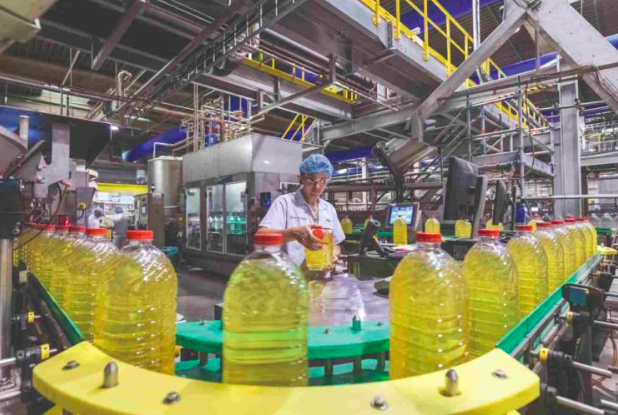
It has 23 factories processing consumer products such as refined and compound oils, tomato extract and pulp, sauces, olive oils, and mayonnaise.
It is in the cocoa and chocolate market, acidulants and citrates, lecithins, starches and sweeteners, animal nutrition, and ingredients for the pharmaceutical industry.
In the ethanol and sugar sectors, it operates in partnerships, and for grain exports, it owns eight terminals in the ports of Santos (SP), Miritituba (PA), Paranaguá (PR), Santarém (PA), and Porto Velho (RO).
To run its business, it has almost 11,000 employees in Brazil.
33 YEARS AT HOME
Sousa knows the structure and operation of the company very well.
Born in Goiás and son of a Banco do Brasil agricultural portfolio operator, he chose to study Zootechnics at Fazu (Faculdades Associadas de Uberaba, MG), planning to work on his grandfather’s rural property after graduating at age 19, which lasted just over two months.
He has been with Cargill for 33 years, longer than the company’s new global president and CEO, American agricultural economist Brian Sikes, who takes over on January 1 at 31, replacing Dave MacLennan, who has been there since 2013.
Sousa was hired as a trainee at Cargill and started hanging on to a phone when the cell phone was still a dream, “I entered the commercial area and spent my day buying soybean meal for feed.”
From then on, he never stopped.
Although he has passed through important positions, including a position at Cargill International in Switzerland, he considers the most critical step of his life in the company the exchange of Europe for the Brazilian Midwest, from where he commanded a team of 700 people and the entire grain business of Mato Grosso, Mato Grosso do Sul and Rondônia.
“Returning to Brazil was the most important thing that happened in my life because I came back to manage people, instead of data, as I did until then,” he compares.
“That detail makes all the difference.”
At the end of 2022, Cargill forecasted to close the year with a volume of 6.5 million tonnes of soybean crushed in its industries in Brazil.
Including also the suppliers to the trading company, about 15,000 farmers deliver grain to Cargill.
As a comparison of the size of the operations, in Argentina, the second largest business in South America, there are about 5,200 farmers.
Soybean, although not the only grain, is the main product traded by the company.
NATIVE PEOPLES AND DEFORESTATION
The number of producers in its portfolio keeps the management of the ESG tripod (environmental, social, and governance) in a permanent state of attention.
There is no shortage of reasons for this due to the scale of the operation and the challenge of monitoring diversities in the production chain at various levels.
“If we go back in time, social issues were a great concern in agribusiness, with work situations that today are no longer acceptable, such as cane cutters, for example, or other socially inadequate jobs. In organized agribusiness, this is already behind us, at least two decades ago, because there was a transformation in labor for more entrepreneurial agriculture, especially in the mid-west,” he says.
He also recalls the Brazilian State’s efforts in that direction in past years, and now on the way to yet another challenge, which is to position itself concerning native peoples, indigenous communities, and quilombolas that intersect with soybean production, such as the indigenous peoples of Mato Grosso and Pará.
“For the peoples who do not want to produce on their lands, everything is fine, but there are communities that do, and society needs to position itself if agriculture on indigenous lands is acceptable,” says Sousa.
HE highlights that Cargill does not buy areas where Indians already produce grains, such as in the Campo Novo do Parecis (MT) region.
“If one day society defines as acceptable that these indigenous peoples produce and, especially, our customers also think so, we can buy, but today, no way.”
Among the directives still in progress, the big challenge, with a capital D for Cargill, is the environment under the watch of Brazilian agriculture.
“There are the ghosts of deforestation, or conversion of active biomes, which is an even broader issue,” says Sousa.
“And it’s not just for the Brazilian Amazon. There is also the Cerrado, the Pantanal, and the Chaco in Argentina and Paraguay, which need to be considered using more sustainable agricultural practices in the decarbonization environment. They are welcomed by global customers and contribute to reducing greenhouse gas emissions.”
In July 2022, Cargill announced partnerships focused on the restoration and environmental regularization of 100,000 hectares of APPs (Permanent Preservation Areas) and Legal Reserves in the country over the next five years.
Renata Nogueira, Cargill’s agricultural supply chains sustainability leader in South America, said at the program’s launch that farmers play a central role in the sustainable agriculture journey.
“When we partner with farmers, we can help make adopting sustainable practices not only the right thing to do but also financially viable,” Renata says.
Behind the projects is the LIF (Land Innovation Fund), created by Cargill in 2019 with a US$30 million grant.
The fund supported 28 projects in two previous phases, covering 1.6 million hectares and receiving US$5.6 million in funding.
The pilot phase of the program, announced in July, started with 6,000 hectares of restoration, spread over seven projects.
The model was designed over a year by specialists, among them professors and researchers from universities and institutions such as Agroicone, Associaçãode Agricultores e Irrigantes da Bahia, Bioflora, Conservation International, Instituto Perene, Solidaridad, Way Carbon, World Resources Institute and SLC Agrícola, one of the largest producers of agricultural commodities in the country, with about 600,000 hectares of soybean, corn, and cotton, and that is also part of Forbes Agro100 list.
Cargill’s environmental projects align with what was discussed at the most recent COP in Egypt: who will pay the bill for decarbonizing the planet?
Sousa is convinced that the investments will revert to the rural producer with advantages brought by agriculture capable of adding more carbon to the soil, such as regenerative agriculture and livestock farming.
Cargill owns Nutron, one of the largest animal nutrition companies in Brazil.
It is among the animal protein processing industry leaders in the US, along with National Beef, Tyson Foods, and JBS, another on the Agro100 list.
Because of this prominence, Sousa believes that the governance established in recent decades must account for this ongoing food and energy revolution.
“It’s clear that we have a highly entrepreneurial producer who has invested in improving his ability to manage the business,” he says.
“There is, also, a new generation that is well prepared, studied people who seek knowledge, and this is reflected in the best governance practices in Brazilian agribusiness.”
Not by chance, this great turning point is taking environmental issues from compliance – seen as “you can’t do this, you can’t do that” – to a stage of interaction with the habits of society.
“We are evolving to a scenario in which the field is going to have advantages by increasingly adding sustainable practices,” says Sousa.
“The role of companies, including Cargill, is to bring the field together with consumer markets, which we already do by definition, but which becomes even more relevant when we tell this public the good stories. And this is not lacking in Brazilian agribusiness”.
With information from Forbes
More: Brazil news in English, every day from The Rio Times.
Live Market IntelligenceBrazil — Live Market Board
Rio Times · Live Market Intelligence
Brazil — Live Market Board
-0.93%
185,629.04
-0.93%
65,025.71
-0.06%
11,370.36
-0.39%
3,110,163
+1.11%
2,584.02
+0.57%
60,246.14
+0.76%
| Instrument | Last | Change | YoY | Prev. | High | Low | Volume |
|---|---|---|---|---|---|---|---|
| IBOV | 185,629.04 | -0.93% | +21.85% | 187,366.84 | 168,310 | 167,142 | — |
| USD/BRL | 5.16 | +0.01% | -5.13% | 5.16 | 5.18 | 5.14 | — |
| SELIC | 14.00% | — | — | — | — | — | |
| PETR4 | 41.64 | -0.05% | +35.19% | 41.66 | 41.97 | 41.15 | 41,499,400 |
| VALE3 | 72.97 | +0.83% | +30.75% | 72.37 | 73.54 | 72.66 | 17,658,000 |
| ITUB4 | 38.60 | -1.03% | +4.57% | 39.00 | 39.34 | 38.39 | 29,487,800 |
| BBDC4 | 16.85 | +0.36% | +3.50% | 16.79 | 16.90 | 16.67 | 19,416,900 |
| BBAS3 | 19.37 | +0.47% | +0.73% | 19.28 | 19.44 | 19.16 | 11,069,200 |
| B3SA3 | 14.26 | -0.21% | +12.73% | 14.29 | 14.47 | 14.11 | 33,037,800 |
| ABEV3 | 14.89 | -0.80% | +21.91% | 15.01 | 15.07 | 14.81 | 16,453,100 |
| WEGE3 | 47.59 | +0.49% | +29.99% | 47.36 | 48.08 | 47.36 | 3,364,600 |
| PRIO3 | 59.14 | -0.19% | +50.67% | 59.25 | 59.81 | 58.74 | 3,325,600 |
| SUZB3 | 41.33 | +2.35% | -23.55% | 40.38 | 41.48 | 40.35 | 3,914,900 |
| RENT3 | 34.68 | -0.09% | +0.84% | 34.71 | 34.96 | 34.35 | 7,979,100 |
| AZZA3 | 15.89 | -2.63% | -53.76% | 16.32 | 16.42 | 15.82 | 1,330,300 |
| CSNA3 | 4.30 | +0.47% | -42.65% | 4.28 | 4.41 | 4.26 | 10,076,100 |
| GGBR4 | 24.69 | +2.19% | +51.38% | 24.16 | 24.85 | 24.18 | 7,047,600 |
| ENEV3 | 24.21 | -1.38% | +70.49% | 24.55 | 24.64 | 23.99 | 9,297,000 |
Read More from The Rio Times