Brazil: who are the “Christian” feminists who launched a letter for the legalization of abortion
The movement ‘Evangelical Women for Gender Equality (EIG)’ and the NGO ‘Catholics for the Right to Decide’ launched a public letter last month in defense of the legalization of abortion.
In the manifestation, the groups affirm that they will continue to denounce the “religious fundamentalisms” and that the abortion decision should not be subject to “religious arbitration”.
The text has been the target of several criticisms inside and outside the churches, mainly for two reasons.
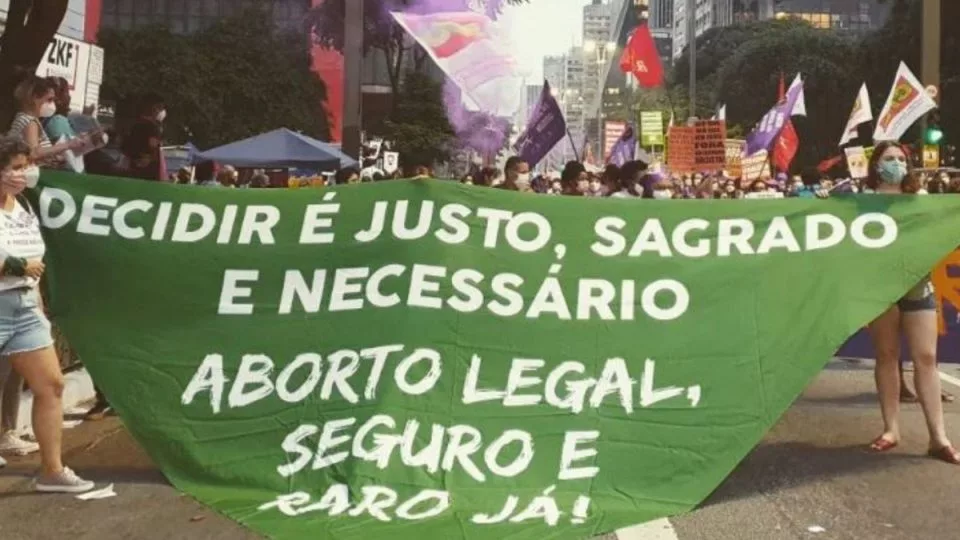
First, contrary to what feminists say, condemning the practice of abortion, the murder of a human being in the mother’s womb, is not a religious issue but a matter of fundamental human rights (in this case, the right to life), regardless of whether a person believes in God or not.
Then, it draws attention to the fact that the signatories consider themselves “Christians,” despite Christianity’s millennial disapproval of violence against the unborn.
Other inaccuracies in the text were raised, such as the statement that a “woman would die every two days victim of unsafe abortion in Brazil,” which is not valid, not even counting data before 2017, or that there would be women imprisoned for aborting in the country, which is also questionable, according to data from the Ministry of Justice.
THE AGENDAS OF THESE FEMINISTS
The Evangelicals for Gender Equality call themselves “Christian” women who “fight for gender equality, social justice, and act to change the situation of evangelicals in their churches and society.”
The group uses the problem of violence against women in society to defend agendas such as abortion (as a solution to aggression against women) and other left-wing militancy.
The most recent publication on their website is a public note against the Statute of the Unborn Child, a proposal in Congress that intends to guarantee the protection of human life from conception on.
For them, the Statute would be “an enormous violence” for supposedly hurting women’s reproductive rights.
The “progressive” agendas are defended with biblical phrases or themes and neutral language: “And we evangelical women suffer in our bodies, together with all other women, the pain, the fear of being a woman in Brazil”, they write.
“Like biblical women, we continue to be silenced, made invisible, disrespected, persecuted, raped, and killed for being women.”
“That is why we, EIG Women, choose, recognize, and name the Spirit of God by the feminine name RUAH, as it appears in the Hebrew originals from the Old Testament, to keep away from us the patriarchy that wants to dominate our bodies and spirituality.”
“Ruah, for us, is the feminine dimension of God.”
The NGO Catholics for the Right to Decide also uses religion to promote the legalization of abortion and gender issues.
Despite adopting the term “Catholic,” the association goes against Catholicism.
The Catholic Church defends life from conception and states that abortion is a grave offense against God.
The “Catholic” group says the organization “draws on feminist practice and theory to promote change in our society, especially in cultural and religious patterns.”
The organization also employs Bible verses and religious discourse to further other leftist agendas.
The organization’s name has already been involved in a lawsuit when the Don Bosco Association, made up of Catholics, requested that the organization no longer use “Catholic”.
In 2020, the 2nd Chamber of Private Law of the Court of Justice of São Paulo decided that the movement could no longer use the name because, according to the rapporteur, Judge José Carlos Ferreira Alves, it is not “remotely rational and logical, moreover, the use of the expression ‘Catholic’ by an entity that combats Catholicism concretely with ideas and guidelines antagonistic to it.
But in September 2022, the Superior Court of Justice (STJ), analyzing a special appeal filed by the feminist association, declared that the Don Bosco Center (CDB) did not have the legitimacy to claim on behalf of the Church.
With this, the NGO continues to use the name “Catholic”.
Some activists and “feminist theologians” are at the head of these movements and contribute to the intensification of these groups, which diverge from the traditional teachings of the Christian churches.
With information from Gazeta do Povo
Read More from The Rio Times