Brazil Lays Fiber Internet Under the Amazon River, and Neighbours Want In
Technology
Key Facts
—The project. Brazil is laying fibre-optic cable along the beds of Amazon rivers.
—The scale. The plan covers 13,200 kilometres of cable to reach 70 locations and 7.5 million people.
—The progress. Five of nine routes are done, about 45 percent of the network.
—The cost. The total investment is about 1.5 billion reais, some 294 million dollars, paid by telecom operators.
—The interest. Colombia and Peru want to link their border networks to it.
Brazil’s Amazon river fiber project is turning the region’s waterways into the backbone of a digital network, and its neighbours want to plug in.
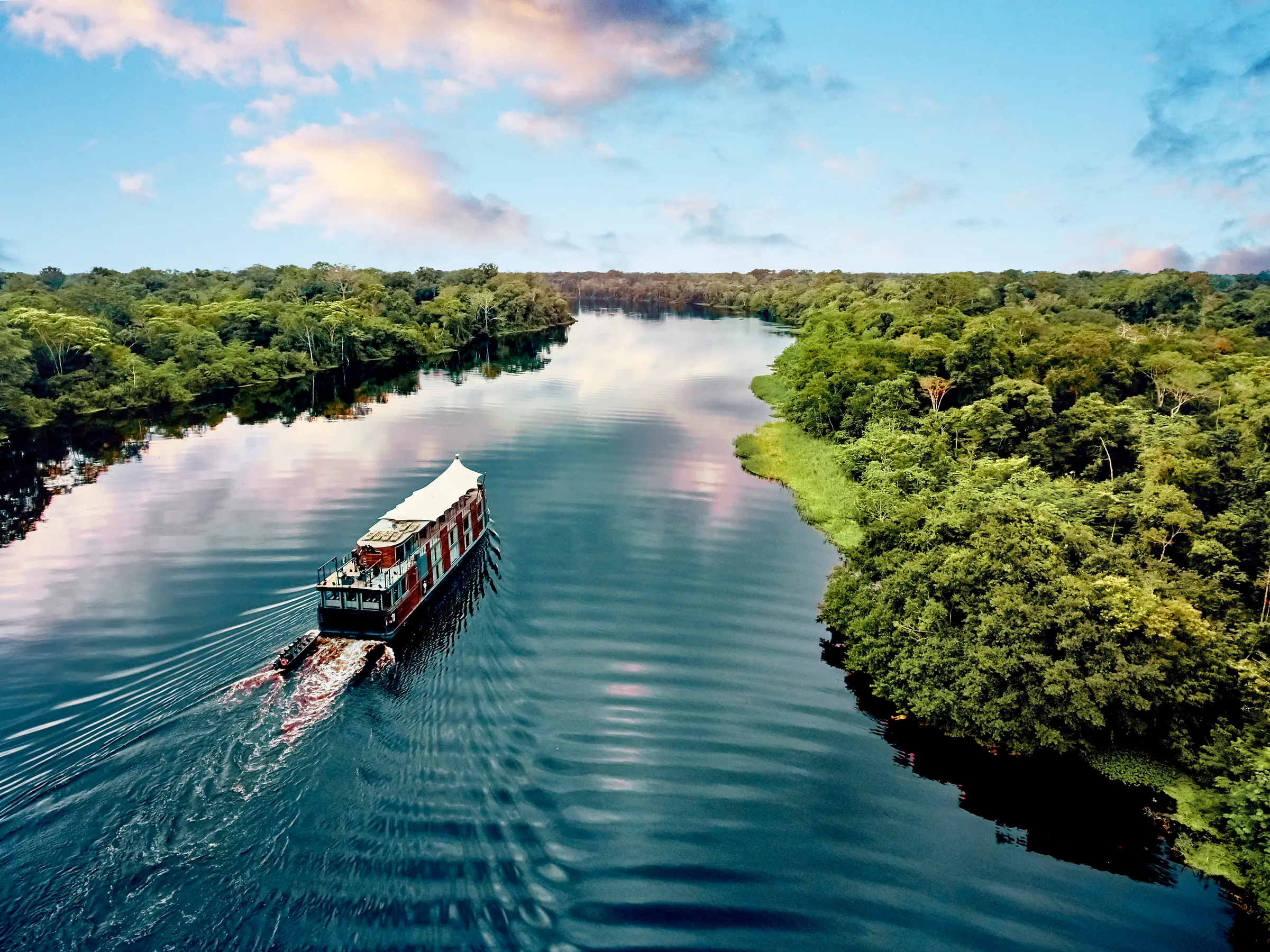
The programme is called Norte Conectado. It lays fibre-optic cable along the beds of Amazon rivers, rather than clearing forest to string it over land.
Officials call it the largest scheme of its kind in the world. Laying cable in rivers is rare and usually limited to short stretches; here it runs for thousands of kilometres.
How the Amazon river fiber network works
The design follows the water. Nine routes, known as infovias, thread through rivers across six northern states, from Acre and Amapá to Roraima.
The scale is vast. In all, the plan covers about 13,200 kilometres of cable to reach 70 remote locations and roughly seven and a half million people.
Progress is now well advanced. Five of the nine routes are complete, together about 5,800 kilometres, or roughly 45 percent of the whole network.
The engineering is brutal. Crews work from barges with divers, battling currents, shifting sandbanks and depths that swing by up to eighteen metres between flood and drought.
Why the Amazon river fiber project matters
The goal is to end an internet blackout. Many of these towns have relied on patchy radio or satellite links, so terrestrial fibre is a step change in speed and cost.
The money came from spectrum. The roughly one and a half billion reais, about 294 million dollars, was paid by operators as a condition of the 2021 5G auction.
Now the plan is going regional. Colombia and Peru have approached Brazil to link their border fibre networks into the Amazonian grid.
The prize is a new data route. Officials want an outlet to the Pacific, giving the region alternative paths that do not all funnel through Brazil’s northeast coast.
For a foreign investor, the read is strategic. A shared Amazon backbone would knit three countries’ networks together and reduce a dangerous single point of failure.
That single point is real. Today the bulk of Brazil’s international internet traffic enters through one stretch of coast in the northeast, a concentration officials call a risk.
The capacity on offer is large. Each cable carries dozens of fibre pairs, giving the network room to grow as demand and new services arrive.
The big telecoms are now involved. The country’s main operators have been cleared to take part, adding investment and reach on top of the state-led rollout.
The uses go well beyond browsing. Officials frame the network as plumbing for public services, mobile coverage, telemedicine, remote schooling and border monitoring.
There is a security angle too. Better connectivity strengthens the state’s ability to police remote borders and to track illegal mining and deforestation.
The delays have been real. Successive droughts lowered river levels and pushed back the original 2025 completion target, exposing the difficulty of the terrain.
For now, the ambition is clear. Brazil is building a river-borne backbone that could anchor digital life across the western Amazon for decades to come.
More: Brazil news in English, every day from The Rio Times.
Frequently Asked Questions
What is the Amazon river fiber project?
It is Brazil’s Norte Conectado programme, which lays fibre-optic cable along the beds of Amazon rivers to bring high-speed internet to remote areas. The plan spans about 13,200 kilometres to reach 70 locations and seven and a half million people, and is roughly 45 percent complete.
Why lay cable in rivers?
In the Amazon, forest and distance make it hard to string cable over land, so rivers offer a faster, cheaper route. It also avoids clearing forest corridors, which officials present as an environmental benefit.
Why do Colombia and Peru want to join?
Linking their border networks would add redundancy and open a new data route toward the Pacific. Today much of the region’s international traffic funnels through a single coastal point in Brazil, which the neighbours want to avoid depending on.
This article was produced by The Rio Times’ automated newsroom system. How we use AI · Report an error · Editorial responsibility: Matthias Camenzind, Editor-in-Chief
LatAm Markets: Live Signals → — real-time movers, turnover leaders and FX across Latin America.