Botswana Debt Climbs as President Boko Takes His Case to the UN
BOTSWANA · PUBLIC FINANCE
Key Facts
- —The speech Boko said trust erodes when countries spend more on debt than on schools and clinics.
- —Botswana debt Public debt reached 33 percent of national income in December 2025, and keeps climbing.
- —The ceiling Government projects 44.66 percent of national income by March 2027, above the 40 percent legal limit.
- —The spending Education takes about 7.1 percent of national income, one of the region’s highest shares.
- —The catch Botswana’s own numbers do not yet show debt costs squeezing schools or clinics.
- —The cushion The government’s savings account has fallen to P2.91 billion (US$209 million) from a 2014 peak.
President Duma Boko told the United Nations that debt costs must not swallow schools and clinics. His country’s own books tell a more careful story.
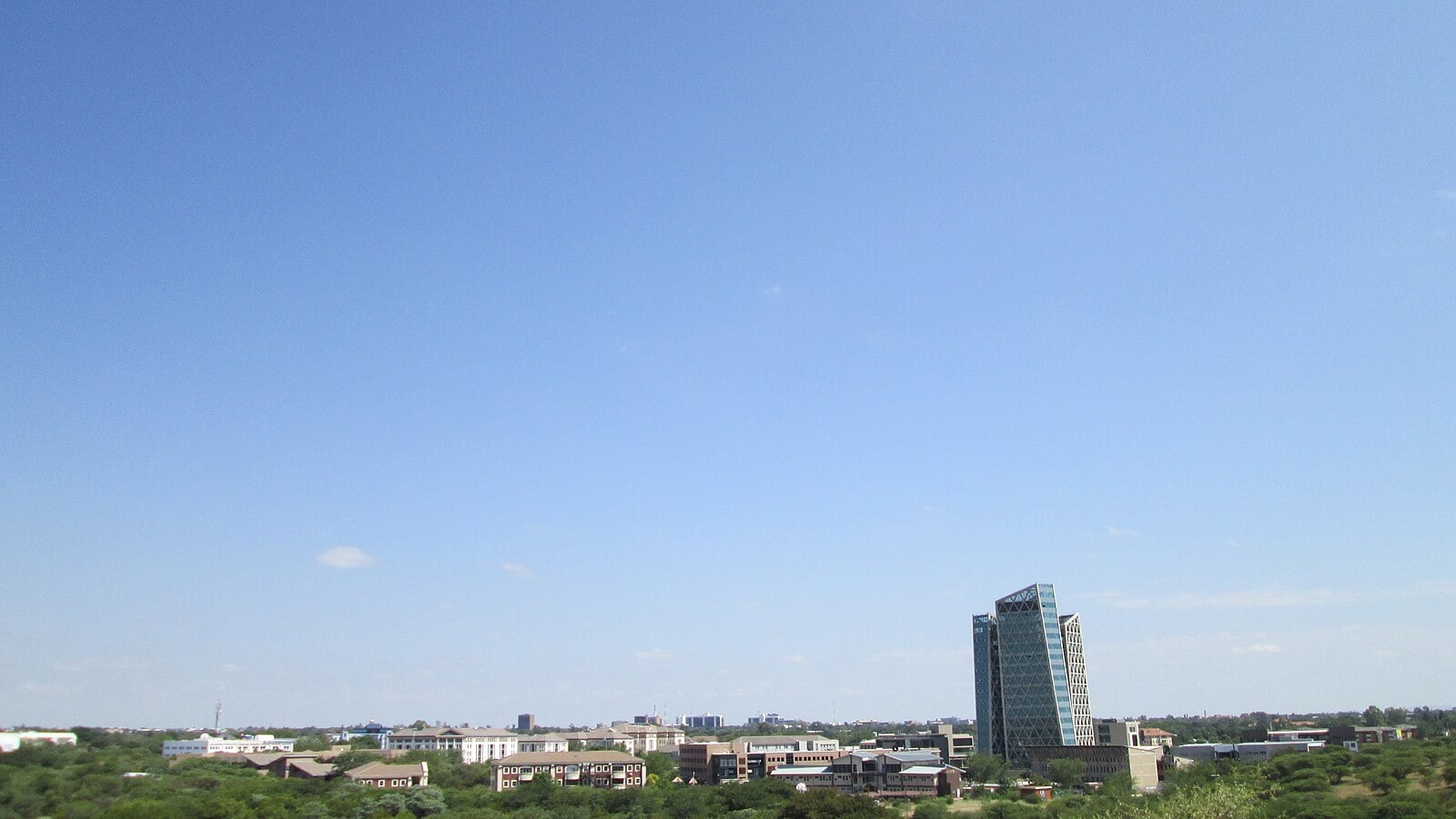
Botswana debt is rising fast after a long diamond slump. President Duma Boko took that argument to the United Nations in New York on Wednesday, 23 September 2026.
What President Boko Actually Said
Duma Gideon Boko is President of Botswana. He addressed the 81st session of the United Nations General Assembly on Wednesday, 23 September 2026.
The theme of this session is restoring trust and managing transformation. Boko built his whole speech around that phrase.
His argument was general, not national. Developing countries, he said, often face borrowing costs several times higher than wealthier nations.
“Debt sustainability is a question of development and fairness,” he told the Assembly. He said trust erodes when nations spend more on debt service than on education, jobs and healthcare.
He asked for fairer access to concessional finance, meaning cheap loans on easy terms. He also asked for private money to be channelled into developing economies.
He then asked members to protect UNAIDS, the United Nations programme on HIV and AIDS. He credited global partnership for his country’s progress against mother-to-child transmission of HIV.
The World Health Organization placed Botswana on its gold tier for that work in May 2025. That is progress towards elimination, not the end of it.
The Botswana Debt Numbers
Botswana debt has risen quickly from a very low base. Total public debt, including state guarantees, reached P90.03 billion (US$6.48 billion) in December 2025.
That equals 33.02 percent of gross domestic product, or GDP, the country’s total yearly output. The finance ministry expected 38.77 percent by March 2026.
It projects 44.66 percent by March 2027. The legal ceiling is 40 percent, so the government says the limit will have to be raised.
Pula figures here use the market rate on 24 September 2026, about 13.90 pula to the dollar.
Why the Diamond Slump Changed the Picture
Botswana has about 2.6 million people, on Statistics Botswana’s own projection. The 2022 census counted 4.1 people per square kilometre.
Botswana was long an unusual case, with low debt, big savings and little need to borrow. The diamond downturn has changed that.
The economy shrank by 2.8 percent in 2024 and by an estimated 0.4 percent in 2025. The government expects a rebound to 3.1 percent in 2026.
Mineral revenue is now only the fourth largest source of income, at P12.21 billion (US$878 million). Customs union receipts are more than twice that, at P26.79 billion (US$1.93 billion).
The cushion has thinned. Foreign reserves fell to P47.4 billion (US$3.41 billion) by December 2025, about five months of import cover.
The government’s own savings account held P2.91 billion (US$209 million) in November 2025. Its 2014 peak was P37.2 billion (US$2.68 billion).
The shift runs deeper than one bad year. Government net financial assets were worth about 40 percent of output in 2008, and minus 30 percent by 2024.
Do Debt Costs Really Crowd Out Schools?
On the country’s own figures, not yet. The budget puts all statutory obligations, which include debt service, pensions and other fixed commitments, at P27.26 billion (US$1.96 billion).
Education alone costs more. Basic education gets P11.83 billion (US$851 million) and higher education P7.37 billion (US$530 million) in the coming year.
Health is allocated P7.51 billion (US$540 million), with primary care now funded through local government. Together, schools and health outweigh the entire statutory bill.
The budget says Botswana spends about 7.1 percent of national output on education. That is among the highest rates for middle-income countries in the region.
Interest payments came to about 3.4 percent of government revenue in 2023, World Bank data shows. Botswana debt is a growing cost, but not yet the squeeze the speech described.
What This Means for Business in Africa
For companies trading with or investing in Botswana, the near-term rules do not change. The pula, work permits and tax rules stay as they are.
The fiscal path still matters for payment risk and project timing. In February the government forecast a deficit of P26.35 billion (US$1.90 billion), or 8.9 percent of output.
On 22 September it cut that forecast to P9.26 billion (US$666 million), or 3.1 percent. Larger central bank transfers and tighter spending did most of the work.
Contractors should watch financing rather than politics. The February budget left P18.6 billion (US$1.34 billion) of its financing unfunded, equal to 6.3 percent of output.
Tax changes are also coming. The government has proposed a higher corporate tax rate and a shorter list of goods that carry no value added tax.
What Is Not Known
The budget does not publish debt service as a separate line. So the exact interest bill for the 2026/2027 year is not public.
It is also unclear whether Boko’s finance demands were taken up in meetings in New York. The country’s stake in the diamond firm De Beers is still being decided.
The next budget, due in February 2027, will show whether the debt ceiling is raised and by how much.
Frequently Asked Questions
Is Botswana in debt trouble?
No. Botswana debt stood at 33.02 percent of national output in December 2025, still low by global standards, but rising fast.
What did President Boko ask for at the UN?
Reform of global financial rules, fairer access to cheap loans, and private money directed into developing economies. He also asked members to protect UNAIDS.
Who is Duma Boko?
A lawyer who leads the Umbrella for Democratic Change. His alliance won 36 of 61 elected seats on 30 October 2024, ending 58 years of Botswana Democratic Party rule.
Sources: Reporting is based on the United Nations record of the general debate, Botswana’s 2026 Budget Speech and Statistics Botswana, with World Bank fiscal data, the Inter-Parliamentary Union, the World Health Organization and reports by CNBC Africa and Polity.
This article was produced by The Rio Times’ automated newsroom system. How we use AI · Report an error
LatAm Markets: Live Signals → — real-time movers, turnover leaders and FX across Latin America.
Read More from The Rio Times