Bolivia’s IMF Loan Clears the Lower House as Gang Warnings Mount
Key Facts
Bolivia’s parliament has taken the first step towards a three-year IMF programme. On the same day, ministers warned that Brazilian criminal groups are recruiting inside the country.
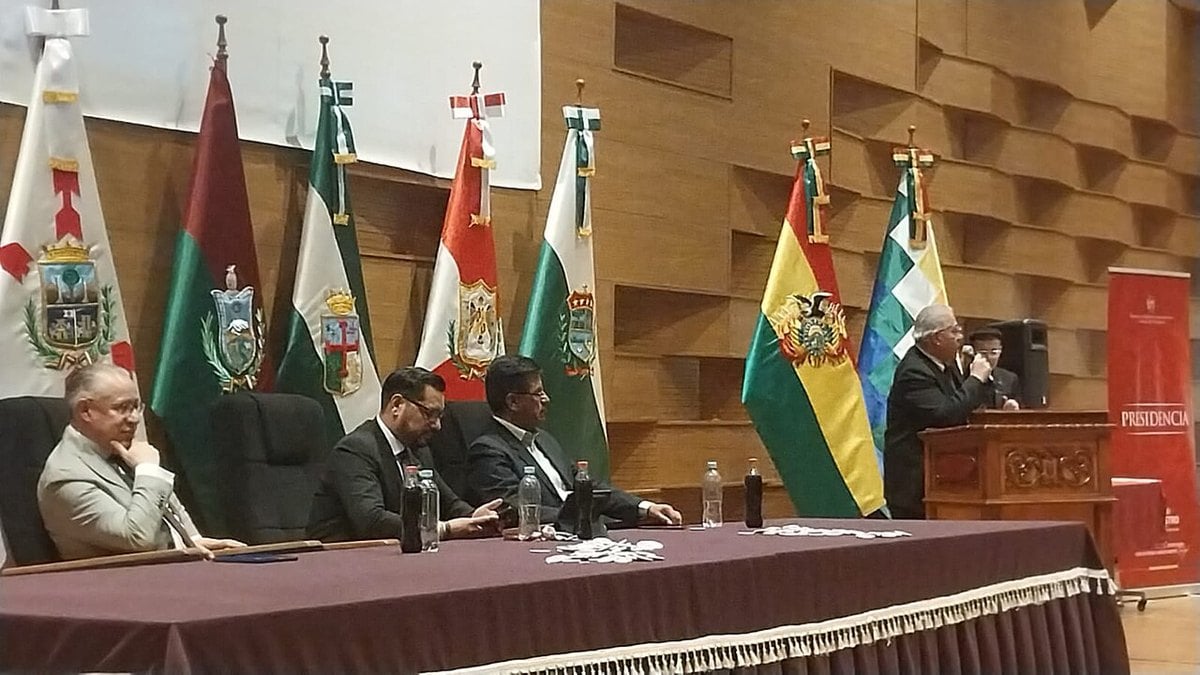
Bolivia’s Chamber of Deputies approved a US$1.9 billion credit from the International Monetary Fund on Thursday 17 September 2026. The bill now goes to the Senate, which must review it before it can become law.
What the Chamber of Deputies Did
The vote came after a session that ran for more than five hours, according to Infobae. Deputies approved the bill in general and in detail, by more than two thirds, with no vote count published.
Chamber president Roberto Castro said the text was sent to the Senate for constitutional review. Economy Minister Christian Morales told the chamber the money would strengthen international reserves.
He described the accord as sovereign and said it carried no imposition on Bolivia. The bill itself runs to a single article, approving the loan and assigning repayment to the treasury.
Opposition deputy Jose Luis Porcel said the proposal ran to seven pages with incomplete annexes. Deputy Sandra Rivero pressed the government on subsidy removal, salary policy and bank interest rates.
The Shape of the IMF Programme
The staff-level agreement was announced on 29 July 2026, under the Extended Fund Facility, and covers 36 months. Infobae reports the credit is set at 1,369 million special drawing rights, equal to about US$1.9 billion.
Each disbursement is repayable over ten years, with amortisation starting after four and a half years. The basic rate is 3.479 per cent, and surcharges, commissions and a service charge apply on top.
Bolivian officials say the programme should unlock a further US$5 billion from other multilateral lenders. That figure has not been confirmed by the lenders themselves.
Infobae also reports a target of cutting the fiscal deficit and lifting reserves by 2031. Those medium-term numbers come from the government, and the IMF board has not yet approved the programme.
What Bolivia Agreed To Do
A summary of the memorandum published by eju.tv lists the main commitments. It says the 2027 budget must contain no fuel subsidies, with prices moving to cost recovery.
It also describes fiscal consolidation of about 8.5 per cent of GDP between 2026 and 2029. The central bank is to provide no new net financing to the non-financial public sector.
The exchange rate is to stay market determined, with intervention only in disorderly conditions. A minimum floor for social spending and a unified social registry are also listed.
How a Loan Law Moves Through Congress
Foreign credits in Bolivia need a law passed by both chambers of the Legislative Assembly. A bill starts in one chamber, is debated in committee, then voted in general and in detail.
The originating chamber sends the approved text to the other for its own review. Only after both chambers agree does the text go to the president for promulgation.
The same route carried a US$500 million loan from the Inter-American Development Bank, sanctioned by the Senate on Thursday. The Senate sanctioned that credit on 17 September, mostly to fund the Renta Dignidad pension.
Paz and the Fuel Subsidy
President Rodrigo Paz confirmed in mid-September that his government is working to end the fuel subsidy. In April, then economy minister Gabriel Espinoza put this year’s fuel import budget near Bs 14,000 million.
That was about US$2.0 billion at the fixed rate then in force, and about US$1.4 billion at today’s. The bank set that rate for Friday 18 September 2026, and it is the reference used here.
Bakers and bus drivers in La Paz have warned that full removal would push prices higher. The government says basic utility tariffs will not rise because of the IMF accord.
Paz has said external money will not be used to pay for the fuel subsidy. His government has also opened fuel imports to private operators, a change still being applied.
The Dollar, Reserves and Prices
Bolivia ended a fixed rate of Bs 6.96 to the dollar in June 2026. The first flexible official rate was Bs 9.73, effective Monday 29 June.
The official rate reached Bs 12.64 on 9 September, then eased back. It was Bs 9.83 on Thursday and Bs 10.01 on Friday, the central bank said.
Central bank figures show gross reserves of US$4,290.3 million at the end of August 2026. Net international reserves stood at US$4,141.0 million, against US$2,009.5 million a year earlier.
Gold accounted for US$3,479.7 million of the gross total, and foreign currency for US$745.1 million. INE put August inflation at 1.10 per cent, with 5.02 per cent over twelve months.
The Security Warning and a New Defence Post
Government Minister Marco Antonio Oviedo spoke to the Legislative Assembly on 17 September 2026. He said the PCC and Comando Vermelho had begun recruiting Bolivian citizens.
Oviedo named Pando, San Matias and San Ignacio de Velasco among the affected areas. He also said a faction of the PCC was charging tolls and taking roads in Santa Rosa, in Pando.
These are statements by a minister, and the reports of them carry no documents or images. Santa Cruz governor Juan Pablo Velasco had raised youth recruitment the day before, Fides reported.
The assembly then extended the state of exception by 90 days, with 100 votes in favour. The United States designated both groups as terrorist organisations in May 2026, a separate matter.
Paz swore in General German Leonardo Rodrigo Mendizabal on the same day. He becomes permanent secretary general of the Supreme Defence Council, known as Cosdep.
The president asked him to draft a security and defence law. Paz said Bolivia faces narcoterrorism and must defeat it to develop.
Chile’s President Is Due in October
Chile’s consul general in Bolivia, Roberto Ruiz, said Jose Antonio Kast will travel to Bolivia in October. He spoke on 17 September, at the reception for Chile’s national day.
The agenda covers electricity links, mining, digital connectivity and police cooperation, Vision 360 reported. The two countries have had no full diplomatic relations since 1978, only consular ties.
Bolivia lost its Pacific coastline in the War of the Pacific and still seeks sovereign access. The International Court of Justice ruled in 2018 that Chile has no duty to negotiate it.
What It Means If You Live or Invest in Bolivia
Fuel prices are the clearest near-term risk to household and transport costs. The memorandum points to cost recovery from January 2027, so plan for higher pump prices.
Importers should watch the official rate daily, because it has moved sharply since June. Contracts written in bolivianos now carry visible currency risk over even short periods.
If the Senate passes the law, disbursements and other multilateral money may follow. If it stalls, the government’s external funding plan for 2027 becomes harder to finance.
Bolivian assets are thinly traded, so most foreign readers will feel this through prices. Salaried residents paid in bolivianos carry the currency move directly in their purchasing power.
What Is Not Yet Known
No date has been set for the Senate vote on the credit. The IMF board still has to approve the arrangement before money moves.
The full text of the memorandum has not been published in English. Officials have not said how fuel prices will be phased up during 2027.
No evidence has been made public for the recruitment claims made on 17 September. Chile and Bolivia have not confirmed a date or a venue for the Kast visit.
Frequently Asked Questions
How big is the IMF credit?
It is set at 1,369 million special drawing rights, about US$1.9 billion. The programme runs for 36 months.
Has the loan been approved?
Only the Chamber of Deputies has voted so far, on 17 September 2026. The Senate has still to act.
What happens to fuel prices?
The memorandum says the 2027 budget carries no fuel subsidy. Prices are meant to reach cost recovery.
Are the gang recruitment claims proven?
They are statements by Bolivia’s government minister on 17 September 2026. No supporting evidence was published with them.
Sources: Los Tiempos, Deputies approve the IMF credit by more than two thirds, Infobae, Chamber of Deputies gives the IMF accord its first passage, eju.tv, the keys to the Bolivia-IMF accord and what the government must do, Banco Central de Bolivia, net international reserves by component, INE Bolivia, consumer price index for August 2026, Noticias Fides, government minister on Brazilian groups recruiting young Bolivians, Vision 360, Kast to visit Bolivia in October, Vision 360, official dollar rate back above Bs 10 on Friday
This article was produced by The Rio Times’ automated newsroom system. How we use AI · Report an error
In depth
Read More from The Rio Times