Bolivia Finds US$75.1 Million in Damage at State Biodiesel Plant

BOLIVIA · ENERGY
Key Facts
- —What happened: Bolivia’s government reported US$75.1 million of damage at the state biodiesel plant in Santa Cruz on 26 August.
- —How big: The loss is 870 million bolivianos, tied to two soybean-oil supply contracts worth US$91.3 million.
- —What went wrong: Supplier Este-Indueste never delivered the crude soy oil, and the required contract guarantees were missing.
- —The catch: The figure is the government’s claim in a criminal complaint, not a finding proven in court.
- —Who is accused: Fourteen people were denounced, including the firm’s partners and YPFB Refinación managers and ex-officials.
- —What comes next: Prosecutors must now investigate, while a wider hydrocarbons corruption sweep has drawn 59 complaints.
Bolivia’s government says it has found US$75.1 million of damage at the state-run biodiesel plant in Santa Cruz and has filed criminal complaints against 14 people. The case centres on two soybean-oil supply contracts that were paid but never honoured.
What the Government Announced
Vice Minister of Transparency Marcelo García presented the case at a press conference in La Paz on 26 August. He put the economic damage at 870 million bolivianos, which officials converted as US$75.1 million.
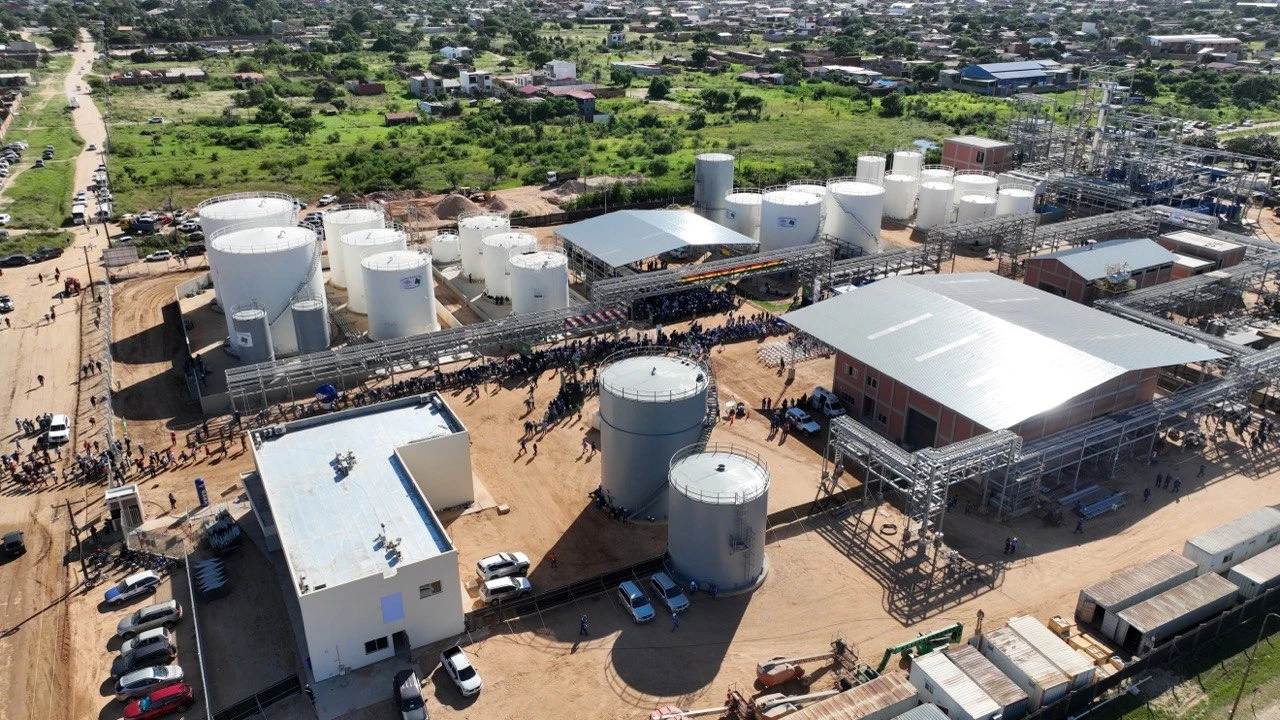
The damage sits inside the Bolivia biodiesel plant in Santa Cruz, the country’s economic engine. The facility is administered by YPFB Refinación, the refining arm of state oil company Yacimientos Petrolíferos Fiscales Bolivianos.
The ministry filed two criminal complaints with the public prosecutor, the Fiscalía. They name 14 people, from the supplier’s legal representative and partners to current and former YPFB Refinación officials.
García described a pattern that ran from start to finish of the contracting process. A series of systematic acts, he said, channelled more than 870 million bolivianos to one company without return.
The announcement fits the new government’s anti-corruption drive in state companies. President Rodrigo Paz’s administration has made the hydrocarbons sector its first target.
The Bolivia biodiesel plant case is the largest single damage figure the government has published so far. Officials presented it as proof that the sweep is finding real money.
How the Contracts Unravelled
The case rests on two contracts worth 1,057 million bolivianos (US$91.3 million) in total. The private firm Este-Indueste, a Bolivian limited liability company, was hired to supply crude soybean oil to the Bolivia biodiesel plant.
The company did not deliver, García said. Under Bolivian rules, a defaulting supplier should have lost its guarantees, and the state should have recovered the money through them.
Those guarantees never existed, the vice minister told reporters. A performance guarantee of 7 percent of contract value and an advance guarantee for the full amount were both missing.
Guarantees are the state’s insurance policy when it pays before delivery. Without them, a defaulted contract leaves the treasury with neither the product nor the money.
Investigators also found that YPFB Refinación’s own guarantee regulations had been modified. The changes softened conditions in ways that benefited both parties to the contracts.
That detail is why the complaint reaches inside the state company. Rewriting internal rules to weaken protections requires insiders, not just an aggressive supplier.
New contracts were then signed under the weakened rules, and the state made what García called million-dollar disbursements. Este-Indueste again failed to comply and asked for the contract terms to be changed.
One contract was eventually terminated, with an agreement to return 336.4 million bolivianos (US$29 million). The company offered two farmland plots as security, but both carried legal restrictions that blocked seizure.
What the Bolivia biodiesel plant actually received for the disbursed millions remains unclear. The government’s account describes money leaving, not oil arriving.
A Wider Corruption Sweep in Hydrocarbons
The biodiesel case is not a one-off, according to the vice ministry. Investigators have spent about 20 days working through the hydrocarbons sector in Santa Cruz.
So far the sweep has drawn 59 complaints of alleged corruption, García said. He described them as naming names and specific acts across Santa Cruz, La Paz, Chuquisaca and Beni.
The government plans a dedicated WhatsApp line for corruption reports in the hydrocarbons sector. That suggests officials expect the complaint volume to keep growing.
YPFB enters this process with its reputation already damaged. The company spent part of 2026 compensating thousands of drivers for a batch of destabilised gasoline that harmed engines.
Why the Biodiesel Plant Matters to Bolivia
The plant was built to blend locally produced biodiesel into the national fuel supply. Every litre made at home is a litre of diesel Bolivia does not have to import with scarce dollars.
That matters because Bolivia’s fuel imports have drained its foreign reserves for years. The state oil company is already carrying heavy debts to its trading partners.
Those debts are public and large. YPFB acknowledged this month that it owes about US$1.06 billion to the trading houses that keep fuel flowing.
Against that backdrop, the Bolivia biodiesel plant was supposed to be part of the answer. A working plant converts domestic soybeans into fuel and saves hard currency with every batch.
Soybean oil is the feedstock that makes the model work, and Santa Cruz is soy country. A supply contract that failed there strikes at the cheapest part of the whole chain.
For foreign readers, the case also shows where Bolivia’s new government is aiming. President Rodrigo Paz took office promising to clean up state companies, and YPFB is the biggest target of all.
What to Watch from Here
The first test is the prosecutor’s response. The Fiscalía must decide whether the complaint becomes formal charges against the 14 named individuals.
The second is asset recovery, which looks difficult on the facts presented. Money disbursed without enforceable guarantees is hard to claw back, as the farmland episode shows.
The third is the plant itself. No restart timetable for full operations was announced alongside the criminal complaints.
Whether the Bolivia biodiesel plant can still meet its original purpose is an open question. The answer depends on feedstock supply as much as on courtroom outcomes.
Finally, watch whether the 59 complaints produce more cases like this one. A single prosecution is a press event, but a series of them would be a policy.
Opposition reaction to the Bolivia biodiesel plant case had not emerged by 28 August. Given that the contracts predate the current government, the political fallout may cross party lines.
More: Bolivia news in English, every day from The Rio Times.
Frequently Asked Questions
What damage did Bolivia find at the state biodiesel plant?
The government reported damage of 870 million bolivianos, which officials put at US$75.1 million, at the YPFB Refinación biodiesel plant in Santa Cruz. The loss is tied to two soybean-oil supply contracts worth US$91.3 million that were not honoured.
Who is Este-Indueste S.R.L.?
Este-Indueste S.R.L. is the private company contracted to supply crude soybean oil to the plant. The government says it never delivered and offered farmland with legal restrictions as security for returning part of the money.
Has anyone been convicted in the biodiesel case?
No. The government filed criminal complaints against 14 people on 26 August 2026, but prosecutors have yet to bring formal charges. All those named are presumed innocent unless convicted.
Connected Coverage
We covered the state oil company’s debts on 26 August in Bolivia Swears In New Economy Minister as YPFB Owes US$1.056bn to Traders, and the fuel crisis behind it in Bolivia Ends Diesel Subsidy for Large Consumers as YPFB Admits Crisis.
Sources: Red Uno (Bolivia), 27 August 2026; Bolivia.com; Vice Ministry of Transparency statements, 26 August 2026; The Rio Times archive.
This article was produced by The Rio Times’ automated newsroom system. How we use AI · Report an error · Editorial responsibility: Matthias Camenzind, Editor-in-Chief