Argentinians, Facing Umpteenth Economic Crisis, Look Forward with Little Hope
RIO DE JANEIRO, BRAZIL – “The economic situation is catastrophic, people are very sad,” says Luis, behind the counter of his pet food store in a middle-class neighborhood in Buenos Aires.
Argentina is used to recurring economic crises, but the Covid-19 pandemic has exacerbated the country’s umpteenth recession, this time since mid-2018. Argentina’s Gross Domestic Product (GDP) fell 19.1 percent in the second quarter this year, the largest quarterly collapse since the official records began in 1981.
Between January and March 2002, at the worst moment of the “corralito” crisis (economic measures taken in Argentina in order to stop a bank run) that erupted in late 2001, the economy had shrunk by 16.3 percent.

The current recession has had a severe impact on the lower middle class and, of course, the poor. Alberto Fernández’s government has protected formal employment with laws and subsidies, but the blow for those with no employment contract was severe.
Numerous bricklayers, housemaids, waiters, and trade workers, among other professions with a high proportion of casual labor, lost their earnings, or saw them reduced to below the poverty line. The number of poor grew by more than five percentage points in the first half of the year: from 35.5 to 40.9 percent. In 2017, the last year of Argentine economic growth, poverty stood at 25.7 percent.
The pandemic also killed many businesses. Restaurants, bars, party halls, and gyms closed their doors after months of mandatory shutdowns to prevent the spread of Covid-19. Others turned into greengrocers, hardware, or toy stores.
This is the case of the business managed by Federico Cillarroca. The plastic ball arena and slides that welcomed young children in this kids’ birthday party hall are gone, and he began to put all kinds of toys on sale. “We are doing our best to overcome the shock. We keep paying our staff, which is no small feat. There are many families that depend on it, entertainers, waiters, makeup artists, magicians, the girl who bakes the cakes, the snack suppliers … There are about 20 or 30 families,” he says.
“Being in Argentina means suffering many crises, with declines and rises in consumption, declines and rises in profitability, and we have to deal with all this, we have the soul of entrepreneurs. But this is different now, everything has closed. Revenue is zero and expenses remain the same,” laments Cillarroca.
Carolina Vielman, the manager of a nearby gym, shares this opinion. They reopened their doors this week, after 222 days of mandatory shutdown, and are back to activity with less than a third of the clients they had in March: they dropped from 1,400 to 400.
The grant that the government provided to thousands of companies contributed to pay part of the employees’ salaries, but many businesses accumulate large debts with the Treasury or with companies supplying electricity and water, and they have no idea how they will pay them. “Everything is very quiet, we sell virtually nothing,” laments Miriam, owner of a stationery store who can’t recall a more difficult moment in the five years her store has been open.
Julio Cabrera has chosen the opposite path of many: to grow to survive. “I grew because this item did not drop with the pandemic. Besides, to leave the former facilities and shut the doors would be to permanently close and stop selling,” says this 44-year-old toy salesman, father of three.
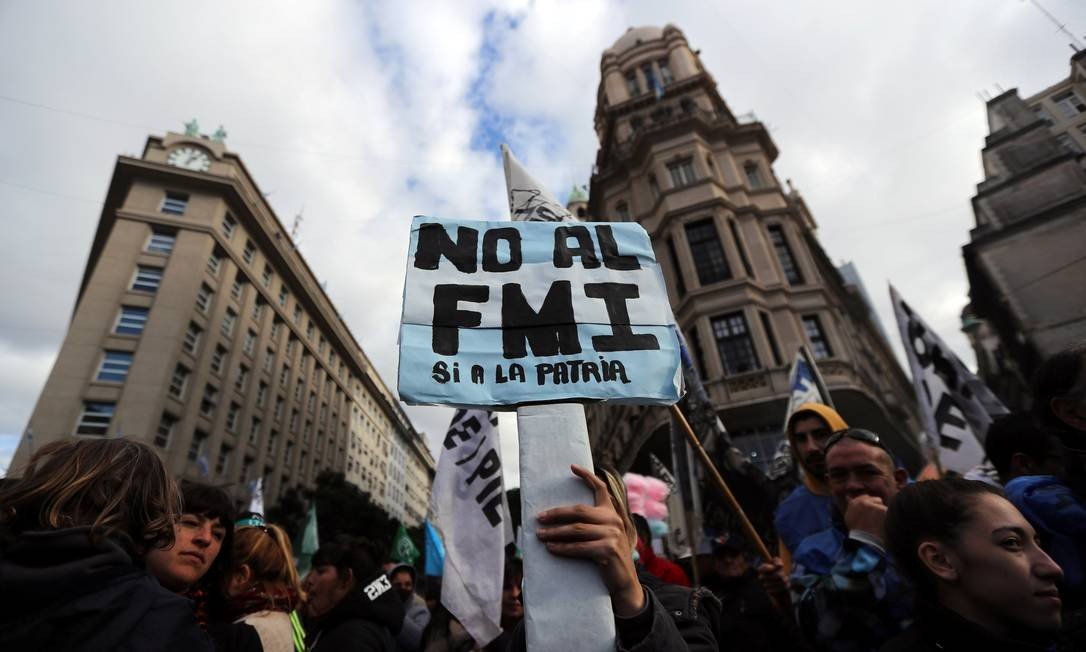
With no access to the credit markets until the government renegotiates its debt with the IMF, Argentina is financing the economic freeze caused by the pandemic by issuing currency. In the first half of the year alone, the Central Bank issued over 1.35 trillion pesos (R$98.3 million) to cover the fiscal deficit and finance subsidies like Emergency Family Income, distributed to nine million people. The issuance level for paper currency is so high that Argentina had to import 400 million banknotes from Brazil.
Waiting for a depreciation
The issue increases inflationary pressure – in September there was a 37 percent increase over the same period last year – even in this crisis context and with severe exchange market controls. The dollar is sold at 83,50 pesos in the official market, in which there are more and more obstacles to access, and at more than double -169 pesos per dollar, but it reached 200 pesos there a week ago – in the parallel market. No one believes that the exchange rate gap will remain as high, so there is apprehension about a depreciation that will further increase prices.
“I can’t buy dollars, so I stock goods,” says Luis, showing a place where he can barely move around because of the many bags of food for dogs and cats. “We saw that last year, the peso depreciated by 20 percent and overnight that loss was passed on to prices,” he argues to justify the advance purchase.
“There are many people wanting to work, but everything is stopped for various reasons. One, because the city halls are not working and do not issue building permits. When they work, there will be many permits and a bottleneck there too. Then, works are being undertaken, but there is neither iron nor cement because the cement companies and the steel mills are not delivering, they are stockpiling, waiting for the depreciation. Even if you want to build, you can’t,” says Roberto Barcala, an independent architect.
In addition to the transformation of many businesses, this architect believes that the pandemic will also lead to significant urban changes, as can be seen in the sudden interest in ‘countries’, which is what private condominiums on the outskirts of cities are called in Argentina. Many offices in the city center have become deserted and teleworking has forced the reorganization of the interior of homes.
The immediate future worries Argentinians. The increase in the price of raw materials helped Argentina emerge from the 2001-2002 crisis, but the international context is now very different, with a worldwide recession. “Next year will be worse, I am very concerned. I think that if I had no family I would live abroad,” says Luis, father of two teenage sons. Others, like Cabrera, the toy salesman, believe in the country’s rebound.
“I always think positive, otherwise I close down and start selling sandwiches. The situation is very difficult, but I’m very optimistic. Next year we’ll be better off. What else can we believe in? We have to go on somehow.”
Source: El País
More: Latin America news in English, every day from The Rio Times.
This article was produced by The Rio Times’ automated newsroom system. How we use AI · Report an error · Editorial responsibility: Matthias Camenzind, Editor-in-Chief
In depth