From World’s 6th-Largest Economy to Its 10th Default: Argentina’s Lessons (Analysis)
RIO DE JANEIRO, BRAZIL – It was on December 20th, 2001 that Argentinian President Fernando de La Rua stepped down, leading the country to an unprecedented cycle of five Presidents in just 12 days.

Poverty and unemployment took over Buenos Aires and the rest of the country, leading people to create neighborhood councils and parallel currencies to survive the Argentine collapse. The middle class, which represented 63 percent of the population at the start of the last decade, has now been reduced to 34 percent. Unemployment reached 16 percent, while the dollar skyrocketed with the end of the peso-dollar convertibility.
For a time traveler out of 1900, it would be hard to believe this was the same country. Argentina in the early 1920s, a rare democracy in Latin America, inspired popular sayings in Europe, such as the one used to refer to someone very rich, which the French said to be “rich comme un argentine “.
Buenos Aires, which in 1913 inaugurated the first subway in Latin America (55 years before São Paulo), was the seat of the eighth wealthiest nation on the planet. The numbers were indeed impressive. An Argentine was on average 29 percent wealthier than a Frenchman, 14 percent than a German, three times richer than a Japanese and five times richer than a Brazilian.
In fact, in 1896, according to the Maddison Project’s base, economist Angus Maddison, Nobel Prize winner who died in 2010, the country boasted the highest per capita GDP on the planet.
The political stability in the period yielded rewards to the country, a destination for foreign investment of all kinds. A railway network even larger today than the Brazilian, was built mainly with English capital. The opulence in consumption was also perceived by the fact that the capital houses the only global branch of the iconic Harrods British department store outside the UK.
With vast lands to the south, Argentina shared with the United States the attention of Europeans who decided to emigrate in search of a better life. The result is that no less than 30 percent of the country’s population was made up of immigrants during this period.
Compared to today, this whole situation has led economists and other scholars in the field to create an unflattering expression, the “Argentine Paradox”. As the Nobel Prize economist Simon Kuznets summarized, there are four types of countries in the world – the developed, the underdeveloped, Japan and Argentina.
In addition to the Japanese issue, a rich but stagnant country for decades, the Argentine situation is intriguing, as it brings us to a more immediate case, an essential part of an economic integration that has never been achieved here.
For decades the country had Brazil as its largest trading partner, a position it only ceased to exercise in 2019, when China took over.
After all, how did Argentina come to be in the current situation?
Looking back, it is not hard to see that much of what caused the country’s downfall was already present underneath its seemingly positive statistics.
As shown in a recent study published by Harvard researchers, titled “The Argentine Paradox”, there are two lines to consider between the “Latin American power” of the early 20th century and the current situation.
In the economic sense, Argentina was an agricultural power, the result of abundant and productive land in the pampas, but based on a fragile farming model.
Unlike the United States, which in 1862 promulgated the so-called “Homestead Act”, distributing land to any settler who decided to inhabit the then-inhospitable Midwest, the Argentinians decided for a centralizing model, selling land to a lucky few.
The result, of course, is that while the American Midwest became populated and developed a range of parallel activities, the Argentine pampas were inhabited by a much poorer population than one might assume when looking at the per capita income data in the country.
The famous “concentration of income,” was driven by the government, and resulted in an elite accustomed to luxury consumption, which produced a climate of cosmopolitan metropolis in Buenos Aires, but did little to improve the country’s economic base.
When compared to the companies listed on the Chicago stock exchange, the largest agricultural exchange in the world, Buenos Aires companies had up to 75 percent less capital per worker, showing that their production was merely due to the increase in the amount of land aggregating more workers.
The result is that as technology evolved around the world, and new lands could be farmed (such as the Brazilian Cerrado, which became the stage of an agricultural revolution in the 1970s), Argentina’s comparative advantage declined.
Between 1930 and 2005, for instance, the price of wool, a large-scale export, fell by up to 75 percent. Over the same period the price paid for wheat, a relevant part of the country’s exports still today, dropped 85 percent since 1917.
In addition to a poorly productive base in the countryside, the country was also facing educational challenges. Its percentage of children in school at the turn of the century was 54 percent of the French index and 48 percent of the same index in Germany, countries with lower per capita income.
This deliberate decision – keeping the interior of the country subject to large landowners who did not live there – generated sequential issues. A classic example from the United States can help understand the significance that dynamism in the interior, and thereby the void that the Argentine government created by concentrating land, can cause in the long term.
For instance, consider a 23-year-old man, about 130 years before Amazon existed, who set up a company in the Midwest to sell and distribute consumer goods to the population far from the metropolis that lived off the railway lines that crossed the country – Richard Sears, founder of the company that bears his name.
In addition to this, there are thousands of other instances spawned from these settlement model choices. Another equally famous is Gustavus Swift, inventor of the refrigerated car, and one of those behind making meat consumption popular for the first time in human history (in the 1870s alone the average consumption of meat by Americans rose 300 percent).
Such examples would never be possible in a nation where the government deliberately promotes social exclusion and creates “national champions”.
Six coups d’état, five dictatorships, plus six defaults and many IMF bailouts
If there are three letters capable of summarizing Argentina’s economic history in the 20th century, it would be precisely those that make up the initials of the International Monetary Fund.
Established in 1944, the fund is there to preserve stability in the balance of payments of member countries. When founded in mid-world war II, Argentina was still the 6th largest economy on the planet, and benefited greatly from the demand for food from a Europe at war, or just out of it.
The problems that would lead Argentina to promote no less than six defaults in the payment of its foreign debt, including the arrears in May this year, began in 1930, when the country suffered its first military coup in the 20th century.
Between 1930 and 1983, there were six coups d’état, five of which resulted in dictatorships. Presidents from all sides took turns in power, replacing each other, but retaining one essence: exacerbated nationalism.
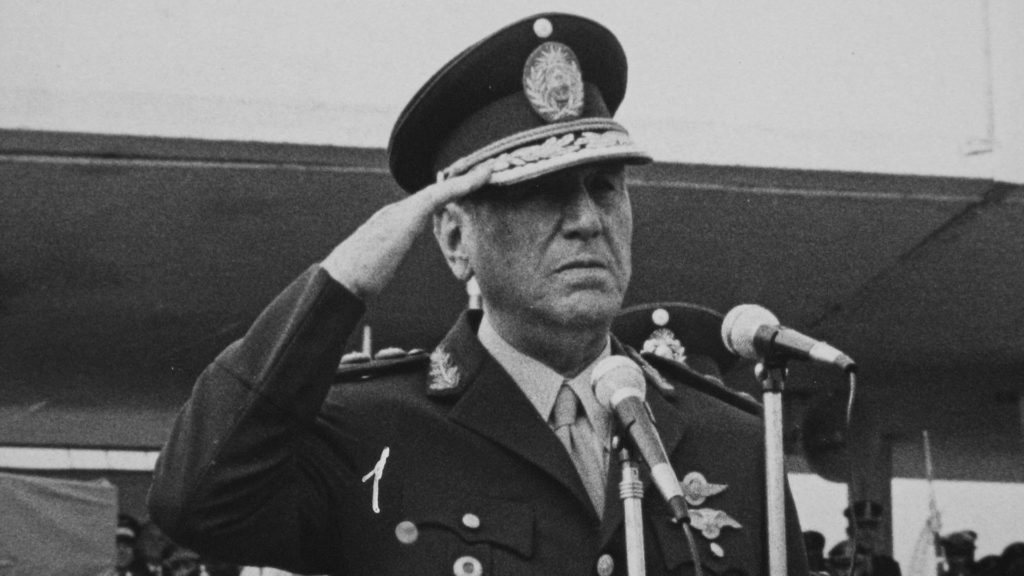
It was in 1946 that President Juan Domingos Perón took over, through a democratic election, adding a new component to nationalism – populism.
Perón, who is still a reference for much of Argentina’s political camp (including the current president, a Peronist), set the tone for what would become the central idea of all the governments that followed, to a greater or lesser degree: to offset the Argentine social problems of the time, through a significant increase in public spending.
Governing with the unions, its government introduces labor rights and a wide range of guarantees to workers. In the second half of the 1940s, Argentina’s economy grew by an average of 8.8 percent per year, while wages rose by 46 percent.
It is therefore no surprise that Perón has become an almost undisputed leader in the country’s history, as everywhere, Argentine politics is guided not by consequences but rather by action.
That the country has entered an inflationary spiral and that pensions, increased by Perón, have reached 29 percent of the total wealth produced by the country, are set aside in the face of its “popular” slant.
The wave of nationalizations and subsidies to the national industry also started with Perón. With the wealth accumulated by exports to Europe, the country invested and expanded several sectors, while preserving a typical Latin American challenge, low competitiveness.
The notion of replacing imports with local production permeates the whole history of Latin America in the second half of the last century. The practical consequence is generally the same in all countries. We created uncompetitive industries, forcing the local population to pay more for domestic products, and prevented the industry from importing machinery and equipment that would improve their productivity.
Argentina and Brazil today
That Argentina’s history has countless parallels with Brazil’s should be no surprise. The remarkable thing, however, was how Brazil managed, at great pains, to overcome its problems and create a reasonably better institutional basis in recent decades.

One will probably think that this doesn’t make sense, given the virtually widespread corruption that occurs in Brazil, but the fact is that our neighbors are not much different, with former President Cristina Kirchner involved in countless unsolved lawsuits.
But if today we consider the concept of Sarney’s inspectors invading supermarkets to check if prices were being regulated as a bad joke, it was because of decisions made in the opposite direction of Argentina, which still adopted a price freeze in 2020 (even before the crisis caused by Covid-19).
A few weeks ago the neighboring country announced the nationalization of an agricultural company, something unthinkable in Brazil today, and with a parallel perhaps only in Venezuela.
The fact is that the harsh penalties limits the government, with the Fiscal Responsibility Law for one, and controlled its inflationary rage, preventing the issue of currency from financing public spending, and therefore limiting it.
Still today Argentina allows its central bank to buy public bonds, which contributes to an inflation rate that exceeds 50 percent per year. In other words, there are no limits to public spending.
To make matters worse, for years Argentina has omitted or defrauded data on its own inflation, tossing the government’s credibility down the drain.
As the Real Plan has shown, inflation is among the factors that contribute most to poverty. It perversely strips resources away from the dispossessed and hands them over to those who have access to means of protection.
Lack of confidence in the currency itself also creates problems. Argentinians have learned to live with more than a dozen different dollar rates, including the odd “streaming dollar”, which as the term implies, refers to the dollar used in the purchasing rate of foreign services, such as Netflix.
The fact is that today Argentina still has a very rich cultural heritage – Buenos Aires is without doubt a city that is worth each minute of a visit – but its economic mishaps warrant attention.
There is no doubt that Brazil is enormously affected by the political and economic chaos in the neighboring country, traditionally a relevant trading partner. The purported rivalry is innocuous and unproductive for either side.
To cheer for the neighboring country, except in soccer World Cups of course, is something that should be embraced in Brazil; most of all, however, Brazil needs to champion a value that sets it apart from the path taken there: Transparency.
Source: InfoMoney
More: Latin America news in English, every day from The Rio Times.
This article was produced by The Rio Times’ automated newsroom system. How we use AI · Report an error · Editorial responsibility: Matthias Camenzind, Editor-in-Chief
In depth