Venezuela’s Reconstruction Hits a Wall: A Decade of Brain Drain
Venezuela · Economy
Key Facts
—Mass skilled exodus Over 7.9 million Venezuelans have left, and studies show up to 90% of early emigrants held a bachelor’s degree or higher, stripping the country of future managers and innovators.
—Oil industry hollowed out A large share of emigrants are oil and gas engineers, a critical loss for a sector that traditionally generated 95% of export revenues and 25% of GDP.
—Healthcare in crisis Between 2012 and 2017, around 22,000 doctors fled the country, deepening a public health emergency just as demand for services is set to rise.
—Research capacity gutted Venezuela lost roughly 15% of its scientists, who were responsible for about one-third of the nation’s research publications, crippling long-term innovation.
—Return is uncertain Analysts estimate only about 20% of skilled exiles would consider returning soon, meaning reconstruction will depend heavily on scarce local and expatriate talent.
Venezuela’s reconstruction is exposing a decade of brain drain as the country scrambles to find engineers, doctors, and skilled technicians needed to repair its crumbling infrastructure and restart its economy.
The Vanishing Workforce
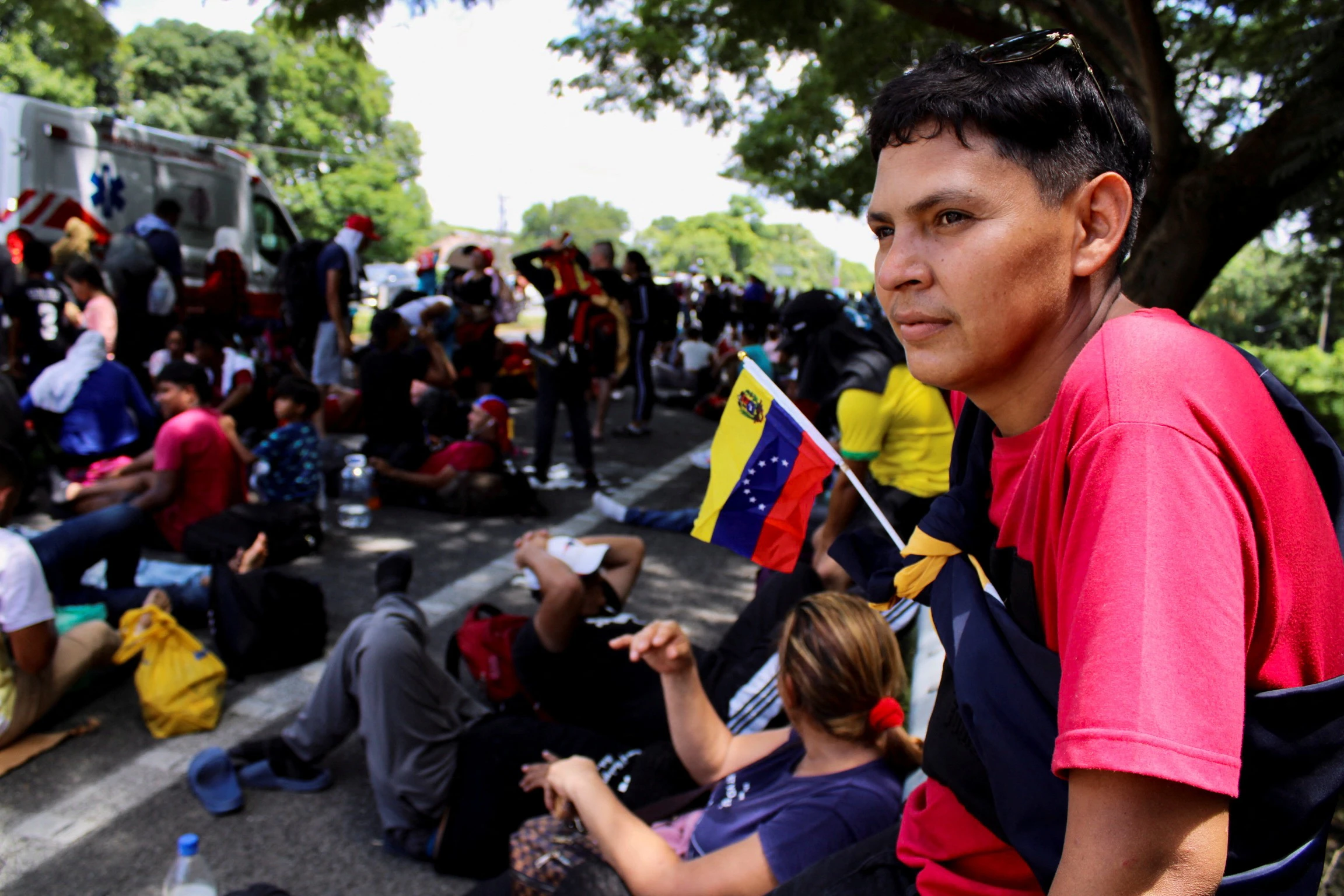
Venezuela’s post-crisis reconstruction is immediately colliding with an uncomfortable reality: the people needed to rebuild the country have left. According to the Bertelsmann Transformation Index (BTI) 2026 report, by the end of 2024 more than 7.9 million Venezuelans had fled, depriving the nation of many of its most skilled workers.
The exodus began as a migration of the highly educated and later evolved into a mass movement of people across all social strata.
This is not just a loss of labor; it is a loss of institutional memory. The Inter-American Development Bank (IDB) warns that “human capital, a fundamental input for reconstruction, is decimated,” emphasizing that the country’s growth potential is being severed.
An analysis by Caracas Chronicles notes that engineers, petroleum specialists, doctors, and project managers working abroad are precisely the human capital needed to physically rebuild Venezuela.
Which Sectors Are Most Affected?
The oil and gas industry, which historically accounted for about 95% of export revenues and roughly 25% of GDP, has been hollowed out. A case study from the University of Miami documents the emigration of skilled workers from the state oil company PDVSA, while sociologist Tomás Páez notes that a significant share of current emigrants are oil and gas engineers.
The health sector is equally crippled: an estimated 22,000 doctors emigrated between 2012 and 2017 alone, along with more than 167,000 teachers.
Science and technology have also been gutted. A 2016 letter in Nature reported that 1,820 Venezuelan scientists—almost 15% of the country’s total—had left, taking with them the capacity for roughly one-third of the nation’s research output.
An IDB technical note found that 2,482 researchers migrated between 1960 and 2020, representing one-quarter of all academic publications. The national talent index ranked Venezuela 105th out of 119 countries for attracting specialized talent and dead last for retaining it.
A Lost Generation, Not Easily Repatriated
The depth of the labor shortage means reconstruction plans face a severe supply-demand mismatch. Exile think tank Plan País estimates that only about 20% of skilled Venezuelans abroad would consider returning in the near term, and only under conditions of clear national unity and security.
The Hub, a Canadian policy outlet, described the exodus as “an entire generation disappeared,” with chemical engineers and energy specialists now embedded in economies like Alberta’s energy sector.
The age profile of migrants compounds the problem. BTI 2026 data shows that 57% of Venezuelan migrants were aged 15–24 and 29% were aged 30–49, pointing to a massive loss of prime working-age adults.
Many professionals have already rebuilt their lives abroad, even if they face “occupational downgrading” into jobs below their qualifications, making a decision to return economically risky without concrete evidence of sustained change.
A State Stripped of Capacity
Beyond physical reconstruction of roads and oil fields, the public sector itself is inoperative. A Harvard Kennedy School study on Venezuela’s debt restructuring describes an “under-skilled and under-staffed state” incapable of delivering reliable electricity. The IDB reports that institutional capacity in the public sector has deteriorated substantially, exacerbated by the flight of specialized human capital.
Firms operating inside Venezuela face acute shortages of skilled workers, alongside unreliable utilities and no credit, according to the IMF. Analysts from Mister Maquinaria, a construction outlook platform, project that an influx of expatriate, non-Venezuelan talent will be required for at least several years because local technical capacity and equipment are simply insufficient for the scale of the work needed.
Why This Matters for Expats and Investors
For investors and expats considering opportunities in a post-crisis Venezuela, the human capital drought is the single most critical bottleneck. An April 2025 industry commentary notes that demand will be extraordinarily high for welders, pipefitters, electricians, rig technicians, and project supervisors, while the regional supply of such talent remains limited.
The economic opportunity is real, but so is the challenge of operating in a market devoid of middle-management and technical staff.
The brain drain also signals that any recovery will be slow and expensive. While the Center for International Private Enterprise (CIPE) identifies oil and agribusiness as key recovery sectors, the IDB emphasizes that executing any program depends on having technical teams that can work efficiently and transparently—teams that, for now, largely reside in Bogotá, Miami, Madrid, and Calgary, not Caracas. The country’s first major reconstruction project will likely be the labor market itself.
Frequently Asked Questions
How many skilled workers have left Venezuela?
By the end of 2024, over 7.9 million Venezuelans had left the country. During the early phase of emigration, 41% of those settling in the United States held university degrees and 14% held doctoral degrees, while 90% of all post-1999 emigrants held at least a bachelor’s degree.
Why is it so hard to get Venezuelan professionals to return?
Safety, political stability, and economic viability remain major barriers. Exile think tank Plan País estimates only about 20% of skilled exiles would consider returning soon.
Many are at their career peak and will not uproot families without evidence of sustained, long-term institutional change.
Which industries face the biggest worker shortages?
The oil and gas sector is hardest hit, having lost engineers and technicians once concentrated at PDVSA. Healthcare and education are also severely affected, with 22,000 doctors and over 167,000 teachers emigrating in just a five-year period.
Scientific research capacity has seen 15% of its workforce vanish.
Sources: BTI 2026 Venezuela Country Report, IDB – A Look to the Future for Venezuela, Caracas Chronicles – Chavismo, Not Sanctions, Depleted Venezuela’s Reconstruction Capital, IMF Regional Spillovers from the Venezuelan Crisis, Nature – Venezuela: Scientific Brain Drain, BBC News – Venezuela crisis in numbers
Read More from The Rio Times