Argentina’s Economic Crisis Explained: What It Means for Brazil and Investors (2026)
Key Facts
—Peak inflation (Dec 2023):. 211% annual — highest of any major economy that year.
—2026 inflation trajectory:. Decelerated to ~50–75% trailing annual; monthly rate now 3–5%.
—Fiscal adjustment:. Argentina swung from ~5% of GDP deficit to primary surplus within 12 months under Milei.
—GDP 2024:. Contracted ~3–4% in real terms during adjustment shock; recovery expected in 2026.
—Argentina-Brazil trade:. Argentina is Brazil’s second-largest bilateral trading partner (~$20–30B per year).
—BRL contagion risk:. A new Argentine crisis event would push BRL weaker 3–6% via EM risk-off channel.
Argentina is in 2026 somewhere between the wreckage of the past and a genuine, if fragile, stabilization. The Milei government delivered one of the largest fiscal consolidations in modern macroeconomic history — and annual inflation, which hit 211% at its peak, has decelerated substantially. None of this means the argentina economic crisis is resolved. But the direction of travel has changed, and the consequences for Brazilian markets and regional investors are real and trackable.
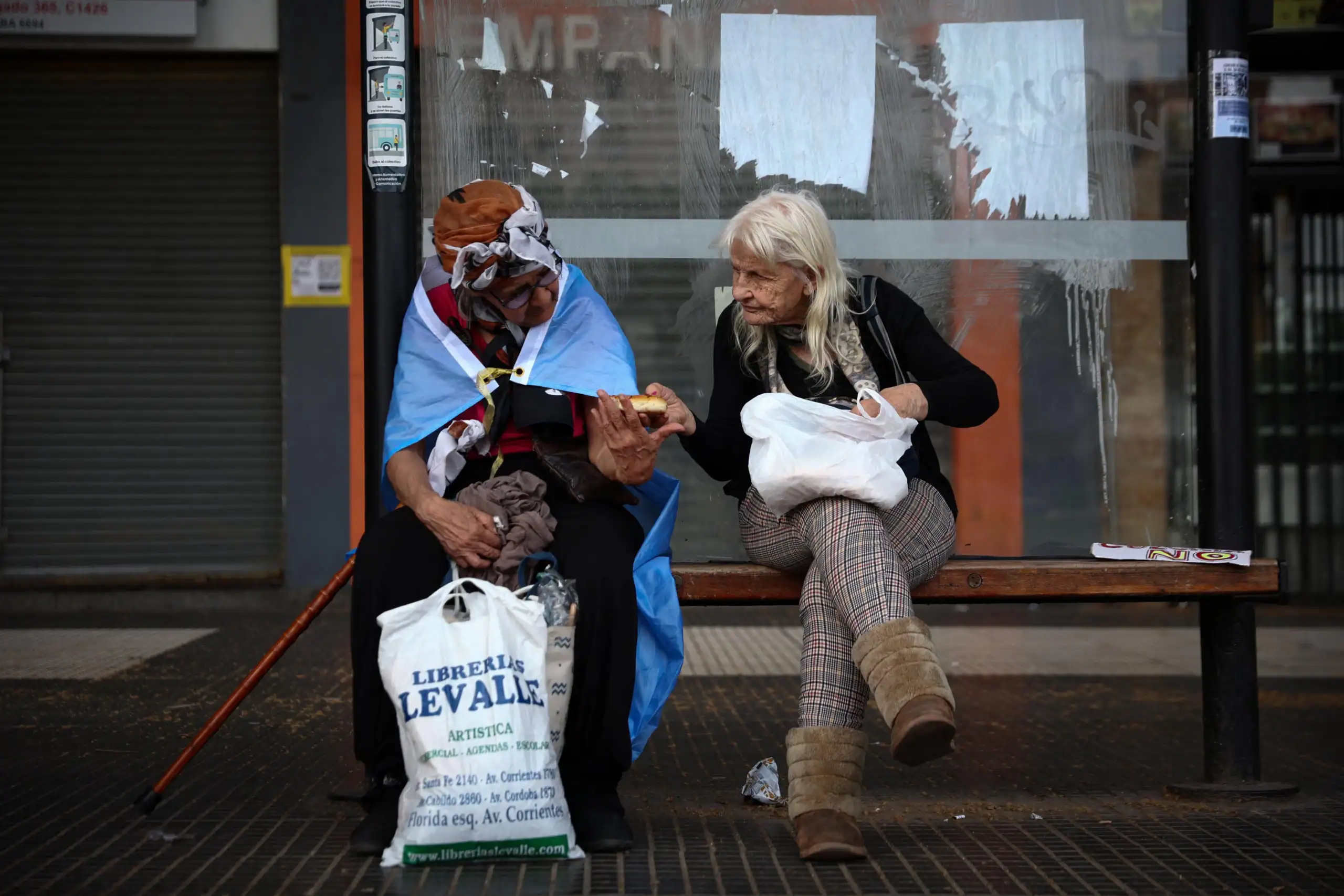
How Argentina Got Here: The Minimum Context
Argentina has defaulted on its sovereign debt nine times since independence. The most consequential modern defaults were in 2001 ($100 billion — the largest sovereign default in history at the time) and in 2020 ($65 billion restructuring with private creditors).
The 2001 collapse of the convertibility peg produced a banking freeze, a 70% devaluation, and five presidents in two weeks. The psychological scar explains both the popular appeal of dollarization and the public’s deep distrust of the peso.
The Kirchner and Fernández Years: Building the Crisis
Under Kirchnerism (2003–2015), Argentina grew on commodity tailwinds while building structural problems: chronic fiscal deficits financed by printing money, capital controls, multiple exchange rates, and a widening gap between official and parallel (blue-dollar) rates.
INDEC’s inflation data was manipulated for years. The Macri government (2015–2019) attempted gradualist reform but needed IMF rescue in 2018 — a $57 billion program, then the largest in Fund history. The Fernández government (2019–2023) reversed most reforms, widened deficits, and monetized spending until annual CPI hit 211% in December 2023 and BCRA reserves were technically negative.
The Milei Reforms: What He Actually Delivered
The single most significant achievement of the Milei government has been achieving a primary fiscal surplus within the first few months of office — something Argentina had not managed consistently in decades.
The adjustment included eliminating or reducing energy and transport subsidies (which had consumed a massive budget share), freezing pension adjustments, cancelling public works, reducing provincial transfers, and cutting federal staffing.
Argentina swung approximately 5 percentage points of GDP from deficit to surplus within twelve months — one of the largest fiscal consolidations in modern history. Full dollarization, the campaign signature, was not implemented: Argentina lacks the reserves to convert the peso base at a viable rate.
Where Argentina Stands in 2026
Inflation: Decelerated from 211% annual peak to an estimated 50–75% trailing annual rate. Monthly inflation has fallen from 20–25% per month (December 2023) to approximately 3–5% per month — still elevated, but a dramatic change in trajectory.
GDP: Contracted ~3–4% in 2024 during adjustment shock; 2026 consensus expects 1–3% real growth recovery driven by Vaca Muerta energy production and rebounding consumption.
Poverty: Rose to 40–55% of the population during the 2024 adjustment shock, now expected to decline as real wages stabilize.
Reserves: BCRA gross reserves recovered toward $30–35 billion from near-zero net position; net reserves still rebuilding under IMF program benchmarks.
Capital controls: Partially relaxed; parallel exchange rate premium has compressed significantly from its 2023 extremes.
How the Argentina Crisis Affects Brazil: Trade
Argentina is Brazil’s second-largest bilateral trading partner, with combined flows of $20–30 billion per year. Argentine recessions directly reduce demand for Brazilian manufactured goods, consumer products, and automotive components — an industry deeply integrated through Mercosur’s bilateral automotive trade regime.
Brazilian exports to Argentina fell sharply during the 2024 adjustment recession. The 2026 Argentine recovery, if sustained, supports a rebound in Brazilian export revenues. On energy: Argentina’s Vaca Muerta shale basin development creates the possibility of significant natural gas exports to Brazil via pipeline — a structural positive if the reform cycle holds.
How the Argentina Crisis Affects Brazil: BRL Contagion
International EM fund managers treat Latin American assets as a correlated bloc under stress. An Argentine crisis event — a default announcement, a failed exchange rate liberalization, a dramatic devaluation — raises EMBI spreads for regional sovereigns, increases BRL volatility, and triggers EM fund redemptions that force managers to sell Brazilian positions to meet outflows.
A disorderly Argentine event would likely push the BRL weaker by 3–6% in days, independent of Brazilian domestic fundamentals. The Milei government’s managed, IMF-supervised adjustment creates much less Brazilian contagion than a sudden crisis event — but the tail risk remains.
A breakdown of the IMF program or a failed exchange rate unification is the primary Argentina-related risk to the BRL in the second half of 2026.
Argentine ADRs: What You’re Actually Buying
Genuine Argentina exposure: Grupo Financiero Galicia (GGAL) and Banco Macro (BMA) are direct plays on Argentine domestic banking normalization — the most straightforward bets on reform success. YPF (YPF) offers high-risk, high-upside exposure to Vaca Muerta through a state-controlled vehicle.
Pampa Energía (PAM), Loma Negra (LOMA), and Telecom Argentina (TEO) provide sectoral exposure to energy, construction, and telecoms respectively.
Misleading “Argentina” tickers: MercadoLibre (MELI) is the dominant e-commerce/fintech platform across Latin America — Brazil is its largest market by revenue; Argentine macroeconomics are a secondary driver. Globant (GLOB) is an Argentine-founded global IT firm whose clients are predominantly US and European corporations.
Treating MELI or GLOB as Argentine bets misunderstands the businesses.
More: Argentina news in English, every day from The Rio Times.
What to Watch in H2 2026
Monthly inflation prints (INDEC): The disinflation trajectory is the reform’s visible success metric. Monthly above 5–7% would break the narrative.
Primary surplus data: Quarterly Ministry of Finance releases on fiscal balance are the most important data series — a slip toward deficit would undermine reform confidence.
IMF program quarterly reviews: Each successful review releases disbursements and publicly confirms benchmark compliance; an unexpected review failure would move Argentine assets sharply and create EM contagion.
Parallel exchange rate stability: The gap between official and parallel peso rates narrowing toward convergence signals progress; a widening gap signals stress.
Vaca Muerta production and export infrastructure: Pipeline and LNG terminal progress is a medium-term structural positive; delays signal political or operational obstacles.
Argentine ADR basket: The Global X MSCI Argentina ETF (ARGT) provides simple basket exposure — note it is weighted toward MELI and GLOB.Individual ADRs for conviction plays: GGAL, BMA (banking), YPF (energy) available on NYSE/Nasdaq via any US brokerage.
Argentine macroeconomic data: Monthly CPI and fiscal data from INDEC (indec.gob.ar); BCRA reserve data from Banco Central de la República Argentina.
IMF program updates: Quarterly review press releases and staff reports at imf.org/Countries/ARG.
Further reading on this site: BRL to USD Exchange Rate Guide 2026 · LATAM Investment Guide 2026
This article is for informational purposes only and does not constitute investment or tax advice. Emerging market investments carry significant risks including currency, political, and liquidity risk. All data cited are approximate estimates as of publication. Consult a licensed financial advisor before making investment decisions. Last updated: August 2026.
Is Argentina’s economy recovering in 2026?
Cautiously, yes. The IMF and most private forecasters project modest positive GDP growth for 2026 after the sharp 2024 contraction. Inflation, fiscal balance, and reserve levels are all moving in the right direction. However, poverty remains near historic highs and real wages have not fully recovered. Whether this recovery is durable — or interrupted by a currency liberalization mistake or political shock — remains genuinely open.
What is Milei’s economic policy?
Three pillars: (1) Fiscal orthodoxy — primary surplus, subsidy removal, state downsizing, ending monetary deficit financing; (2) Disinflation — via fiscal adjustment and a controlled peso crawl, with dollarization as a long-term aspiration not currently operative; (3) Deregulation — reducing state intervention, privatizing SOEs, simplifying business regulations. The philosophical framework is libertarian; practical delivery has been more constrained but still substantial by Argentine historical standards.
Should I invest in Argentina?
High risk, high potential reward. The reform program has improved the medium-term outlook materially from 2023’s baseline, and Argentine assets have re-priced upward from deeply distressed levels. The remaining risks — political sustainability, exchange rate liberalization complexity, Argentina’s track record of reversing reform cycles — are real. Most serious LATAM investors treat Argentina as a satellite position of 2–5% of a regional allocation. Position sizing accordingly.
How does Argentina affect Brazil’s economy?
Through three channels: trade (Argentina is Brazil’s second-largest export market — Argentine recessions cut demand for Brazilian goods); EM contagion (Argentine crises push BRL weaker via regional risk-off even when Brazilian fundamentals are sound); and competitive pressure (sharp Argentine peso devaluations make Argentine commodity exporters more competitive in global markets against Brazilian producers). The severity depends on the nature of the Argentine shock — managed adjustment creates far less Brazilian damage than a disorderly default.
→ BRL to USD: Understanding the Brazilian Real Exchange Rate (2026 Guide)
→ LATAM Investment Guide: A Foreign Investor’s Overview of South America’s Major Markets
→ How to Invest in the Brazilian Stock Market (B3/Bovespa) as a Foreigner
This article was produced by The Rio Times’ automated newsroom system. How we use AI · Report an error · Editorial responsibility: Matthias Camenzind, Editor-in-Chief