Argentina’s Investment Rate Slips to 14% of GDP as RIGI Lags
Argentina · INVESTMENT
Key Facts
- —Ratio Investment in Argentina reached 14.3% of GDP in the first quarter of 2026.
- —Source INDEC published the first-quarter national accounts on 23 June 2026.
- —History The 2004 to 2025 average at current prices is 16.5% of GDP.
- —Regime Twenty-two RIGI projects worth US$47.073 billion had approval by 27 August 2026.
- —Delivery The government expects only US$7.737 billion of that to arrive by 2027.
The first-quarter national accounts show the weakest capital spending since 2020, and the flagship incentive regime is still mostly paperwork.
Fixed capital investment in Argentina fell to 14.3% of gross domestic product in the first quarter of 2026. The figure comes from INDEC, the Instituto Nacional de Estadística y Censos, the country’s official statistics agency.
What the 14 percent figure really measures
The headline refers to gross fixed capital formation, not to total investment including inventories. It covers machinery, transport equipment, construction and other fixed assets.
Argentine analysts often shorten the concept to IBIF, from inversión bruta interna fija. INDEC’s own tables use the near-identical term formación bruta de capital fijo.
The 14.3% reading holds only at current prices, which is one of two bases INDEC publishes. At constant 2004 prices the same quarter shows 17.2% of GDP.
That gap matters, because capital goods prices have moved differently from the wider price index. Anyone citing a single number for investment in Argentina should say which basis they mean.
Who put the number into circulation
The 14 percent claim is traceable to a named economist rather than an anonymous note. Mariana Camino, chief executive and founder of the consultancy ABECEB, made it on 21 July 2026.
Camino said the ratio was 16% of GDP in 2025 and fell to 14% in the first quarter of 2026. She added that a level near 25% is what an economy needs to grow steadily.
Her second point concerned timing rather than level. She warned that the first large sums from the incentive regime would not arrive next year.
How the fall compares with earlier years
INDEC’s quarterly series at current prices puts investment in Argentina at 16.6% of GDP for all of 2025. The 2024 figure was 16.3%, and 2023 reached 18.4%.
Going further back, the ratio stood at 17.6% in 2022 and 15.2% in 2017. The average across 2004 to 2025 is 16.5% of GDP.
First quarters are normally the weakest of the year, so the seasonal comparison matters. Against the first quarter of 2025, the ratio dropped from 16.2% to 14.3%.
In volume terms the fall was steeper, with fixed capital formation down 11.6% year on year. Machinery and equipment led the decline, dropping 18.1% in the quarter.
In pesos, first-quarter fixed capital formation reached 139.4 trillion at current prices. That is US$92.2 billion at the central bank’s A3500 wholesale rate of 1,512.75 pesos on 27 August 2026.
What the RIGI actually offers
RIGI stands for Régimen de Incentivo para Grandes Inversiones, or Large Investment Incentive Regime. Congress created it in July 2024 inside Law 27,742, the government’s omnibus reform.
The regime targets projects of at least US$200 million, with higher floors in some sectors. Approved sponsors receive 30 years of tax, customs and currency stability.
Benefits include a flat 25% corporate income tax rate, against a general scale topping out at 35%. Export duties fall away from the third year, and dividend withholding drops to 3.5%.
Sponsors may also keep a rising share of export dollars abroad, reaching full freedom in year four. Decree 105/2026 pushed the deadline for joining the regime to 8 July 2027.
How many projects have cleared the committee
Official figures reported on 27 August 2026 count 22 approved projects worth US$47.073 billion. The government links them to 95,950 direct and indirect jobs.
Mining carries 12 of those projects, oil and gas six, and electricity two. Steel and infrastructure account for one each.
A further 25 projects sit under evaluation, carrying US$110.883 billion of proposed spending. Economy Minister Luis Caputo said on 13 August that 43 filings worth US$148.229 billion existed.
The gap between approval and concrete
Approval is a permit, not a payment, and the two diverge sharply. The government expects US$4.252 billion of regime spending in 2026 and US$3.485 billion in 2027.
That US$7.737 billion is roughly one sixth of the approved total. The rest is scheduled for later years, well beyond the current electoral cycle.
Fundación Capital reported in May 2026 that mining projects inside the regime had executed about US$854 million. At that point some 14 projects worth roughly US$19 billion had been approved.
A handful of assets are already running. The El Quemado solar park, built by YPF Luz for US$212 million, has operated since December 2025.
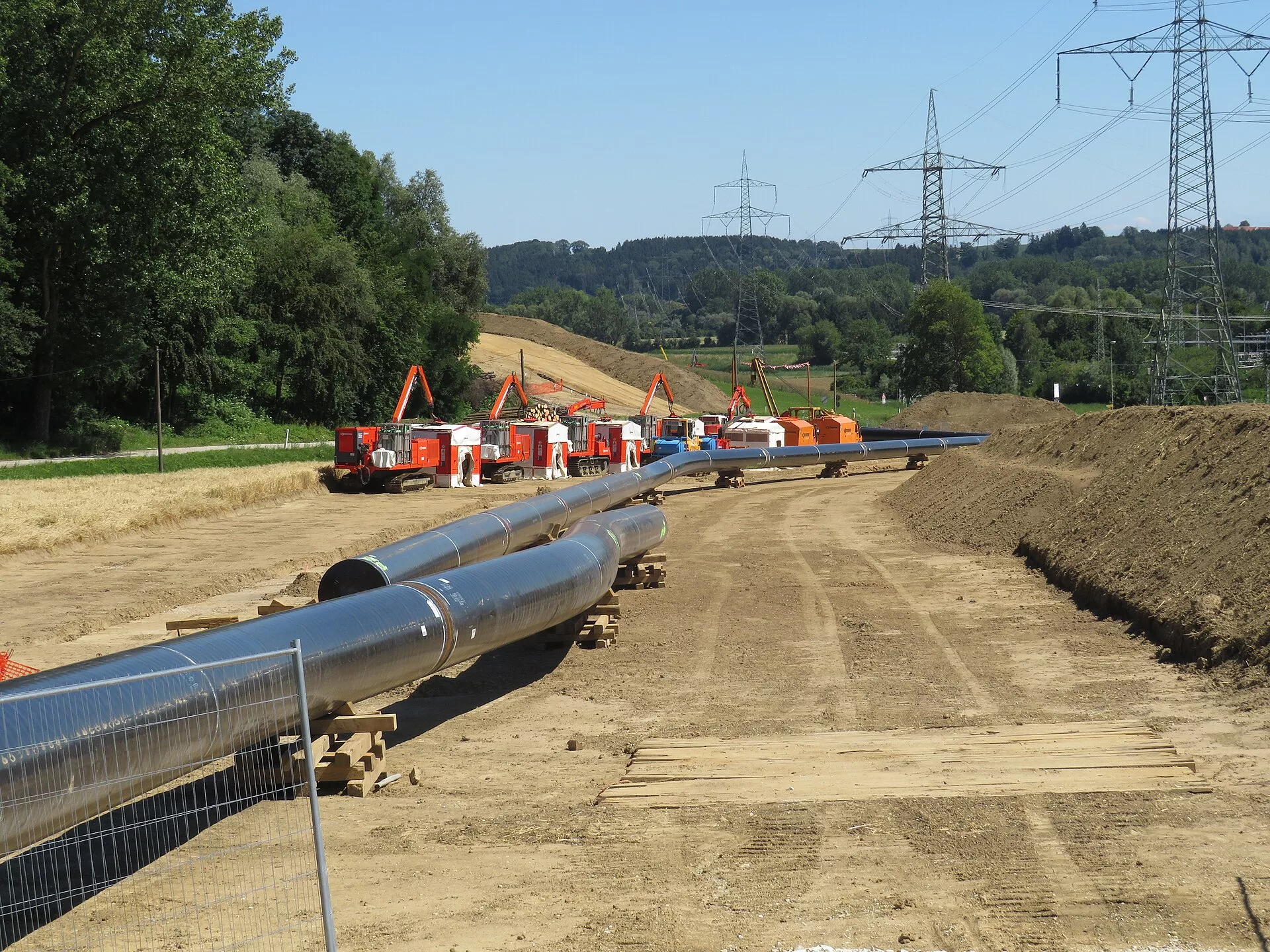
The El Hombre Muerto Oeste lithium plant started up on 1 April 2026. The Vaca Muerta Oil Sur pipeline, a US$3 billion project, was about 70% built in August.
Why capital still hesitates
Legal certainty heads most lists of complaints about investment in Argentina. Provincial and municipal taxes sit outside the national guarantee.
Ingresos Brutos, the provincial turnover tax, supplies about 80% of provincial revenue and equals near 4% of GDP. Tax specialists count more than 170 overlapping levies across the three levels of government.
Alejandra Sarni of the audit firm BDO Argentina told El Cronista in May 2026 that reform keeps stalling. She said the absence of agreement between jurisdictions makes a full overhaul unviable.
Credit costs are the second complaint, after the rate spikes of late 2025 and early 2026. Businessman Cristiano Rattazzi told Perfil in June 2026 that the interest rate had been madness.
Public capital spending has also retreated, removing a traditional partner for private work. Leonardo Piazza of LP Consulting put public works at 0.3% of GDP, down from 1%.
The case that the regime is working
Not everyone reads the numbers as failure. Luis Caputo told the Córdoba stock exchange on 13 August that further filings worth up to US$50 billion were coming.
Neuquén governor Rolando Figueroa defended the regime at the University of Buenos Aires on 24 August. He said there are no investments without legal certainty and fiscal stability.
Figueroa put five projects in his province at US$44.9 billion and forecast a large output rise. He also said he negotiated to bring upstream oil and gas into the regime.
Supporters argue the pipeline is real but slow, because mines and gas plants take years to build. The Rio Times covered one such approval, a US$365 million Compañía Mega expansion in Neuquén.
INDEC has not yet published second-quarter accounts, so 14.3% remains the latest official reading. Until that changes, investment in Argentina sits closer to 14% than to the 25% Camino calls necessary.
Frequently Asked Questions
How far has investment in Argentina fallen?
INDEC put gross fixed capital formation at 14.3% of GDP in the first quarter of 2026. At current prices that compares with 16.6% for the whole of 2025.
What is the RIGI?
It is the Régimen de Incentivo para Grandes Inversiones, or Large Investment Incentive Regime, created by Law 27,742. It grants 30 years of tax, customs and currency stability to projects above US$200 million.
How much RIGI money has actually been spent?
The government expects US$7.737 billion between 2026 and 2027, against US$47.073 billion approved. Fundación Capital counted about US$854 million executed in mining projects by May 2026.
Connected Coverage
Argentina approves US$365 million RIGI project to expand Mega gas complex
Sources
- www.indec.gob.ar
- www.indec.gob.ar
- www.infobae.com
- www.infobae.com
- www.lanacion.com.ar
- www.argentina.gob.ar
- www.argentina.gob.ar
- www.mdzol.com
- www.cronista.com
- www.perfil.com
- www.impulsonegocios.com
- www.neuquenalinstante.com.ar
- www.valorlocal.com.ar
- api.bcra.gob.ar
- www.riotimesonline.com
This article was produced by The Rio Times’ automated newsroom system. How we use AI · Report an error · Editorial responsibility: Matthias Camenzind, Editor-in-Chief
In depth