All that remains is to get to the party: in the world and in Brazil, rum emerges as the new gin
With the London edition of RumFest UK 2022 over, the world’s largest celebration of the distillate, Ian Burrell, CEO, founder of the event (in 2007) and (official title) Global Rum Ambassador, was just contentment.
After all, not only did the grandiose meeting, where the best rums in the world are drunk and sold, again take place in person, but it also gathered impressive media statistics.
Not by chance, in the heart of the land of gin, RumFest UK has influenced the emergence of congeners around the world, in the USA (Miami, New York, Chicago, San Francisco), Europe (Paris, Stockholm, Prague), Asia (Hong Kong) and the Caribbean (Mauritius).

IS RUM THE “NEW GIN”?
Judging by its rich sensory complexity of aromas and flavors, yes it could be.
Burrell and a group of specialists and Brazilian producers back this bet. After the global gin tsunami of the last decade, the time has come and the turn of the distillate obtained from sugar cane molasses whose origins point to the 17th century, and which began to be produced as a medicine (!), before becoming famous as the official booze of pirates and corsairs (and that’s not fake news).
And not just producers. Specialized publications such as the bible “Drinks International”, from England, have been warning for a long time about a trinomial that they believe to be irreversible: worldwide consumption at heights, activated, of course, by cocktails; quality and even sophistication in production, expressed in the current “wave” of premium, extra-premium and aged rums; and, finally, a leap in quality also in the production of white rum, for a long time considered just a “poor cousin”.

The high reaches the USA, European markets (United Kingdom, France, Germany, Italy, Belgium, Spain) and even Australia and Canada.
In Europe, for the first time in recent years, sales of premium rum surpassed those of the “darling” gin, in an estimated growth of 165%.
More: with an eye on the future, recently Brown-Forman, the world’s beverage giant, “owner” of brands such as Jack Daniel’s, acquired Diplomático, a famous brand of Venezuelan rum.
Another giant in the sector, Diageo, owns the legendary Zacapa, from Guatemala, considered one of the best on the planet.
All these indicators express an “image change”: driven by the cocktail industry, rum is finally being taken seriously as a high quality spirit.
ALSO IN BRAZIL
In Brazil, after the national gin boom, and despite the obvious monopoly of industrial brands (Montilla, Havana Club, Barcardí), high quality non-industrial rums have emerged.
Although in modest numbers, it is not uncommon for cachaça producers to diversify their portfolio by investing in the new vein (after all, the production still is the same). In some cases, this diversification works as an opening for cachaça, boosting its sales.
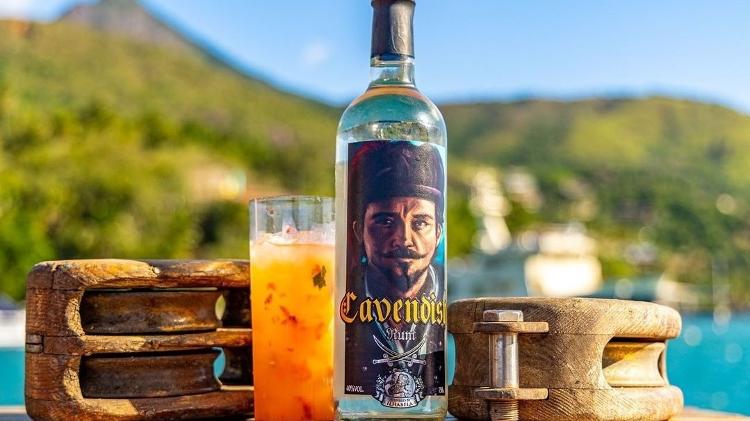
“I believe it is something in progress that could become as big as gin”, says Joseph Van Sebroeck, producer of Cavendish rum (and Dona Filó cachaça). “Perhaps it will not reach the same status, but it is clear that the market will grow a lot in Brazil, as it already happens in Europe and the USA”.
Although I see cachaça producers like him already moving, his curious parameter makes perfect sense.
“Rum needs to be discovered by new audiences and reach the nightclub box, like whiskey and gin”.
Managing partner of the renowned cachaça from Rio Grande do Sul Weber Haus and, more recently, of Señor Weber rum, businessman Evandro Weber is also an enthusiast. “The cane-based drinks will soon have their new moment”, he bets.
“I always participate in international festivals and I have seen a lot of quality rums appearing, which was not common not so long ago. Especially because there is still a lot of work to be done by the big companies that define what will be a boom in the beverage segment”.
A specialist in the subject, businessman Vicente Bastos Ribeiro, former UN economic consultant in New York, is the producer at the head of Fazenda Soledade (Nova Friburgo, RJ), which since 1977 has been distilling cachaças awarded at international festivals. More recently, it also bottles Soledade premium rum, in white and aged (in “ipê”) versions.
“The moment is for rum,” he says. “It’s something that has been talked about a lot at international festivals, that the time has come for rum to ‘come together'”, he jokes.
“There is a greater increase even in Europe than in the USA. In England and mainly in France, which have historical connection with the agricultural rum of their former colonies. I also see great potential for Brazilian rum”, he says, stating that most of of its production is exported to France.
REMEMBER: RUM IS NOT CACHAÇA
Like vodka, rum “has no owner”, it has no designation of origin. And just like cachaça, it shares the same “matrix” with sugar cane. Both couldn’t be more different.
While cachaça derives from garapa, fresh sugarcane juice, rum is a distillate obtained from molasses, that is, from cooked sugarcane juice. While rum can be made at any latitude, cachaça, to take that name, only in Brazil.
With information from UOL
This article was produced by The Rio Times’ automated newsroom system. How we use AI · Report an error · Editorial responsibility: Matthias Camenzind, Editor-in-Chief
Read More from The Rio Times