World Bank Mission 300 Connects 50 Million Africans as 600 Million Still Lack Power
Economy · Africa
—The stakes. Sub-Saharan Africa accounts for about 85 percent of the global electricity access deficit, with roughly 560 million people still unserved as of 2024.
—The driver. Mission 300, led by the World Bank Group and African Development Bank Group, aims to connect 300 million Africans to electricity by 2030.
—The date. As of August 2026, Mission 300 reports more than 50 million people connected across 40 countries, up from 32 million by September 2025.
—The money. At the January 2025 Dar es Salaam summit, partners pledged over US$50 billion, with US$48 billion allocated by the World Bank and AfDB through 2030.
—The friction. National Energy Compacts have been launched by 36 countries, yet gas-to-power versus renewables debates and utility failures still slow delivery.
Africa’s energy access gap remains the defining infrastructure challenge for investors in 2026. Mission 300 has accelerated connections, but the distance to universal access still depends on whether fragile utilities and financing models can hold.
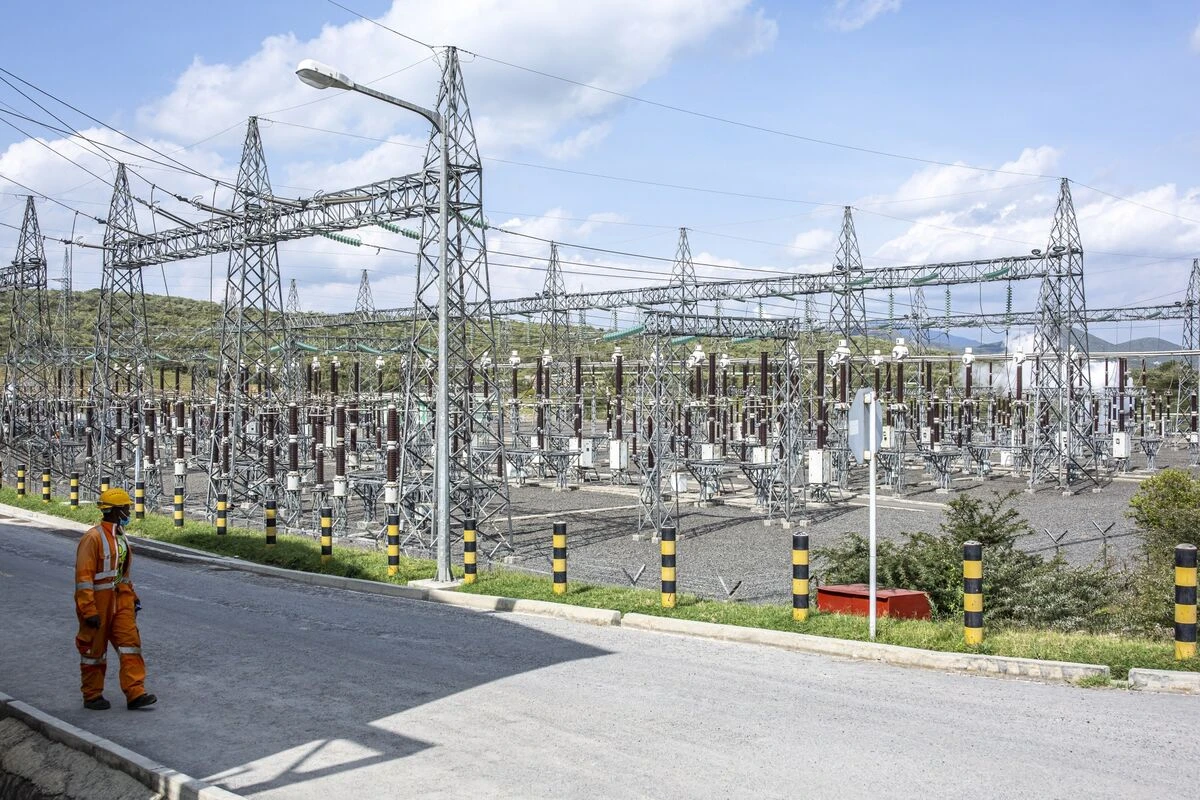
The scale of Africa’s electricity deficit
As of 2024, around 560 million people in sub-Saharan Africa lacked access to electricity.
The International Energy Agency (IEA) has repeatedly used the figure that almost 600 million people in Africa lack access to electricity today.
Mission 300 documentation states that sub-Saharan Africa is home to nearly 600 million people without electricity, accounting for about 85 percent of the global access deficit.
The Tracking SDG7 report for 2025, using 2023 data, puts the global figure at over 666 million people, with approximately 565 million in sub-Saharan Africa.
A June 2026 joint communication from the World Bank and partners reports 655 million people globally still lack access, of whom over 560 million live in sub-Saharan Africa.
Why the 600 million figure varies
A 2026 analysis from Energy Transition Africa explains that the widely cited 600 million figure derives from the IEA’s administrative data approach applied to Africa as a whole.
The IEA’s World Energy Investment 2026 uses a 590 million figure for Africa, while World Energy Investment 2025 states that 600 million people still lack electricity access.
The Tracking SDG7 2025 edition reports roughly 565 million people without electricity in sub-Saharan Africa, around 85 percent of the global total.
All three counts remain broadly consistent with the Mission 300 programme’s working assumption of a 600 million access gap in Africa.
For foreign investors, the slight differences matter less than the concentration of the deficit in a few large markets such as Nigeria and the Democratic Republic of Congo.
Mission 300 and the national compacts
Mission 300 is an initiative led by the World Bank Group and the African Development Bank Group to connect 300 million Africans to electricity by 2030.
In January 2025, thirty African heads of state endorsed the Dar es Salaam Energy Declaration at the Mission 300 Africa Energy Summit.
National Energy Compacts are described as the core instrument of Mission 300, combining infrastructure, financing, and policy tracks.
The first 12 Energy Compacts were endorsed by Chad, Côte d’Ivoire, Democratic Republic of Congo, Liberia, Madagascar, Malawi, Mauritania, Niger, Nigeria, Senegal, Tanzania, and Zambia.
Together those countries pledged more than 400 policy actions to strengthen utilities, reduce investor risk, and remove bottlenecks.
Financing pledges versus delivery
At the Dar es Salaam summit, Mission 300 partners pledged more than US$50 billion in support of expanding energy access in Africa.
The World Bank Group and African Development Bank Group said they planned to allocate US$48 billion in financing for Mission 300 through 2030.
The Islamic Development Bank Group separately pledged US$2.65 billion for Mission 300 and energy access in Africa from 2025 to 2030.
The World Bank has committed to mobilise US$30 billion for energy in Africa between 2024 and 2030.
But connection delivery has often lagged financing announcements, a key concern for investors tracking project-level conversion rates.
Connection numbers on the ground
By September 30, 2025, the cumulative Mission 300 connection total was 32 million people through 84 projects in 39 countries.
A September 2025 World Bank statement said 30 million people had already been connected since the launch of Mission 300, with more than 100 million in the pipeline.
As of August 2026, the World Bank Mission 300 page reports over 50 million people connected across 40 countries.
Approved operations were projected to reach an additional 92 million people, with planned operations adding another 65 million, giving visibility to about 157 million future connections.
Gas-to-power versus renewables
The gas-to-power versus renewables debate remains a central tension inside African energy planning in 2026.
Several governments argue that domestic natural gas can provide faster baseload power and support industrialisation.
Development partners and climate-focused investors often favour renewables plus storage, especially for mini-grids and distributed systems.
Mission 300 compacts do not resolve this tension, instead allowing each country to define its own generation mix through national policy choices.
For external capital, the debate affects which projects receive concessional financing and which require purely commercial returns.
South Africa’s Eskom turnaround
The recovery of South Africa’s state-owned utility Eskom has become a reference point for utility reform elsewhere in Africa.
Operational improvements at Eskom have reduced the severity of load-shedding, though the utility still carries heavy debt and relies on tariff increases.
International investors now watch Eskom’s unbundling into generation, transmission and distribution units as a test case for utility restructuring.
Eskom’s progress influences sentiment toward South Africa’s broader energy transition and its ability to replace ageing coal plants.
The South African case contrasts sharply with markets where transmission constraints and municipal arrears continue to deter private generation.
Nigeria’s grid failures
Nigeria‘s national grid has experienced repeated collapses in 2025 and 2026, undermining confidence in centralised power delivery.
The grid failures reflect decades of underinvestment in transmission infrastructure and weak gas supply to thermal plants.
In response,
Distributed generation, especially solar mini-grids and industrial captive power, is growing as a hedge against grid unreliability.
Nigeria’s Energy Compact under Mission 300 focuses heavily on utility reform, metering, and reducing technical and commercial losses.
Mini-grid financing gains momentum
Mini-grids are now central to achieving rural electrification at scale across sub-Saharan Africa.
Mission 300 encourages private mini-grid developers through blended finance and results-based subsidies tied to new connections.
Financing models increasingly combine development finance institutions, local currency lenders, and carbon revenue.
The World Bank’s US$30 billion energy envelope includes dedicated support for distributed renewable energy and mini-grid rollouts.
For foreign investors, mini-grid aggregation across multiple sites is becoming more bankable than individual village-scale projects.
Nigeria Grid Collapse Frequency Deepens
Nigeria’s national power grid failed repeatedly in early 2026, exposing the fragility of the country’s electricity backbone. On 23 January, the first collapse of the year caused a nationwide blackout, with generation plunging from more than 4,500 megawatts to as low as 24 megawatts by 1:30 p.m. All 23 connected generation plants lost output, and the 11 distribution companies recorded zero supply. The Nigerian Independent System Operator blamed simultaneous tripping of multiple 330 kV transmission lines and disconnection of some generating units.
Just four days later, on 27 January, the grid collapsed again, marking the second system failure within one week. Power generation dropped to zero megawatts by 11:00 a.m., leaving all distribution companies with no electricity. Nigeria had by then suffered three nationwide outages in less than a month, dating back to a collapse on 29 December 2025. One of the disturbances was attributed to a voltage problem originating from the Gombe Transmission Substation.
The investment outlook for 2026
As Mission 300 enters its second year, the gap between pledges and signed power purchase agreements remains the main bottleneck.
National Energy Compacts give investors a clearer policy roadmap, but regulatory quality still varies widely across the 36 compact countries.
The pipeline visibility of about 189 million future connections creates a substantial addressable market for equipment, services, and project finance.
Eskom’s stabilisation and Nigeria’s grid software overhaul show that utility-level fixes can draw in downstream private capital.
Meeting the 2030 target would still require roughly 50 million new connections per year for the rest of the decade, far above current delivery rates.
Connected Coverage
DR Congo: Kinshasa Comics Festival Returns After Six Years
The Big Picture
Latest developments
- Nigeria’s AG Mortgage Bank Lifts Assets 48% as Profit More Than Doubles — 28 September 2026
- Africa Intelligence Brief — Saturday, September 26, 2026 — 26 September 2026
- Quickmart Kenya Grows on Supplier Credit Rather Than Bank Debt — 25 September 2026
- Fidelity Bank Wins Nigerian Appeal Over 2023 Detention Award — 25 September 2026
This article was produced by The Rio Times’ automated newsroom system. How we use AI · Report an error · Editorial responsibility: Matthias Camenzind, Editor-in-Chief
LatAm Markets: Live Signals → — real-time movers, turnover leaders and FX across Latin America.