A.I. Investment and Local Innovation Take Center Stage at Web Summit Rio 2025
Web Summit Rio 2025, held at Riocentro in late April, brought together over 34,000 attendees and nearly 1,400 startups to focus on how artificial intelligence is reshaping business in Brazil and beyond.
Organizers and speakers emphasized the region’s growing importance in the global technology supply chain, highlighting a shift toward local infrastructure and practical business applications.
Microsoft announced a R$14.7 billion investment in Brazilian AI and cloud infrastructure over three years, the company’s largest single commitment in the country.
The tech giant’s ConectAI program has already trained 2.4 million Brazilians in AI skills, with a target of reaching five million by 2028. This push to build a skilled workforce aims to address a key hurdle for Brazilian companies.
They face a shortage of qualified professionals who can implement and operate AI systems. Major industry players like Nvidia, OpenAI, and IBM joined the event.
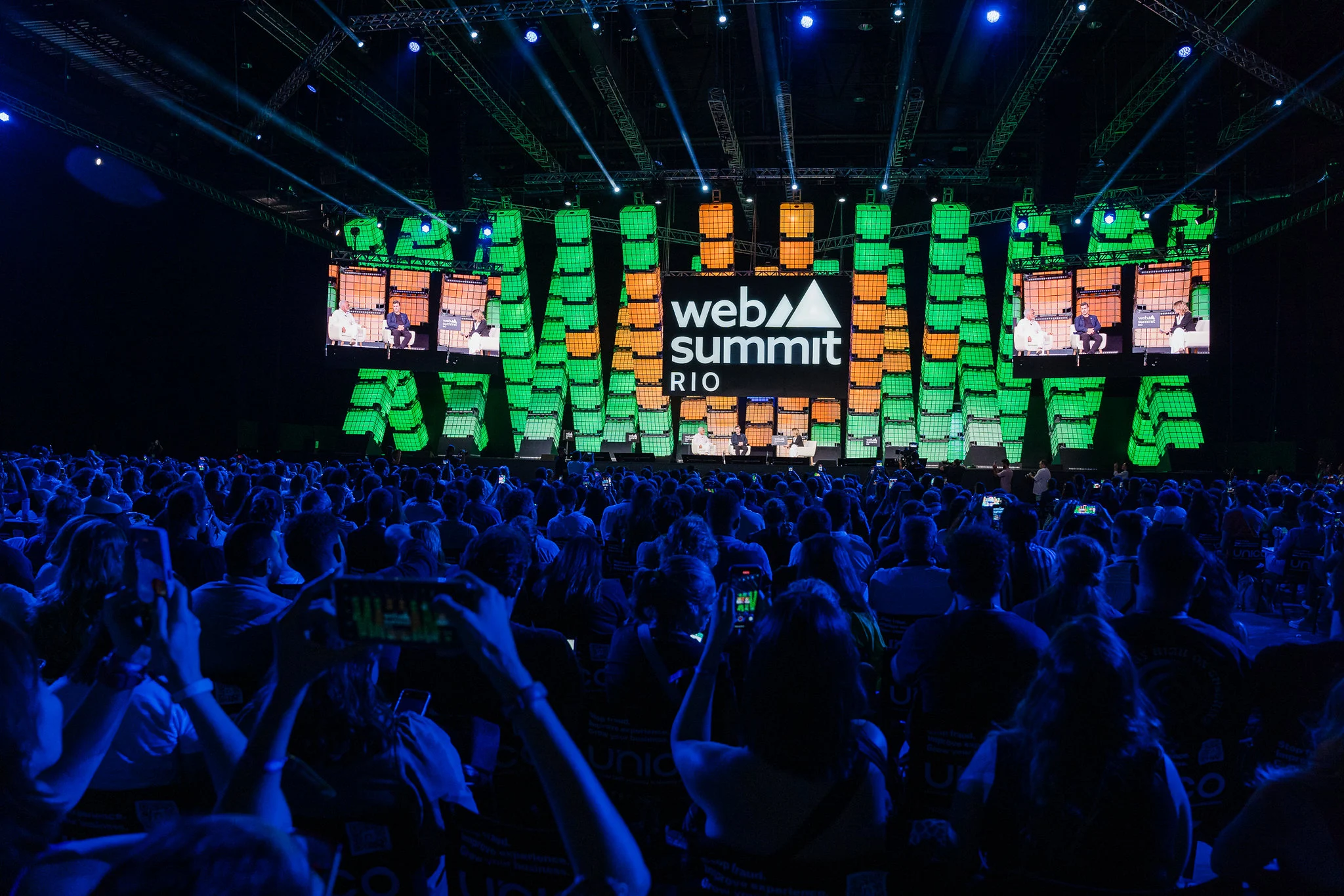
Their presence underlined the strategic value of Brazil’s energy resources for powering new data centers and AI campuses. Plans for Rio AI City, a 1.8-gigawatt data center hub powered by clean energy, signal a move to keep core AI infrastructure and data processing within Brazil’s borders.
Organizers positioned this as a foundation for local startups and established firms to build and scale AI-driven products without relying on foreign infrastructure.
Startups like NotCo, a Chilean foodtech company operating in Brazil, showcased how AI can directly impact manufacturing and product development.
NotCo’s proprietary AI platform, Giuseppe, enables rapid creation and reformulation of plant-based foods, slashing development times from years to months.
AI Adoption Accelerates Across Industries as Global Firms
Global consumer goods companies, including Mars, Nestlé, and Kraft Heinz, now use NotCo’s technology to improve product lines and meet changing health and sustainability demands.
NotCo’s business-to-business services and software-as-a-service model have attracted significant attention, signaling a shift toward AI as a core tool in food production and innovation.
Other sessions focused on the practical integration of AI into finance, retail, and logistics, with executives stressing that AI now touches every department, not just IT.
Companies increasingly use AI to automate audits, streamline compliance, and improve customer service, responding to rising regulatory complexity and market pressure for efficiency.
Speakers repeatedly stressed that Brazil’s unique combination of skilled talent, abundant clean energy, and growing tech ecosystem positions it as a key AI hub for Latin America.
The real story behind the numbers is a region moving to control its digital future, invest in local capacity, and use AI to solve business challenges on its own terms.
This article was drafted with automated assistance and reviewed before publication. How we use AI · Report an error · Editorial responsibility: Matthias Camenzind, Editor-in-Chief
Living in or visiting Rio de Janeiro? See this month's events and our Rio de Janeiro city guide with rents, safety and upcoming concerts.