Zinc Pulls Back: Nexa, Buenaventura Drop on Friday
Key Facts
- Nexa Resources fell 3.96% to US$13.35 in Friday’s session, the sharpest single-session drop among the Latin American zinc proxies tracked.
- Buenaventura dropped 3.25% to US$35.12, giving back part of a rally that had pushed zinc to its highest London levels since June 2022.
- LME zinc settled around US$4,070 per tonne on 28 August, down 0.9% on the day after touching US$4,107 earlier in the week.
- The cash-to-three-month spread hit a US$231.75 premium for immediate metal on 27 August, a sign of scarce immediately available supply in London warehouses.
- Hawkish remarks on US rates spurred bets on Federal Reserve tightening, lifting the dollar and pressuring dollar-priced metals across the board.
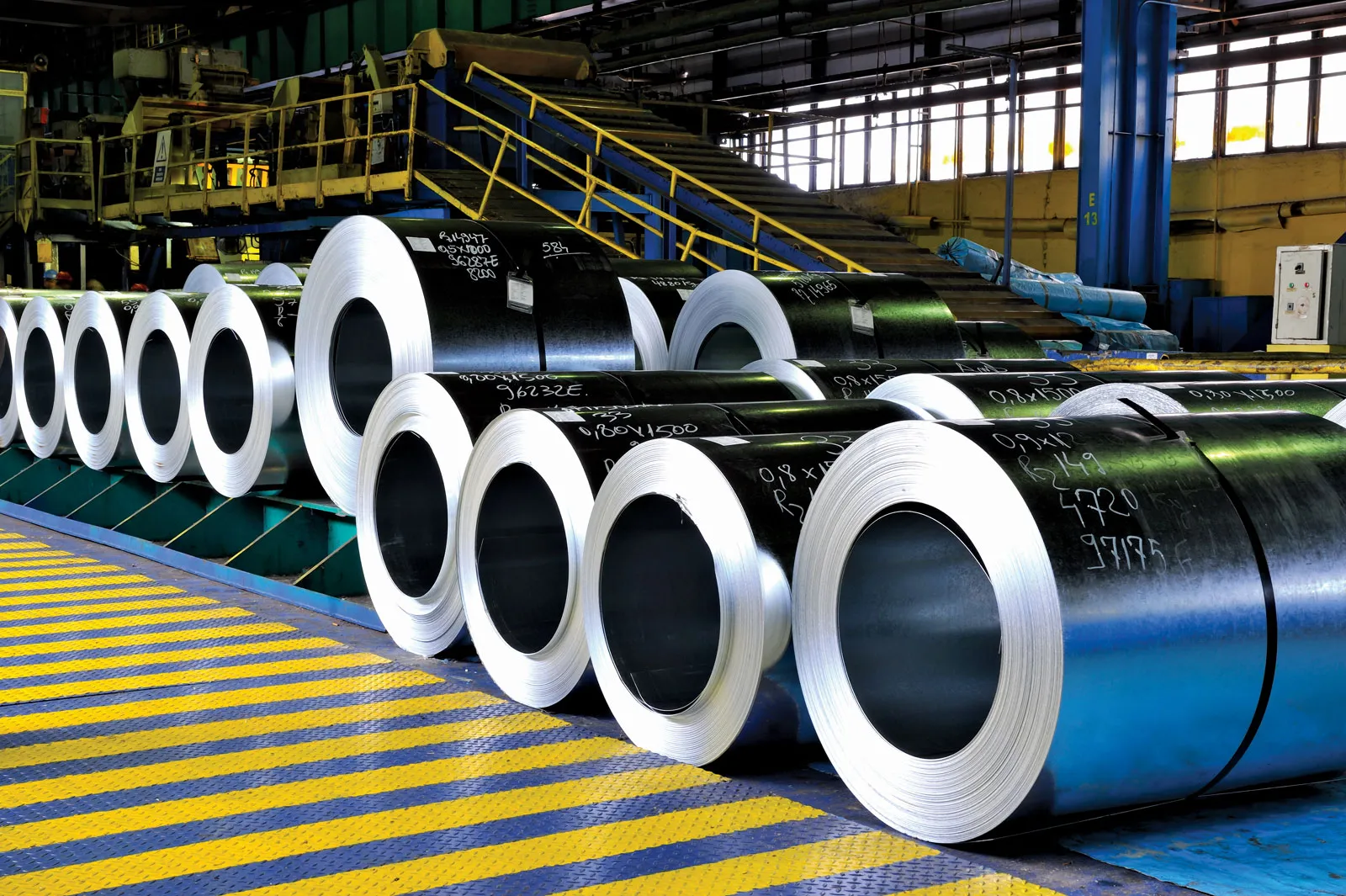
- Galvanised steel and construction demand remain the fundamental floor under zinc, with supply tightness doing most of the recent price work.
Today’s Focus
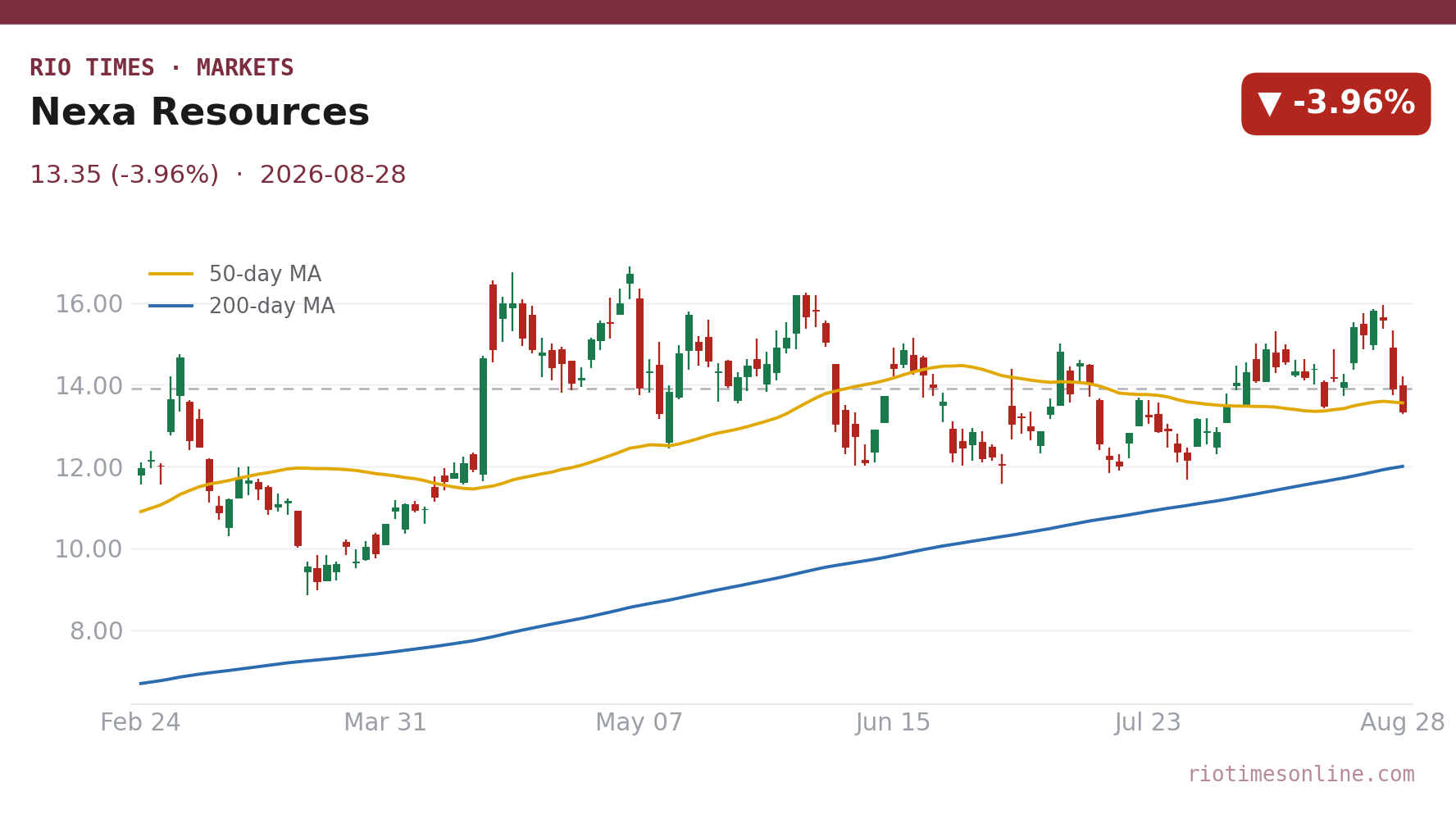
Zinc’s Latin American proxies fell hard on Friday, August 28, 2026, as a hawkish shift in US interest-rate expectations knocked the shine off an overheated metal. Nexa Resources closed 3.96% lower at US$13.35, while Buenaventura dropped 3.25% to US$35.12, both retreating from the strong rally that had carried London zinc to its highest level since June 2022.
The London Metal Exchange three-month contract settled near US$4,070 per tonne, down about 0.9% on the day after peaking at US$4,107 earlier in the week. Behind the move: remarks by a Federal Reserve figure that revived bets on further US rate hikes, strengthening the dollar and making metals priced in the American currency costlier for overseas buyers.
Yet the physical zinc market remains exceptionally tight. The cash-to-three-month spread blew out to a US$231.75 premium for immediate delivery on 27 August, meaning buyers are paying fat money for metal they can get right now rather than in three months. Supply constraints across major producing regions, including Peru, Bolivia and Mexico, are doing much of the heavy lifting.
For Latin America’s miners, the pullback looks like profit booking in a strongly bid market. Nexa’s first-quarter 2026 net revenues nearly doubled year-on-year to US$609 million, driven by higher zinc prices and stronger smelter volumes, showing exactly how much earnings leverage the region’s producers have to every dollar move in London.
What matters today. The pullback is a rates-driven wobble inside a structurally tight supply story, not a break in the zinc rally.
01 The session in one read
Zinc’s Latin American proxies had a rough end to the week. Nexa Resources, the Lima- and São Paulo-listed polymetallic miner with zinc-heavy earnings, slid 3.96% to US$13.35 on Friday, August 28, 2026. Buenaventura, the Peruvian precious and base metals producer, fell 3.25% to US$35.12.
The moves tracked a broader retreat in metals after hawkish commentary on US monetary policy revived bets on higher interest rates. A stronger dollar made commodities priced in the American currency less attractive globally, triggering profit booking after zinc had surged to its highest London level since June 2022.
Friday’s drop looks corrective rather than the start of a trend reversal. The combination of spiking US rate-hike bets and a firmer dollar hit all metals, but zinc’s underlying architecture—a sky-high spot premium, low visible stocks, and constrained output from Latin American producers—has not changed. The variable to watch is whether the cash-to-three-month spread holds its steep spot premium into next week; if it does, buyers are still scrambling for metal and Friday’s slide will likely be bought.
02 The board
The two traded proxies tell the session story cleanly. Nexa Resources closed at US$13.35, down nearly four percent in a single day, a notable air-pocket for a stock that had been riding the zinc rally. Buenaventura printed US$35.12, off 3.25%, confirming the selling was sector-wide rather than company-specific.
On the London Metal Exchange, three-month zinc settled near US$4,070 per tonne on Friday, easing about 0.9% from mid-week. European data put the contract at €3,495 per tonne, equivalent to that US$4,070 level, while Asian screens had shown mild firmness earlier, with MCX September zinc up 0.89% to ₹418.90 per kg before the US rate news bit.
| Asset | Level | Change |
|---|---|---|
| Nexa Resources | US$13.35 | -3.96% |
| Buenaventura | US$35.12 | -3.25% |
Source: RT close, 2026-08-28. Where a commodity has no spot feed, an exchange-traded tracker or leading producer is shown as a labelled proxy.
Live Market IntelligenceThe live market board
Rio Times · Live Market Intelligence
Latin America — Cross-Market Board
| Instrument | Last | Change | YoY | Prev. | High | Low | Volume |
|---|---|---|---|---|---|---|---|
| IBOV | 206,505.98 | -0.18% | +21.85% | 206,887.52 | 168,310 | 167,142 | — |
| IPSA | 10,966.21 | -0.49% | — | 11,020.01 | 11,210 | 10,984 | 1,513,213,483 |
| IPC MEX | 66,790.35 | -0.26% | +12.17% | 66,965.15 | 66,121 | 65,405 | 108,886,187 |
| MERVAL | 2,835,843 | +0.00% | +30.51% | 3,022,485 | 3,042,365 | 2,991,150 | — |
| COLCAP | 2,582.29 | +0.46% | — | 9.04 | 9.05 | 9.02 | 4,133 |
| BVL PERÚ | 60,511.74 | -1.60% | — | — | — | — | — |
| USD/BRL | 5.16 | +0.01% | -5.13% | 5.16 | 5.18 | 5.14 | — |
| EUR/BRL | 5.95 | +1.01% | -5.83% | 5.89 | 5.98 | 5.94 | — |
| USD/MXN | 17.06 | -0.24% | -8.58% | 17.10 | 17.08 | 17.01 | — |
| USD/CLP | 913.98 | +0.04% | -5.67% | 913.65 | 915.11 | 906.68 | — |
| USD/COP | 3,140 | +0.03% | -22.04% | 3,139 | 3,141 | 3,105 | — |
| USD/PEN | 3.36 | -0.66% | -4.82% | 3.38 | 3.38 | 3.35 | — |
| USD/ARS | 1,493 | +0.10% | +12.96% | 1,491 | 1,494 | 1,480 | — |
| USD/UYU | 40.27 | +1.24% | +1.80% | 39.77 | 40.27 | 40.23 | — |
| USD/PYG | 5,939 | +1.68% | -19.54% | 5,841 | 5,939 | 5,925 | — |
| USD/BOB | 11.64 | -0.76% | +72.04% | 11.73 | 11.72 | 11.64 | — |
| USD/DOP | 58.34 | +1.25% | -3.44% | 57.62 | 58.34 | 58.04 | — |
| USD/CRC | 445.92 | +0.89% | -9.71% | 441.97 | 448.50 | 445.92 | — |
03 What moved it
The immediate trigger was monetary policy. Hawkish remarks on Federal Reserve rate hikes—echoing through the gold and broader metals complex this week—lifted the dollar and encouraged investors to trim winning commodity positions. Gold’s sharp weekly drop pulled the whole metals basket lower, and zinc, after its sprint to multi-year highs, was vulnerable to exactly this kind of air-pocket.
Underneath the session noise, the zinc market itself is extraordinarily tight in London. The cash-to-three-month spread blew out to a US$231.75 premium for nearby delivery on 27 August, a level that signals desperate competition for immediately deliverable metal. That physical squeeze has been the engine of the rally, and it did not unwind on Friday—it simply got overshadowed by macro selling.
04 The Latin American read
For Latin America, zinc is not an abstraction. Peru and Mexico sit among the world’s leading zinc producers, and Bolivia is an important Andean supplier. When London zinc moves, the foreign-exchange earnings and tax receipts of these economies move with it, because so much of the metal is exported to galvanised-steel plants in Asia, Europe and North America.
The demand side is anchored in construction and infrastructure: zinc’s primary industrial use is galvanising steel to stop it rusting, which makes every bridge, warehouse and automotive body panel a quiet bid for the metal. Supply constraints in the mining and smelting chain, not demand collapse, have been the story of 2026’s price surge, and those constraints have not gone away.
05 The names to watch
Nexa Resources is the purest listed play on zinc for foreign investors wanting Latin American exposure. The company operates five polymetallic mines—four underground and one open-pit—across Peru and Brazil, and its first-quarter 2026 filings show how zinc prices feed directly into earnings: average LME zinc in Q1 was US$3,241 per tonne, up 14% year-on-year, pushing net revenues to US$609 million from US$454 million a year earlier.
Buenaventura is a more diversified Peruvian miner, with zinc among its base-metals output alongside silver and gold. Its shares act as a broader Andean mining barometer, which is why the 3.25% drop on Friday matters: it suggests foreign investors were trimming Latin American mining risk across the board, not just selling zinc specifically.
06 The outlook
The central tension is between a macro environment turning less friendly for dollar assets and a zinc market that remains physically squeezed in London. If the spot premium holds, every dip is likely to find buying from consumers needing metal now. If the Fed chatter intensifies and the dollar keeps climbing, further profit booking in stocks like Nexa and Buenaventura is possible even as the underlying metal stays tight.
07 What to watch
- Cash-to-three-month spread: A hold above US$200 in London spot premium would confirm physical tightness and likely cap downside.
- Federal Reserve rate expectations: Further hawkish surprises would lift the dollar and pressure all metal proxies.
- Nexa smelter volumes: Higher refined output from Cajamarquilla or Brazilian operations would signal producers are cashing in on price strength.
- Peruvian and Mexican supply: Any disruption or strike news would tighten an already strained supply chain and potentially reverse Friday’s slide.
Frequently Asked Questions
Why did Nexa and Buenaventura fall on Friday?
Hawkish US rate remarks revived dollar strength, triggering profit booking across metals after zinc’s multi-year high.
Is the zinc rally over?
Probably not. The London cash-to-three-month spread at a US$231.75 spot premium shows physical metal is still scarce.
What does zinc have to do with construction?
Zinc galvanises steel to prevent corrosion, making it essential for buildings, infrastructure and vehicles.
Which countries matter for Latin American zinc?
Peru and Mexico are leading global producers, with Bolivia an important Andean supplier.
Market data: RT
This article was produced by The Rio Times’ automated newsroom system. How we use AI · Report an error · Editorial responsibility: Matthias Camenzind, Editor-in-Chief
LatAm Markets: Live Signals → — real-time movers, turnover leaders and FX across Latin America.