ExxonMobil Set to Return to Venezuela After 19-Year Standoff

Venezuela · Oil & Gas
Key Facts
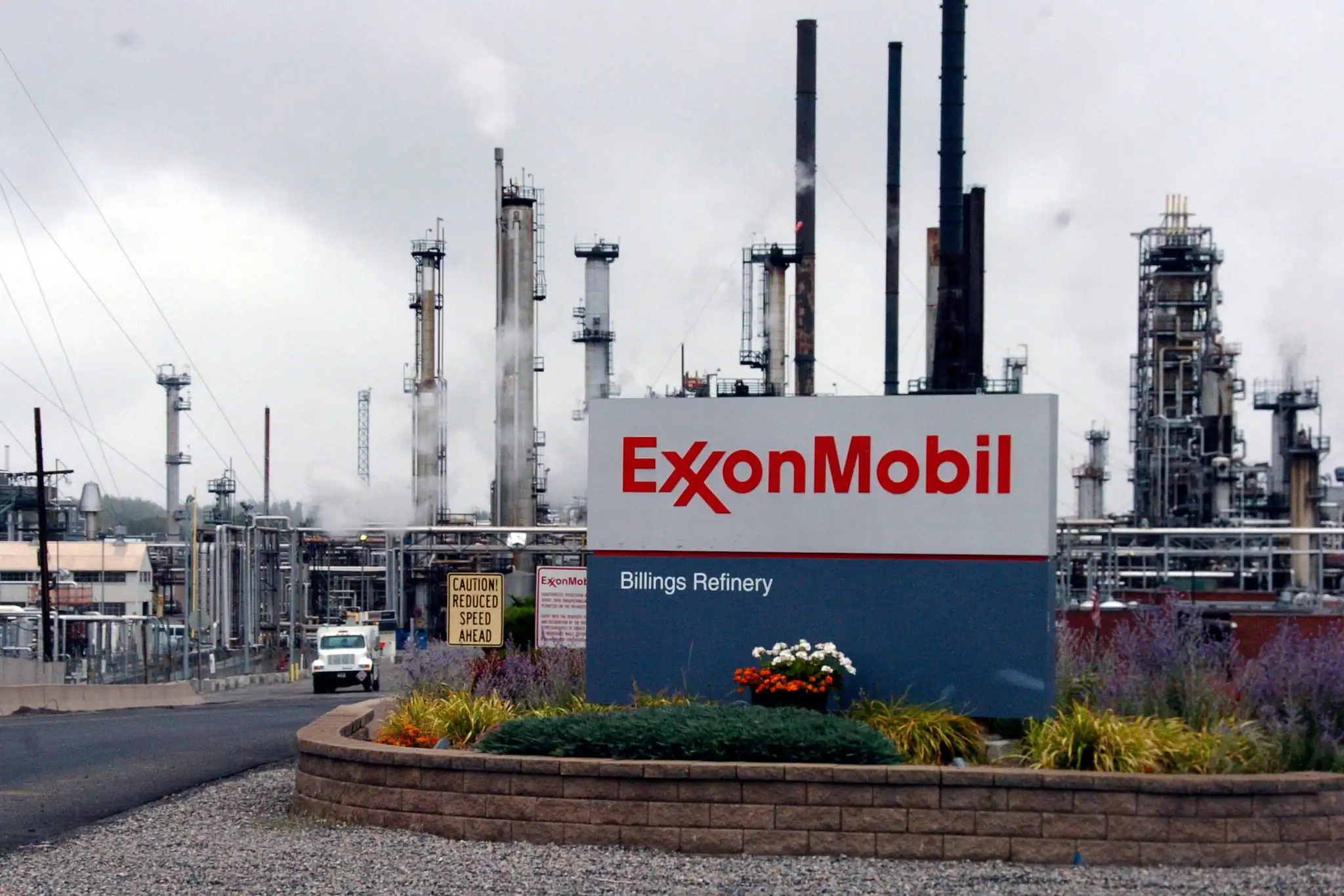
—Report:. ExxonMobil is in advanced talks to acquire oil-production rights in Venezuela covering up to six Exxon Venezuela oil fields across multiple regions of the country, the New York Times reported Thursday citing sources familiar with the negotiations, with a formal announcement possible before the end of May.
—Historical context:. Exxon exited Venezuela in 2007 after Hugo Chávez nationalized its assets and has since pursued more than $13 billion in arbitration claims jointly with ConocoPhillips, the two large United States majors that left Caracas during the same expropriation wave that Chevron’s negotiated stay survived.
—What changed:. Chief Executive Darren Woods told President Trump at a January 9 White House meeting that re-entering Venezuela would “require some pretty significant changes” given that the company’s assets had been seized twice; the company called the country “uninvestable” the same month.
—Chevron catalyst:. The April announcement that Chevron raised its stake in the Petroindependencia joint venture from 35.8 to 49 percent through an asset swap with Petróleos de Venezuela tipped the strategic calculus, making it untenable for Exxon to cede the heavy-crude reserve to its main domestic competitor.
—Trump framing:. A finalized Exxon agreement would mark the most politically loaded signal yet of the United States-Venezuela commercial normalization that the Trump administration has built around interim President Delcy Rodríguez since the January military operation that captured Nicolás Maduro.
—Reserves stakes:. Venezuela holds approximately 303 billion barrels of proven oil reserves, the largest on Earth, but the country currently produces only around 1.02 million barrels per day after decades of underinvestment under the Maduro government and the resulting Petróleos de Venezuela operational decline.
The shift completes the post-Maduro commercial reset in which the major international oil companies that left during the Chávez nationalization are now competing for re-entry alongside Chevron, with the Iran war and tightened global supply doing more for the deal economics than any policy concession from Caracas itself.
What does the report say about Exxon Venezuela oil fields?
The Rio Times, the Latin American financial news outlet, reports that ExxonMobil’s discussions with Venezuelan authorities have reached a stage that the New York Times described Thursday as “advanced,” with sources familiar with the talks indicating a potential agreement covering up to six Exxon Venezuela oil fields across multiple regions of the country. The scope would give Exxon a substantial footprint in the world’s largest proven oil reserve base. The sources, who spoke on the condition of anonymity, told the New York Times that an announcement could come before the end of May, although the timing remains subject to final commercial and legal terms.
Exxon declined to comment publicly when contacted; the Venezuelan government and the state-owned oil company Petróleos de Venezuela did not respond to requests for comment. Acting President Delcy Rodríguez, who previously ran the Venezuelan oil industry under the Maduro government and is reported to be pushing aggressively for the Exxon agreement, has consistently framed the broader oil-sector reopening as central to the post-Maduro economic strategy. The Trump administration has lifted most United States sanctions on Venezuelan crude exports through a sequence of general licenses issued by the Treasury Department since the January transition.
Why has Exxon’s position changed?
Three forces have moved together to shift Exxon’s posture. The Iran war that began in late February and the subsequent Strait of Hormuz disruption pushed Brent crude into the $90 to $110 range for most of 2026, sharply improving the economics of new Western Hemisphere oil investments, while Chevron’s April expansion of its Petroindependencia stake from 35.8 percent to 49 percent through an asset-swap with Petróleos de Venezuela demonstrated that the post-Maduro contractual framework could deliver real production growth for foreign operators and gave Chevron a structural lead in the Orinoco heavy-oil belt that Exxon could not match from outside the country. Acting President Rodríguez has reportedly worked the negotiating channel directly, signaling political willingness at the highest level to accommodate the foreign-investor concerns that earlier deterred Exxon.
The January 9 meeting at the White House illustrated the gap that Exxon and the Trump administration have spent the past four months narrowing. Exxon Chief Executive Darren Woods told Trump and the assembled oil executives that the company’s twice-expropriated experience in Venezuela meant a third entry would require “pretty significant changes” in the legal framework and investment protections. The January 29 Venezuelan petroleum-law reform allowed foreign minority partners to operate, export and collect revenues directly, addressing one of Woods’ core concerns, and the subsequent Productive Participation Contract framework introduced different economic structures with greater operator autonomy than the classic joint-venture model.
What is the Trump-administration calculation?
A finalized Exxon agreement would be a clear political win for the White House. The Trump administration has been pushing United States oil majors to commit roughly $100 billion to Venezuelan reconstruction since the January transition, and the public hesitance of Exxon in particular drew direct presidential criticism after the January 9 meeting; Trump signaled then that he “didn’t like Exxon’s response” and suggested the company might be excluded from United States-backed investment opportunities, language that pushed Exxon to send a technical-assessment team to Venezuela within weeks of the meeting. The current advanced-talks stage is the product of four months of that process.
For Caracas, the Exxon return is more important symbolically than mechanically. Venezuela needs roughly $100 billion to $180 billion of cumulative investment over the next decade to restore production to historical peaks, according to recent industry estimates, and Exxon’s balance sheet alone cannot deliver that scale; what the Exxon agreement signals is institutional credibility, since the company that walked away from Venezuela twice and rejected the same opportunity as recently as January now considers the framework workable, leaving the door structurally open to ConocoPhillips, Repsol, Eni and Shell to follow with their own arrangements. The 90-page operating contract that Petróleos de Venezuela began circulating last week is the legal architecture that any of those entrants would now negotiate against.
What does it mean for Latin American oil dynamics?
The implications cascade across the regional supply picture. Brazil’s Petrobras has been the principal Latin American export-volume swing supplier to Asia through the Iran-war oil shock, while Mexican output remains in structural decline, Colombian production faces the Petro government’s renewable-transition policy constraints, and Argentina’s Vaca Muerta unconventional play has been the bullish growth story but needs years more capital expenditure to scale exports. Venezuelan reactivation, even partial, alters that picture significantly because the reserve base allows for sustained multi-year output growth without the geological constraints other Latin American producers face.
The Guyana-Venezuela friction is the other axis to watch. Exxon’s signature growth basin since leaving Venezuela has been Guyana’s offshore Stabroek block, which is now producing more than 700,000 barrels per day and remains contested by Caracas under the colonial-era Essequibo territorial claim. A working Exxon-Venezuela commercial relationship could pull some heat from the Essequibo dispute, since the company would have direct incentive to keep its Caracas and Georgetown operations both running, but it could equally fail to do so if the post-Maduro political settlement in Caracas reopens its claim with greater force.
What should investors and analysts watch next?
- Contract structure: Whether the six-field framework uses the classical joint-venture model with Petróleos de Venezuela holding majority interest, or the new Productive Participation Contract structure with greater operator autonomy.
- Arbitration overhang: Whether the agreement addresses the outstanding $13 billion in arbitration claims Exxon and ConocoPhillips collectively hold from the 2007 expropriation, or whether those remain as separate proceedings.
- ConocoPhillips signal: Whether ConocoPhillips, which left Venezuela alongside Exxon in 2007, follows with its own re-entry announcement; the company has the same legal and arbitration history as Exxon and would face the same competitive pressure from Chevron.
- Esequibo posture: The Rodríguez administration’s stance on the Essequibo claim in the weeks following any Exxon announcement, since Exxon’s Guyana operations remain at the center of that dispute.
- OFAC licensing: Whether the Treasury Department’s Office of Foreign Assets Control issues a specific license for Exxon parallel to the framework already in place for Chevron, or whether the company relies on broader general-license authorization.
- Production trajectory: Venezuelan total production data over the second half of 2026, with the target of 1.5 million barrels per day by year-end as the practical test of whether the new framework can deliver scale.
More: Latin America news in English, every day from The Rio Times.
Connected Coverage
The talks build on the framework described in the 90-page Petróleos de Venezuela operating contract, sit inside the broader picture documented in our Venezuela crisis 2026 guide, and extend the macro picture set out in our analysis of the post-Hormuz Venezuela economic recovery.
This article was produced by The Rio Times’ automated newsroom system. How we use AI · Report an error · Editorial responsibility: Matthias Camenzind, Editor-in-Chief
Frequently Asked Questions
How did Exxon leave Venezuela in 2007?
President Hugo Chávez forced foreign operators to convert their existing concessions into minority joint ventures controlled by Petróleos de Venezuela. Exxon and ConocoPhillips refused the terms and exited, while Chevron, Eni, Repsol and others negotiated minority positions and stayed. Exxon and ConocoPhillips pursued arbitration claims that have collectively totaled more than $13 billion.
When could the deal be signed?
The New York Times reports that an announcement could come before the end of May, though final commercial and legal terms remain to be agreed. The realistic window for actual contract signature, after due diligence on the field-by-field engineering and updated reserve estimates, is more likely to run into the third quarter of 2026.
How does this affect Guyana?
Mixed. Exxon’s Guyana operations remain at the center of the Essequibo territorial dispute, and a working Exxon-Venezuela commercial relationship could either dampen Caracas’ rhetoric on the claim or, conversely, push the issue into a more transactional negotiating space. The legal proceeding at the International Court of Justice remains active and is not affected by any commercial agreement.
Is Chevron still the largest United States operator in Venezuela?
Yes, by a wide margin. Chevron has been the only United States oil major operating in Venezuela since the Chávez expropriation wave, currently exports over 267,000 barrels per day from the country, and most recently expanded its Petroindependencia stake to 49 percent. The expected Exxon re-entry adds a second major United States operator but does not displace Chevron’s incumbent footprint in the short term.
What risks remain to the Exxon deal?
The political dimension is the main remaining risk. Any change in the United States-Venezuela commercial framework, including a future challenge to the legitimacy of the Rodríguez interim administration or a renewed sanctions tightening, could undermine the contractual basis. Operational risks include the deteriorated state of Petróleos de Venezuela infrastructure and the depleted technical workforce after the migration wave of the Maduro decade.