Tren de Aragua Suspect Pleads Not Guilty in Nebraska

CRIME · VENEZUELA
Key Facts
- —The country Venezuela. The accused, Aníbal Alexander Canelón Aguirre, 50, is Venezuelan. The US Treasury said on 30 September that his alleged network is based in Venezuela and Mexico.
- —What happened On Friday 2 October he appeared before a federal magistrate in Nebraska and pleaded not guilty to four conspiracy counts, the US Justice Department said.
- —Who is involved The FBI, which put him on its Ten Most Wanted list in March 2026 as its first cyber fugitive, and a Homeland Security Task Force. The FBI had offered up to US$1 million.
- —What it means for you The alleged thefts hit US cash machines, not customer accounts. Treasury says the malware forced cash out without debiting any account.
- —Still open Media reported in mid-September that the FBI had captured him in Venezuela; the Justice Department has not said how he was transferred. No trial date had been published as of 3 October.
The United States holds a Venezuelan man it accuses of building malware for a Tren de Aragua cash-machine theft scheme. Aníbal Alexander Canelón Aguirre, 50, pleaded not guilty in a federal court in Nebraska on Friday 2 October.
The FBI calls him “Prometheus” and “The Engineer”. He is the first cyber criminal ever placed on its Ten Most Wanted list, the Justice Department said.
What the US Justice Department says
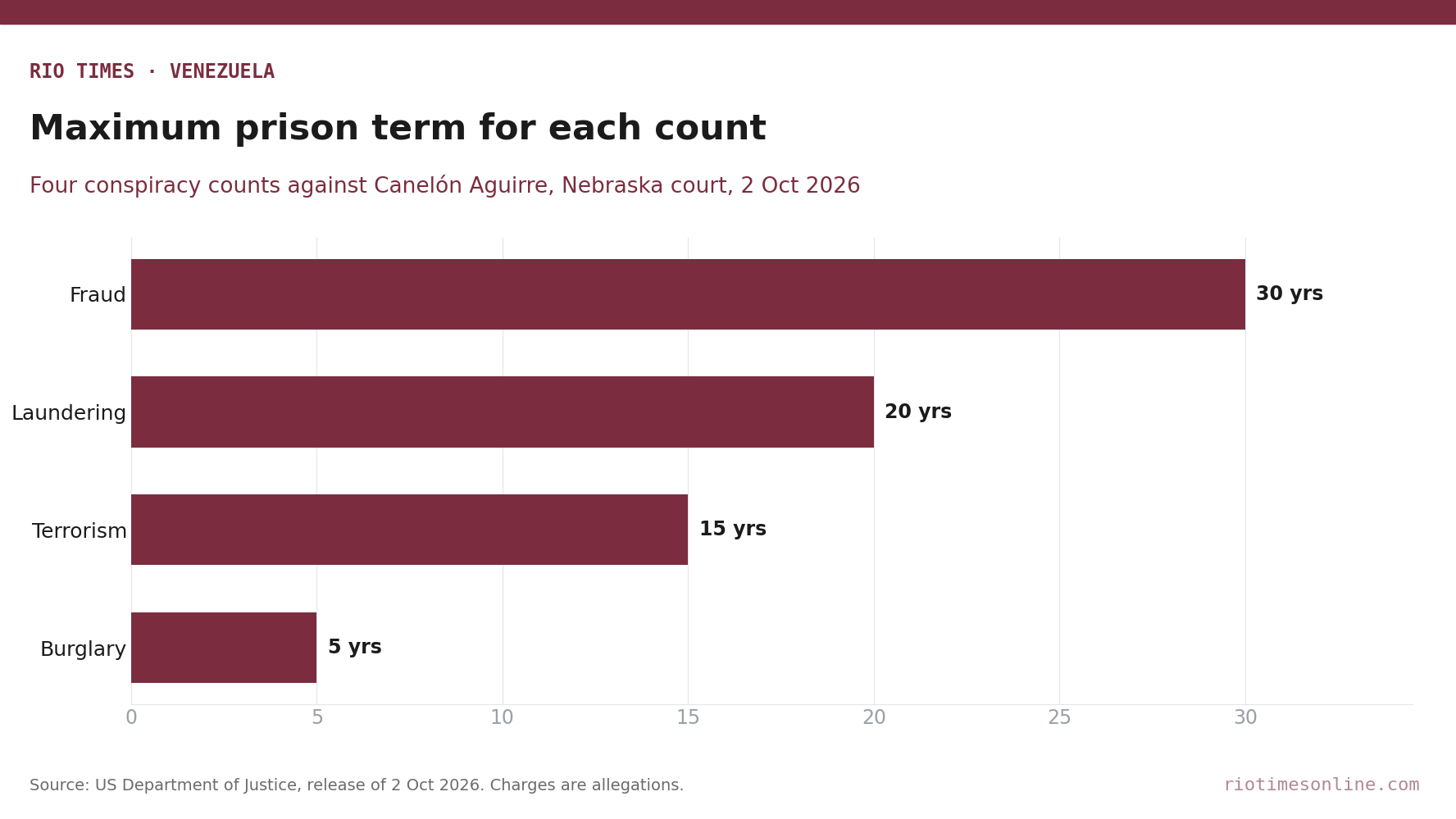
A federal grand jury in Nebraska indicted Canelón Aguirre in December 2025, and an arrest warrant was issued on 9 December, according to his FBI wanted notice. The four counts are conspiracy to commit bank fraud, bank burglary and computer fraud, money laundering, and material support to terrorists.
The maximum terms run from five to 30 years per count, the department said. He was placed on the Ten Most Wanted list in March 2026, the 540th person ever added.
He entered his pleas before Magistrate Judge Michael D. Nelson and will remain detained in Nebraska pending trial, the department said. The Justice Department stressed that an indictment is only an allegation and that defendants are presumed innocent.
Attorney General Todd Blanche called the capture “yet another success” for the task force. FBI Director Kash Patel said he was the tenth Most Wanted fugitive caught under the current administration.
How the alleged cash-machine scheme worked
Prosecutors call the method “jackpotting”. Crews break into a cash machine, install malicious software and then trigger it remotely until the machine empties.
According to the Justice Department, Canelón Aguirre developed the malware known as Ploutus and was one of the principal leaders of the conspiracy. It allegedly included tools to delete itself and hide from bank staff and forensic examiners.
Treasury put reported US losses from jackpotting at US$40.73 million across more than 1,500 attacks, as of August 2025. That total covers all reported attacks, not only those charged in this case.
The Justice Department says 120 people have been charged in Nebraska over the jackpotting conspiracy so far. Three of them have been sentenced.
Sanctions came two days earlier
On 30 September the Treasury’s sanctions office, OFAC, designated 10 targets tied to the alleged network. It described the scheme as a key source of revenue for the gang, which Washington lists as a terrorist organisation.
The proceeds were allegedly laundered through cryptocurrency and moved to members in several countries. In June the gang lost Héctor “Niño” Guerrero: a US strike inside Venezuela killed the Tren de Aragua boss.
The sanctions fit a wider US campaign, set out in US Terror Designations: 21 Latin American Groups Listed, Not 13.
What Is Not Yet Known
The Justice Department release does not say where Canelón Aguirre was arrested or how he reached the United States. Telemundo, Euronews and El Estímulo reported in mid-September that the FBI had captured him in Venezuela.
FBI Director Patel said only that he was “back in the United States”. No statement from Venezuelan authorities on the transfer had been published by Saturday.
It is also unclear how much of the reported losses prosecutors will attribute to him personally. None of the allegations has yet been tested before a jury.
Sources: US Department of Justice, release of 2 October 2026; US Treasury, OFAC release of 30 September 2026; FBI Ten Most Wanted notice; El Nacional (with EFE), 3 October 2026; El Estímulo, 3 October 2026; Infobae, 3 October 2026.
Editorial responsibility: Matthias Camenzind, Editor-in-Chief · Editorial standards · Report an error