Venezuela Oil Production Tops One Million Barrels Again
From 636,000 to a Million — and Counting
Five years ago, Venezuela oil production had collapsed to 636,000 barrels per day — a level that would have been unthinkable for a country sitting atop the world’s largest proven crude reserves. The February OPEC report tells a different story. Output averaged 1.021 million bpd, up 97,000 barrels from January and back above the symbolic million-barrel threshold that the country first recrossed in January 2025 after a six-year absence. Even the more conservative secondary-source estimates tracked by OPEC showed a 9.7% increase, from 823,000 to 903,000 bpd. This is part of The Rio Times’ comprehensive coverage of Latin American financial markets and economic developments.
The price story reinforced the volume gains. Venezuela’s benchmark Merey crude — a heavy, sulfur-rich grade that trades at a steep discount — jumped from $43.21 per barrel in January to $52.31 in February, the largest increase within the OPEC basket. The Middle East conflict that erupted in late February drove global prices higher, with the OPEC basket averaging $67.90, up $5.59 month-over-month. For a country whose economy depends almost entirely on hydrocarbon revenues, the simultaneous improvement in volume and price represents a meaningful fiscal boost.
The Post-Maduro Oil Opening
The production rebound is inseparable from the political upheaval that preceded it. Weeks after U.S. special forces captured Nicolás Maduro in January, the chavista-controlled National Assembly unanimously approved a sweeping reform of the Organic Hydrocarbons Law proposed by acting president Delcy Rodríguez. Analysts interpreted the legislation as the dismantling of Hugo Chávez’s signature economic legacy — the 2001 law and its 2006 reform that had elevated state control over the petroleum sector and restricted foreign participation. The new framework opens Venezuela’s oil industry to private and foreign capital on terms that would have been unimaginable a year ago.
Washington has moved quickly to capitalize on the shift. U.S. Energy Secretary Chris Wright traveled to Caracas in February and established what both sides described as a long-term energy association with the Rodríguez government. Interior Secretary Doug Burgum followed in March, accompanying the signing of agreements between Venezuela and Royal Dutch Shell. The U.S. Treasury has issued broad licenses enabling companies including Trafigura and Vitol to export Venezuelan crude under a supply arrangement worth roughly $2 billion, with proceeds channeled through a U.S.-administered fund in Qatar. Trump has claimed that over 100 million barrels of previously sanctioned Venezuelan inventory have been sold since the new arrangement began.
Venezuela Oil Production: The Ceiling Problem
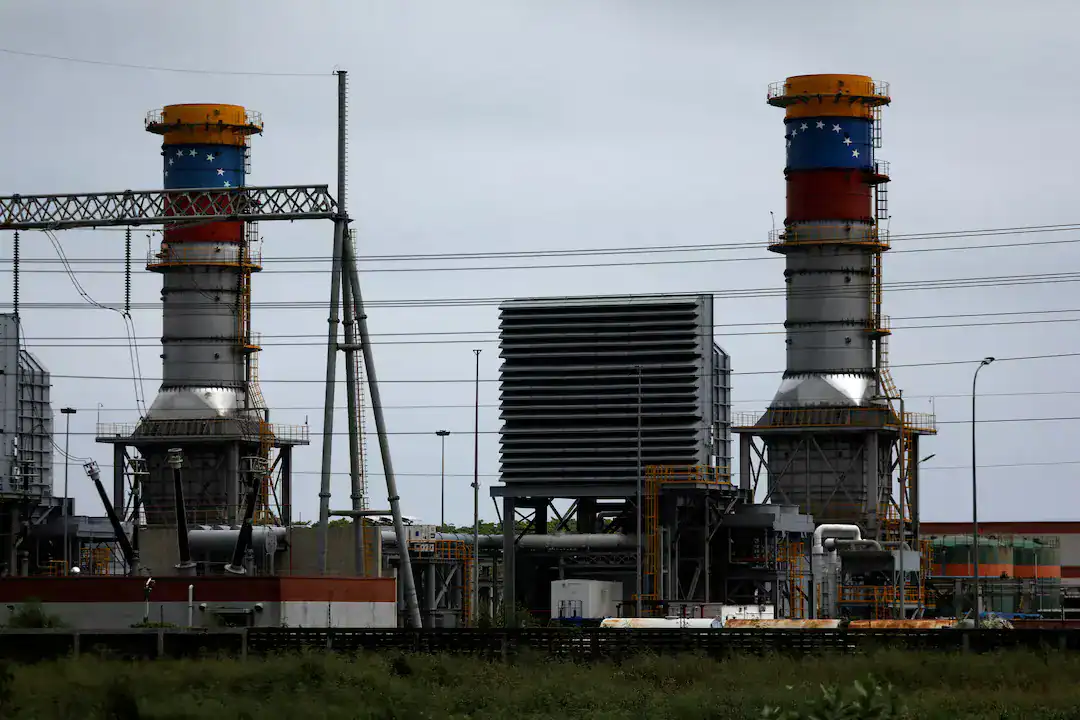
Ecoanalítica director Alejandro Grisanti projects that Venezuela could reach 1.3 million bpd by year-end and potentially 1.5 million by 2027 — but industry executives meeting at a Caracas energy forum this week highlighted formidable obstacles. The electrical grid, described as the primary bottleneck, would require an additional 2,000 megawatts — at roughly $1 million per megawatt — to support two million barrels of daily output. Storage capacity covers only 15 to 30 days. Technological platforms are obsolete, well data has not been updated in 30 years, and the country faces an acute shortage of specialized petroleum engineers after years of emigration.
French firm Maurel & Prom announced it had installed its first drilling rig in Venezuela after an eight-year absence. Schlumberger’s local representative said logistics remain paralyzed by licensing delays. The Orinoco Belt — which accounts for more than half of national output — only recently returned above 500,000 bpd after production cuts forced by export blockages in late 2025. The trajectory is upward, but the country that once pumped over three million barrels a day remains a long way from anything resembling its former capacity, legal reforms notwithstanding.
More: Latin America news in English, every day from The Rio Times.
This article was produced by The Rio Times’ automated newsroom system. How we use AI · Report an error · Editorial responsibility: Matthias Camenzind, Editor-in-Chief