Venezuela Oil Licences: US Treasury Adds Methanol as Venezuelan Gold Sits Unrefined
SANCTIONS · VENEZUELA
Key Facts
- —The country Venezuela holds the world’s largest proven oil reserves. Since Nicolás Maduro’s capture by US forces in January, its trade with America runs under US Treasury licences.
- —What happened On 28 September the Treasury reissued General Licences 46E, 48D and 49B. All three now list methanol among covered petrochemicals (OFAC texts).
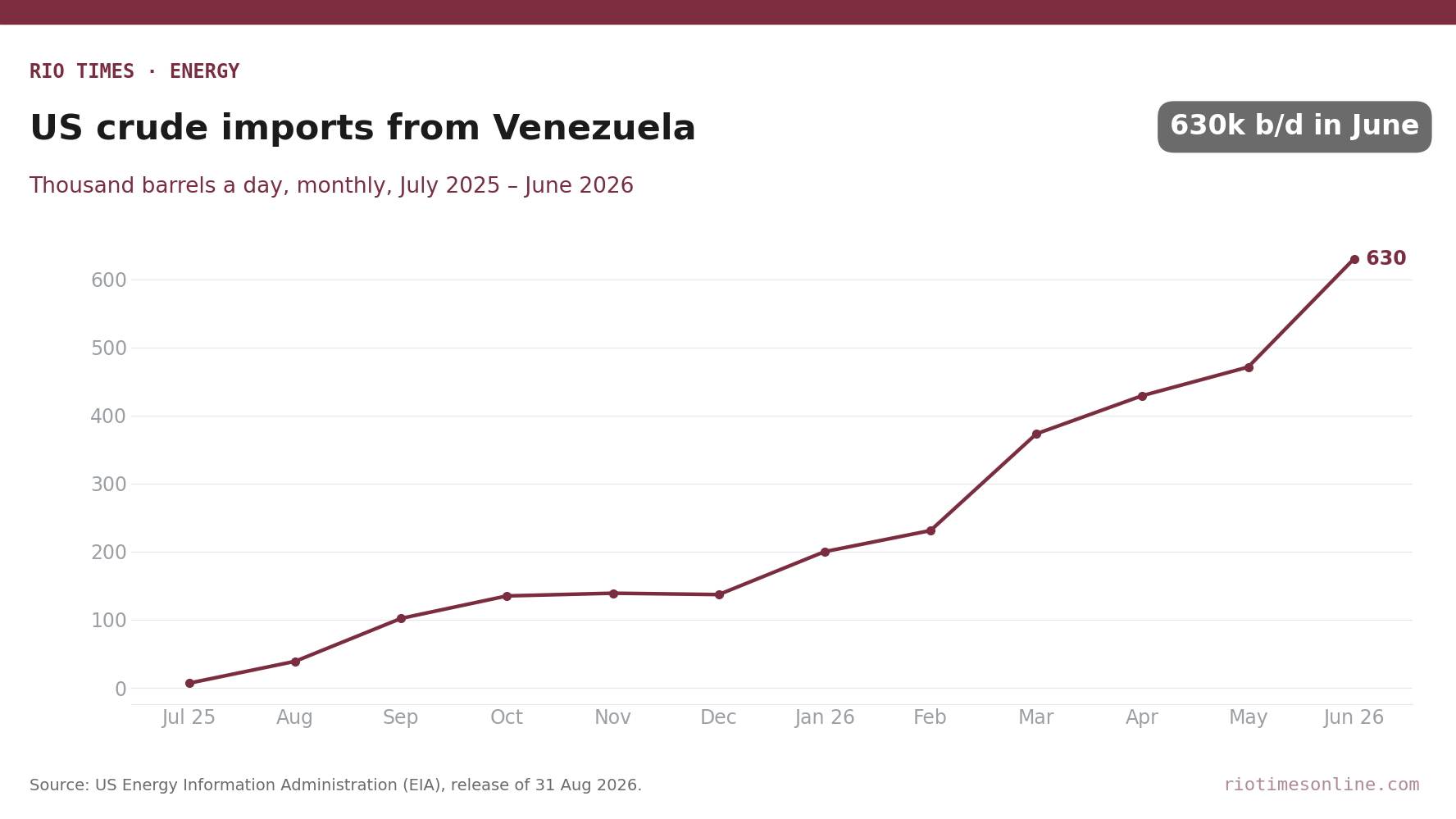
- —The numbers US crude imports from Venezuela rose from 7,000 barrels a day in July 2025 to 630,000 in June 2026 (EIA, 31 Aug release).
- —What it means for you Continuity, not a new opening: real investment still needs separate US approval. Venezuelan gold is legal to buy, yet US refiners will not process it (NYT, 28 Sep).
- —Still open Why methanol was added now, and what proof would satisfy refiners. The EIA publishes July import data on 30 September.
The US Treasury widened its Venezuela oil licences on 28 September, adding methanol to the petrochemicals American firms may trade. The same day, The New York Times reported that Venezuelan gold flown to America sits unrefined.
Both stories show sanctions being taken apart one product at a time. They also show that legal permission moves faster than the buyers who must accept the goods.

What the Treasury Changed
The Office of Foreign Assets Control (OFAC), the Treasury unit that runs US sanctions, issued the three licences on Monday. They replace 46D and 48C of 27 August and 49A of 13 March.
For 46E and 48D, a comparison with the August texts shows one substantive change. Each annex now lists methanol, an industrial alcohol for plastics and fuels, under five tariff codes.
The annex already covered fertilisers and their inputs, such as urea and ammonia. Licence 49B, replacing a March version, carries the same annex.
What the Venezuela Oil Licences Allow
Licence 46E lets US companies founded on or before 29 January 2025 lift, ship, store and refine Venezuelan oil bound for America. Disputes with the state oil company PDVSA must be settled in the US, Britain, France or Singapore.
Licence 48D covers equipment and services for oil, gas, petrochemicals and electricity. It still bars new joint ventures and excludes diluents, the thinners heavy crude needs.
Licence 49B lets firms sign investment contracts, but only as contingent deals. Carrying them out still needs a separate OFAC authorisation.
All three exclude parties tied to Russia, Iran, North Korea and Cuba, and restrict entities linked to China. Venezuela’s independent TalCual said the licences widen oil operations, while El Universal wrote that Washington had eased sanctions.
The Gold That Refiners Will Not Take
The New York Times reported on 28 September that Venezuelan gold worth hundreds of millions of dollars sits in US warehouses. The Spanish agency EFE and La Opinión summarised the investigation the same day.
Under a March deal, state miner Minerven agreed to supply 650 to 1,000 kilograms of unrefined doré bars to the trader Trafigura. La Opinión valued the full tonne at about US$165 million.
International standards require refiners to verify that gold has not financed crime, environmental destruction or corruption. According to the Times, US refiners have so far declined to process it.
The legal door is open. OFAC’s General Licence 51D of 2 September lets established US firms buy and refine Venezuelan gold, with supply-chain reporting.
The risk was flagged early. In April, eleven groups led by SOS Orinoco warned the US mining licences could become a channel for laundering illicit gold.
Where Trust Holds, and Where It Does Not
Oil shows the system can work when buyers trust the product. US crude imports from Venezuela climbed from 7,000 barrels a day in July 2025 to 630,000 in June, EIA data show.
Gold shows the limit, because refiners follow market sourcing rules, not Washington’s. A licence removes a legal barrier, but it cannot certify a mine.
What is stabilising is the legal frame, revised several times this year and mostly toward openness. What could reverse it is evidence that licensed trade has financed armed groups or corruption.
For foreign investors, the message is continuity rather than a new opening. For residents, methanol matters little, but oil remains the main export earner.
Earlier steps are covered in US Eases and Tightens Venezuela Sanctions in One Move. The wider picture is in Venezuela Explained: The Transformation, the Oil Economy and What to Watch.
What Is Not Yet Known
OFAC published no statement explaining why methanol was added now. It is also unclear which Venezuelan plants or foreign buyers will use the new room first.
Nobody has said what documentation would satisfy refiners, or whether the stored gold will move at all. The EIA’s July import figures, due on 30 September, will show whether oil flows kept rising.
Frequently Asked Questions
What changed in the Venezuela oil licences on 28 September?
OFAC reissued General Licences 46E, 48D and 49B, which now list methanol among covered petrochemical products. For 46E and 48D, the other terms match the August versions.
Does this lift US sanctions on Venezuela?
No. The licences authorise specific transactions under conditions, and carrying out new investment still needs a separate OFAC approval.
Why is Venezuelan gold not being refined in the United States?
The New York Times reported on 28 September that US refiners have declined to process it. Industry standards require proof that gold did not finance crime, environmental destruction or corruption.
Sources: OFAC, Issuance of Amended Venezuela General Licenses, 28 Sep 2026 (texts of GL 46D, 46E, 48D, 49B and 51D); US Energy Information Administration, US crude imports from Venezuela; TalCual, 28 Sep 2026; El Universal, 28 Sep 2026; The New York Times, 28 Sep 2026, as summarised by EFE via Diario Libre and La Opinión; Business & Human Rights Resource Centre, SOS Orinoco statement, April 2026.
Read More from The Rio Times