Iran’s Seven-Day Hormuz Plan and What US$104 Oil Does to Latin America
Key Facts
Iran has offered to reopen the Strait of Hormuz within seven days if the United States meets a list of conditions. Its foreign minister, Abbas Araghchi, set out the plan to reporters in New York during the UN General Assembly.
The offer matters far from the Gulf, because the strait has been shut since February and oil still costs about US$104 a barrel. Latin America is split by that price, between the countries that buy fuel and the ones that sell it.
What Iran Has Offered
Araghchi said Qatar passed the plan to Washington, according to the Anadolu Agency, Turkey’s state news agency. The clock would start the day after the United States accepted it.
Under the plan, fighting would stop on every front, including Lebanon, and the American naval blockade of Iranian ports would end. Washington would also waive sanctions on Iranian oil exports and release frozen Iranian funds, Al Jazeera reported.
The United States would take those steps over the first five days, and the strait would open on the sixth or seventh. Talks on a wider settlement would begin on the seventh day.
“The moment they accept this plan, from the next day, this timetable can start,” Araghchi said. He added that reopening the waterway would not mean concessions on Iran’s nuclear programme.
Live Market IntelligenceBrazil — Live Market Board
Rio Times · Live Market Intelligence
Brazil — Live Market Board
-0.27%
183,476.86
-0.27%
64,651.92
+0.60%
11,255.90
-0.39%
2,893,751
-1.57%
2,584.72
-0.95%
59,934.37
+1.27%
| Instrument | Last | Change | YoY | Prev. | High | Low | Volume |
|---|---|---|---|---|---|---|---|
| IBOV | 183,476.86 | -0.27% | +21.85% | 183,965.91 | 168,310 | 167,142 | — |
| USD/BRL | 5.16 | +0.01% | -5.13% | 5.16 | 5.18 | 5.14 | — |
| SELIC | 14.00% | — | — | — | — | — | |
| PETR4 | 41.64 | -0.05% | +35.19% | 41.66 | 41.97 | 41.15 | 41,499,400 |
| VALE3 | 72.97 | +0.83% | +30.75% | 72.37 | 73.54 | 72.66 | 17,658,000 |
| ITUB4 | 38.60 | -1.03% | +4.57% | 39.00 | 39.34 | 38.39 | 29,487,800 |
| BBDC4 | 16.85 | +0.36% | +3.50% | 16.79 | 16.90 | 16.67 | 19,416,900 |
| BBAS3 | 19.37 | +0.47% | +0.73% | 19.28 | 19.44 | 19.16 | 11,069,200 |
| B3SA3 | 14.26 | -0.21% | +12.73% | 14.29 | 14.47 | 14.11 | 33,037,800 |
| ABEV3 | 14.89 | -0.80% | +21.91% | 15.01 | 15.07 | 14.81 | 16,453,100 |
| WEGE3 | 47.59 | +0.49% | +29.99% | 47.36 | 48.08 | 47.36 | 3,364,600 |
| PRIO3 | 59.14 | -0.19% | +50.67% | 59.25 | 59.81 | 58.74 | 3,325,600 |
| SUZB3 | 41.33 | +2.35% | -23.55% | 40.38 | 41.48 | 40.35 | 3,914,900 |
| RENT3 | 34.68 | -0.09% | +0.84% | 34.71 | 34.96 | 34.35 | 7,979,100 |
| AZZA3 | 15.89 | -2.63% | -53.76% | 16.32 | 16.42 | 15.82 | 1,330,300 |
| CSNA3 | 4.30 | +0.47% | -42.65% | 4.28 | 4.41 | 4.26 | 10,076,100 |
| GGBR4 | 24.69 | +2.19% | +51.38% | 24.16 | 24.85 | 24.18 | 7,047,600 |
| ENEV3 | 24.21 | -1.38% | +70.49% | 24.55 | 24.64 | 23.99 | 9,297,000 |
Washington’s Answer
President Donald Trump has rejected the seven-day offer, the Wall Street Journal reported, and expects American bombing to resume after the midterm elections. The White House has not confirmed that account.
In public the State Department has not closed the door. Its spokesman, Tommy Pigott, said it was not the United States that had stopped talks from happening.
A United States official told CBS News that the discussions were positive and constructive, but that Washington was in no hurry. The official said America held the stronger position.
Iran’s reading is the opposite. Araghchi said the choice now rested with the United States, and that Iran would not surrender sovereign rights under pressure.
Why the Strait Is Shut
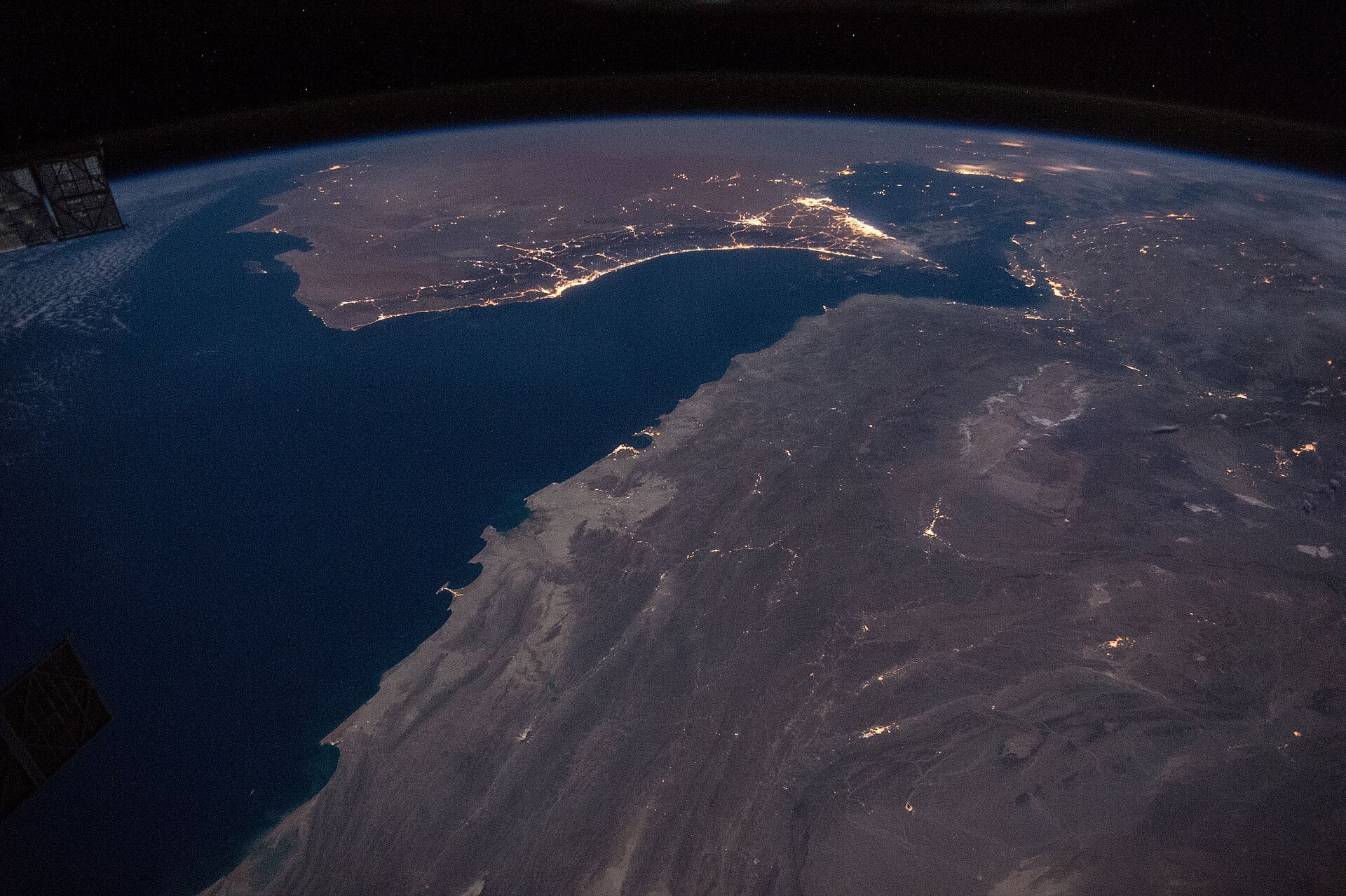
The Strait of Hormuz is the channel between Iran and Oman through which about a fifth of the world’s oil normally moves. Iran closed it on 28 February, after American and Israeli air strikes began the war.
A ceasefire in June briefly eased the blockage, but it broke down in July. The United States reimposed a naval blockade of Iranian ports on 14 July, and the waterway has stayed effectively shut.
Traffic through the strait has fallen from about 20 million barrels a day to fewer than four million, the International Energy Agency estimates. American Central Command says it has turned back 122 commercial ships heading for Iranian ports.
Brent crude, the benchmark that prices most traded oil, settled at US$104.37 a barrel on Friday, down 2.09%. It cost about US$70 before the war and touched roughly US$150 in the first weeks of it.
The Bill for the Importers
Most of Latin America buys its fuel rather than making it. Chile, Peru, the Central American republics and the Caribbean islands import almost everything they burn, so a Gulf shortage lands on their pumps.
OLADE, the intergovernmental energy body for Latin America and the Caribbean, measured the damage done in March. Petrol prices across the region rose 15% that month, diesel prices 21%, and regional energy inflation reached 1.42%.
Chile shows what that costs a treasury, which was spending about US$140 million a week to hold pump prices down. In March the government let go, and petrol rose 44% and diesel 54% in a single week.
The Economic Commission for Latin America and the Caribbean, a UN body, expects energy to cost at least 25% more this year. It calculates that the trade balance of Central America, Haiti and the Dominican Republic could worsen by 0.9% of their output.
The Windfall for the Exporters
The other half of the region is selling into the shortage. Latin America pumped 11% of the world’s crude last year against 30% from the Middle East, and is filling part of the gap.
Brazil passed four million barrels a day this year and set a monthly production record in June. The Americas Society and Council of the Americas put its crude sales to China up 87% in the first five months.
Guyana, a country of about 800,000 people on South America’s north coast, has gained most in proportion. Its government raised its 2026 petroleum revenue forecast to about US$6.5 billion, more than double the budget figure.
Venezuela sold more than 1.25 million barrels a day in May, its best month in over seven years. Colombia’s Ecopetrol rose 1.28% on Friday to US$16.58 in New York, the only regional oil share to gain.
What to Watch
The first question is whether Washington answers the offer at all. A rejection reported by one newspaper is not a formal refusal, and Iran has said its timetable stays available.
The second is the oil price, which has swung with each diplomatic signal. Brent lost about 2% on Friday on talk of a deal, having gained 3.4% the day before on talk of a wider war.
The third is what happens to the region’s fuel subsidies if prices stay high into 2027. Chile has already stopped paying, and other governments are weighing the same choice.
The fourth is Latin America’s own diplomatic position, which has hardened. Colombia severed relations with Iran this month over alleged links to armed groups, and Tehran called the accusation baseless.
Frequently Asked Questions
What is the Strait of Hormuz?
It is the narrow sea channel between Iran and Oman that normally carries about a fifth of the world’s oil. Iran closed it on 28 February 2026, days after the war with the United States and Israel began.
Why does it matter in Latin America?
Chile, Peru, Central America and the Caribbean import nearly all their fuel, so a Gulf shortage raises their pump prices. Brazil, Guyana, Colombia and Venezuela sell crude and earn more.
What does fuel cost in the region now?
OLADE measured petrol at between US$0.70 and US$2.07 a litre across Latin America and the Caribbean, and diesel at between US$0.80 and US$1.65.
Has the United States accepted the plan?
No. The Wall Street Journal reported that President Trump rejected it, and the White House has made no public comment on the report.
Would reopening bring prices down?
Brent fell about 2% on Friday on talk of a deal alone, so a reopening would be expected to push prices lower. No institution has published a figure for how far or how fast.
This article was produced by The Rio Times’ automated newsroom system. How we use AI · Report an error
Read More from The Rio Times