Uruguay, exporting country: the external wind that returned and will continue in 2022
RIO DE JANEIRO, BRAZIL – Uruguay sold an average of more than US$31 million per day in goods exports during the year just ended. It is not news that a small country focused on agricultural production has its export balance as a key factor in its economic growth.
Still, it could be news that, from one year to another, exported goods have grown 43% and that for the first time in history, it has managed to surpass the barrier of US$11 billion in sales to the world.
The factors behind the expansion, according to various analysts, stem from a combination of the post-pandemic recovery, marked by an upturn in demand from the central countries, with China as the leading food buyer, and an “extraordinary” increase in the international prices of raw materials.
When extended over time, these processes are cataloged as a “commodity boom” and are particularly relevant for the economies of the region, which are net exporters of raw materials. Its most recent precedent extends throughout the decade that ended in 2014. As it happened at the time, its reissue begins to ignite the debate about the importance of this “tailwind” on the performance of the activity.

For Marcos Soto, analyst and dean of the Business School of the Catholic University (UCU), the factors mentioned involve the “two sides of the same coin”: “The rebound in the economies brought greater demand and limited production capacity, higher prices, especially in products related to food and staples, which should be the first to recover. Thus, what we have is a feedback effect between recovery and prices”.
For his part, economist Aldo Lema, consulted by the newspaper, summarized what happened during 2021: “The rebound in prices was associated with the strong rebound in world growth, the revaluation of the yuan against the dollar [which favors the valuation of sales in U.S. currency] and supply problems in some items, for which such a significant recovery in demand was unexpected”. Taking preliminary data, he mentioned that the average price index of Uruguay’s exports “increased close to 15%”, so that the increase in the volume of goods sales was “around 20%”.
This external context resulted in that, “in general, agricultural products increased their sales abroad, with few exceptions”, according to the economist Florencia Carriquiry, partner of the consulting firm Exante, in the program “En perspectiva” of Radiomundo. This evaluation includes meat, the leading product in the export ranking, which more than doubled sales in 2020 by selling 36% more in volume with “record” prices, according to the Uruguay XXI Institute, as well as other items, such as cellulose (43% more), soybeans (17%), dairy products (14%), and wood (64%).
The total in millions of the export basket also shows a considerable expansion if compared to the records of 2019 (26%) and, “although in some cases it is due to higher prices, the physical volume exported increased considerably in the case of meat and wood”, said to the newspaper the economist Nicolás Cichevski, manager of Economic Analysis of the consulting firm CPA, who as a “relevant” fact of the year we left behind also added the record export of energy to Brazil.
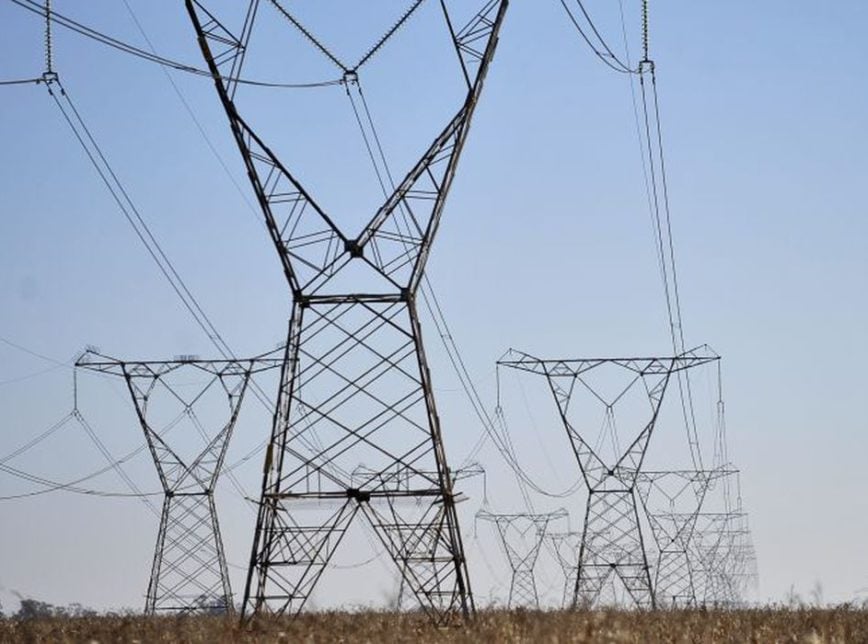
In this case, the State, as an exporter, obtained exceptional revenues after a 632% increase in energy sales because a severe drought affected electricity generation in Brazil. The revenues went to Uruguay’s National Administration of Power Plants and Electric Transmissions (UTE), which, to comply with the transmissions, turned on its thermal power plants -the most polluting method- and bought diesel oil from Ancap, which also brought profits for the oil company and led to the government’s decision not to adjust fuels at the end of the year.
Just as the levels of energy sales generated this effect in the public sector, Carriquiry argued that the “good export performance was reflected, at the supply level, in a significant expansion of primary activities, which despite the summer drought accumulated a growth of almost 3% in January-September according to the latest published figures, of the manufacturing industry, which expanded more than 6% in the same period and was at the highest levels since 2014, and also of trade, due to the impact of trading activities in this sector”.
THE FAVORABLE CONTEXT
Based on the above, economists agree that a set of external factors shaped a favorable scenario for Uruguay as an exporter and that this would not have significant changes in the year ahead. How big is this external phenomenon, and can it be compared to the last commodity supercycle, which resulted in an unprecedented expansion of the local economy?
Soto pointed out that, according to Bloomberg’s commodities index -which counts 23 raw materials from six sectors-, “at the end of 2021 a five-year high in prices was reached”, so he considered “there is no doubt that there is a kind of ‘tailwind’ for Uruguayan production” of primary goods. Meanwhile, Lema expressed that “on average the prices of raw materials have returned to the level observed at the end of the 2003-2014 supercycle, although with some heterogeneity; for example, beef is 25% above the 2014 average”.
In the same line, Cichevski explained that the relevant price index prepared by CPA, which weights the items according to the incidence in Uruguayan exports, showed that “in 2021 the prices of relevant commodities for the country would have reached levels similar to those of the last boom”. To this must be added, as part of the favorable context, that oil -an international price that has an inverse impact on Uruguay, since it buys and does not produce- “was below the levels observed during the last boom (2011-2013)”, which has generated an “exceptionally good terms of trade relationship in 2021”.
Also, “the monetary and fiscal stimuli deployed by the United States in 2020 and early 2021 propitiated a favorable financial scenario for Uruguay and the rest of the emerging countries, with interest rates at historically low levels, which facilitated the financing of fiscal deficits and the attraction of investments”, stated Cichevski.
In line with the above analysis, Tamara Schandy – partner of Exante – considered that “the international context was very good for Uruguay” and detailed: “The reactivation of the world economy after the initial shock of the covid-19 was exceptionally vigorous and faster than expected. This context of intense reactivation of world demand combined with a framework of abundant liquidity and some supply factors in some markets gave rise to commodity prices that were very favorable for Uruguay. It was also another year of “cheap money” due to low international interest rates on the financial side. That is the key to Uruguay’s good performance.
WHAT’S AHEAD AND SPREADS
In financial terms, 2022 finds central banks in the process of reversing the expansionary policies they deployed to face the pandemic. In particular, it finds the United States with a level of inflation not seen since 1982 -it closed the year at 7% per annum. It means that interest rates will start to rise, creating a less friendly international scenario for emerging countries. In any case, as of today, global factors continue to point in the direction of a favorable context; the tailwind will continue to blow for Uruguay.
Given that the international prices of the exportable basket would be maintained, a “sustaining” of the millions obtained from sales to the world in 2021 is foreseen. “The main economies will continue to grow at a good pace, and that will generate a strengthening of demand,” said Soto.
Likewise, the dean of the UCU warned about the risks associated with “inflationary processes” and their effect on the dynamism of economies. In addition, there is still “the unknown of what will happen” with its neighbors: “Brazil is in stagflation, with a risk of recession in 2022, and Argentina is a time bomb”.
For Cichevski, in the next two years, “the risk for emerging economies is greater, particularly for those with weaker fundamentals, whether economic-financial or institutional”. However, this is “relativized in the case of Uruguay given the good performance of the Chinese economy, which values the yuan in relation to the dollar and thus positively affects the dollar prices of exportable commodities”. At the same time, he highlighted Uruguay’s differentials due to its “institutional framework” and “the fact that, although the fiscal deficit is still high, our relative position in financial terms has improved; currently the country risk is the lowest in Latin America”.
In the same sense, Lema predicted “a year of prolongation of high prices, even with some additional upward bias” as a result of the fact that “world growth continues to be higher than the historical average (4.5% versus 3.5%)”. In his opinion, “even with the withdrawal of stimuli and rate hikes, this cycle resembles the one observed in 2003-2007, when world growth was sustained, and commodities remained high”.
Schandy, on the other hand, said that “in general terms, 2022 will be favorable, but not as good as 2021, because the rebound effect of the initial fall of covid-19 has already passed in the world and because monetary and fiscal policies will become more normal”. At the same time, he agreed with his colleagues when he warned about the rebound of inflation in the world, and particularly in the United States, because if it does not ease, “a more contractionary turn” in its monetary policy is possible. This “makes credit more expensive and may have negative consequences for global growth, commodity prices and financial markets in general, and lead to a further strengthening of the dollar in the world”.
THE TO-DO LIST
The government’s forecasts contained in the last Rendición de Cuentas, made in mid-2021, project growth of 3.5% for this year and moderation towards the end of the period. According to the government’s analysis, this is supported by “the recovery from the pandemic effect, global growth, rising commodity prices and the implementation of structural reforms.”
Analysts are now recalibrating their forecasts. Unlike months ago, when the government forecasted an expansion that economists saw as lower, they are now projecting an increase in activity slightly above the official forecast.
Lema set 3% as a floor for growth in 2022, which he said could reach up to 5%, “with an additional reduction of the fiscal deficit”. Cichevski also considered that “the economy’s performance in the second half of 2021, even though we do not yet know the fourth-quarter data, together with the return of tourism in the 2022 season, would ensure a 3% growth floor” for this year.
For their part, in Exante, they point “to an expansion of almost 4% in the average of the year”. However, compared to the fall of the fiscal deficit, they marked caution: “So far a good part of the adjustment was due to the ‘full use’ of the public investment lever, which does not seem to have much more room to go down”, and “another major adjustment factor was the fall in the public sector wage bill, in a context of falling real wages”, which should be reversed “having an explicit political commitment that this government will end without a loss of purchasing power”, Schandy stressed.
Both Exante’s partners and the CPA manager pointed out that Uruguay has structural reforms ahead and that the post-2022 scenario will depend on the outcome of these processes. “The economic plan must focus fundamentally on solving -or at least starting- the structural problems of the Uruguayan economy to boost medium and long-term growth: productivity of the non-tradable sector, human capital (education), trade openness, fine-tuning and improving regulations”, said Cichevski, and indicated that it seems “necessary to move forward” with some of these reforms “to return to systematic growth at 3% rates”.
Along the same lines, Carriquiry expressed that “Uruguay must press the accelerator at the level of a reform agenda that contributes to promoting productivity improvements in the economy and, ultimately, a better quality of life for all Uruguayans. Completing the social security reform and significant progress towards a more open economy are central objectives for this year”.
Soto also pointed out a complementary line of action to sustain growth, which involves boosting services exports, such as the technology sector. This sector reached a milestone recently, since in 2020, for the first time, foreign sales exceeded the local market in the framework of a process that does not see a break. “The greatest challenge of diversification of our productive verticals lies in continuing to deepen activities that generate value and job opportunities and are in demand globally. For example, exports of services related to information technologies”.
In turn, Soto stressed that “there are still conditions for beef to be the main export product” of Uruguay, but analyzing the growth dynamics, “it is not crazy to think” that technology and the sale of services abroad will replace it. “That is why, when we talk about international insertion and exports, we must think of ourselves in a ranking of goods and services”, he concluded.
PRODUCTS AND MARKETS
For the third consecutive year, beef ranked first in the ranking of products exported by Uruguay, a position it had lost in previous years to cellulose. 61% of the total beef sold went to China, almost double the share of the previous year, which was partly due to external aid: “In a framework of firm demand from the Chinese market, the supply is limited, since Brazil and Australia have a lower production due to stock reconstruction and there have been some circumstantial aspects, such as the cessation of exports from Argentina, the temporary interruption -between September and December 2021- of Brazilian production destined for China and the suspension by China of certain Australian slaughterhouses”, analyzed Uruguay XXI.
The second product in the ranking, cellulose, also showed a strong expansion (43%) compared to 2020, which “is almost exclusively explained by better export prices, which recovered after being at reduced levels” the previous year. Meanwhile, foreign sales of timber rose 64% in the year, with improvements in volumes and prices, again with China as a key factor -the first destination, doubling exports from the previous year-.
In terms of buyer countries, Soto highlighted Egypt, sixth in the ranking of local export destinations, which showed an annual growth of 158% due to higher soybean shipments and placements of live cattle and wheat, two products that were not exported in 2019 and 2020. In addition, the analyst indicated that China “will strongly repeat” its role as the leading trading partner, since its economy “will grow another 5% and that encourages demand”. Meanwhile, he warned that the problems in Brazil’s economy may bring “lower exports to our second market” and that the “export surpluses” in the neighboring country “may imply a reduction in export prices of products competitive with our industry (dairy products, for example)”, which may even compete “with our products in similar markets at lower costs”.
With information from La Diaria
More: Brazil news in English, every day from The Rio Times.
Editorial responsibility: Matthias Camenzind, Editor-in-Chief · Editorial standards · Report an error