Uganda Shilling Weakens 6% as Fuel Prices Climb
UGANDA · ECONOMY
Key Facts
- —What happened The Ugandan shilling has lost about 6% of its value against the dollar since the end of August.
- —The numbers It averaged Shs3,704.51 to the dollar in August. By midday on Tuesday 15 September it was around Shs3,920.
- —At the pump Total was quoting petrol at Shs6,899 and diesel at Shs6,699 a litre, about US$1.76 and US$1.71.
- —Why it is happening Brent crude above US$107 a barrel, Middle East supply risk, and heavy dollar demand from fuel importers.
- —The part that surprises In dollars, Ugandan petrol has barely moved since July. Almost the whole recent rise at the pump is the currency.
- —What the central bank did It raised the cash reserve ratio from 9.5% to 11% in May and has held its policy rate at 9.75%.
Ugandan drivers are paying a fifth more than a year ago. In dollars, the fuel itself has hardly moved since July.
The Ugandan shilling weakened to around Shs3,920 to the dollar by midday on Tuesday 15 September, from an August average of Shs3,704.51. Pump prices are approaching Shs7,000 a litre.
The Currency
Bank of Uganda rates put the shilling at an average of Shs3,704.51 to the dollar through August.
It closed Monday 14 September around Shs3,917 and opened Tuesday at Shs3,903, weakening to about Shs3,920 by midday.
That is a move of roughly 5.8% in the exchange rate, or a loss of about 5.5% in the shilling’s own value.
Bloomberg described it on 16 September as a two-year low, driven by surging demand for foreign exchange.
At the Pump
Total was quoting petrol at Shs6,899 and diesel at Shs6,699 a litre on 15 and 16 September, about US$1.76 and US$1.71.
Shell was at Shs6,850 for petrol and Shs6,750 for diesel, some US$1.75 and US$1.72.
The Shs7,000 threshold everyone is watching works out at about US$1.79 a litre.
These are two dealers’ forecourt prices reported by the Daily Monitor, not a published national average.
Live Market IntelligenceCommodities — Live Market Board
Rio Times · Live Market Intelligence
Commodities — Live Market Board
-0.03%
| Instrument | Last | Change | YoY | Prev. | High | Low | Volume |
|---|---|---|---|---|---|---|---|
| GOLD | 4,461 | +1.78% | +33.20% | 4,383 | 4,503 | 4,421 | 139,824 |
| SILVER | 65.59 | +1.26% | +73.05% | 64.77 | 66.98 | 64.81 | 46,406 |
| BRENT | 88.88 | -0.03% | +34.42% | 88.91 | 90.07 | 88.12 | 29,713 |
| WTI | 83.11 | -0.11% | +31.57% | 83.20 | 84.35 | 82.40 | 166,848 |
| COPPER | 6.61 | +0.03% | +46.70% | 6.61 | 6.71 | 6.61 | 39,543 |
| LITHIUM | 75.20 | +1.47% | +62.95% | 74.11 | 75.80 | 75.08 | 89,275 |
| IRON ORE | 161.91 | — | +58.10% | 161.91 | 161.91 | 1 | |
| SOY | 1,184 | +3.20% | +17.05% | 1,148 | 1,199 | 1,168 | 163,179 |
| CORN | 480.50 | +10.02% | +29.34% | 436.75 | 480.75 | 459.50 | 341,248 |
| WHEAT | 655.00 | +3.93% | +29.70% | 630.25 | 657.75 | 631.50 | 128,793 |
| COFFEE | 317.25 | -5.51% | +0.67% | 335.75 | 321.20 | 313.55 | 21,747 |
| SUGAR | 16.43 | -1.79% | -3.01% | 16.73 | 17.11 | 16.22 | 171,992 |
| COCOA | 5,719 | +3.18% | -34.96% | 5,543 | 5,779 | 5,574 | 26,773 |
| ORANGE JUICE | 138.55 | -0.47% | -45.38% | 139.20 | 141.05 | 137.50 | 703 |
| COTTON | 85.03 | +2.33% | +26.78% | 83.09 | 82.90 | 81.96 | 16,546 |
| BEEF | 223.60 | -3.93% | -5.18% | 232.75 | 226.40 | 223.00 | 16,126 |
| CATTLE | 339.10 | -3.16% | -1.82% | 350.17 | 345.50 | 338.60 | 10,164 |
| USD/BRL | 5.16 | +0.01% | -5.13% | 5.16 | 5.18 | 5.14 | — |
The Comparison That Explains It
The Uganda Bureau of Statistics put average petrol at Shs6,538 a litre in July and diesel at Shs6,603.
At the exchange rate then, that is roughly US$1.74 for petrol. At today’s rate, Shs6,899 is about US$1.76.
So petrol has risen about 5.5% in shillings since July and less than one per cent in dollars.
The recent increase at Ugandan pumps is almost entirely an exchange rate story, not an oil story.
The Year Is a Different Matter
Over twelve months the picture reverses. Petrol was around Shs4,710 a litre a year ago and diesel around Shs4,354.
That is a rise of roughly 39% for petrol and 52% for diesel. New Vision made those calculations from the bureau’s price levels.
The bureau’s own published measure, annual liquid energy fuels inflation, was 26.2% in the year to June 2026.
The two figures measure different things, and the gap between them is why fuel inflation in Uganda is argued about.
What the Analysts Say
Peter Ochieng, a regional downstream oil and gas expert, points to Brent at about US$107.4 a barrel. He adds risk premiums on freight and insurance.
Stephen Kaboyo of Alpha Capital Partners says the shilling is moving in lockstep with crude prices.
That is the important mechanism. The oil price raises the fuel bill and the dollar demand that pays it, which pushes the currency down.
Dr Susan Kavuma of Makerere University points to the general channel from import costs into domestic inflation.
What the Central Bank Has Done
The Bank of Uganda raised the cash reserve ratio from 9.5% to 11% in May 2026, tightening shilling liquidity.
It has held the central bank rate at 9.75%.
A higher reserve ratio makes shillings scarcer and is a way of defending the currency without raising the policy rate.
Uganda holds reserves but has not signalled heavy intervention.

What It Means for People Living There
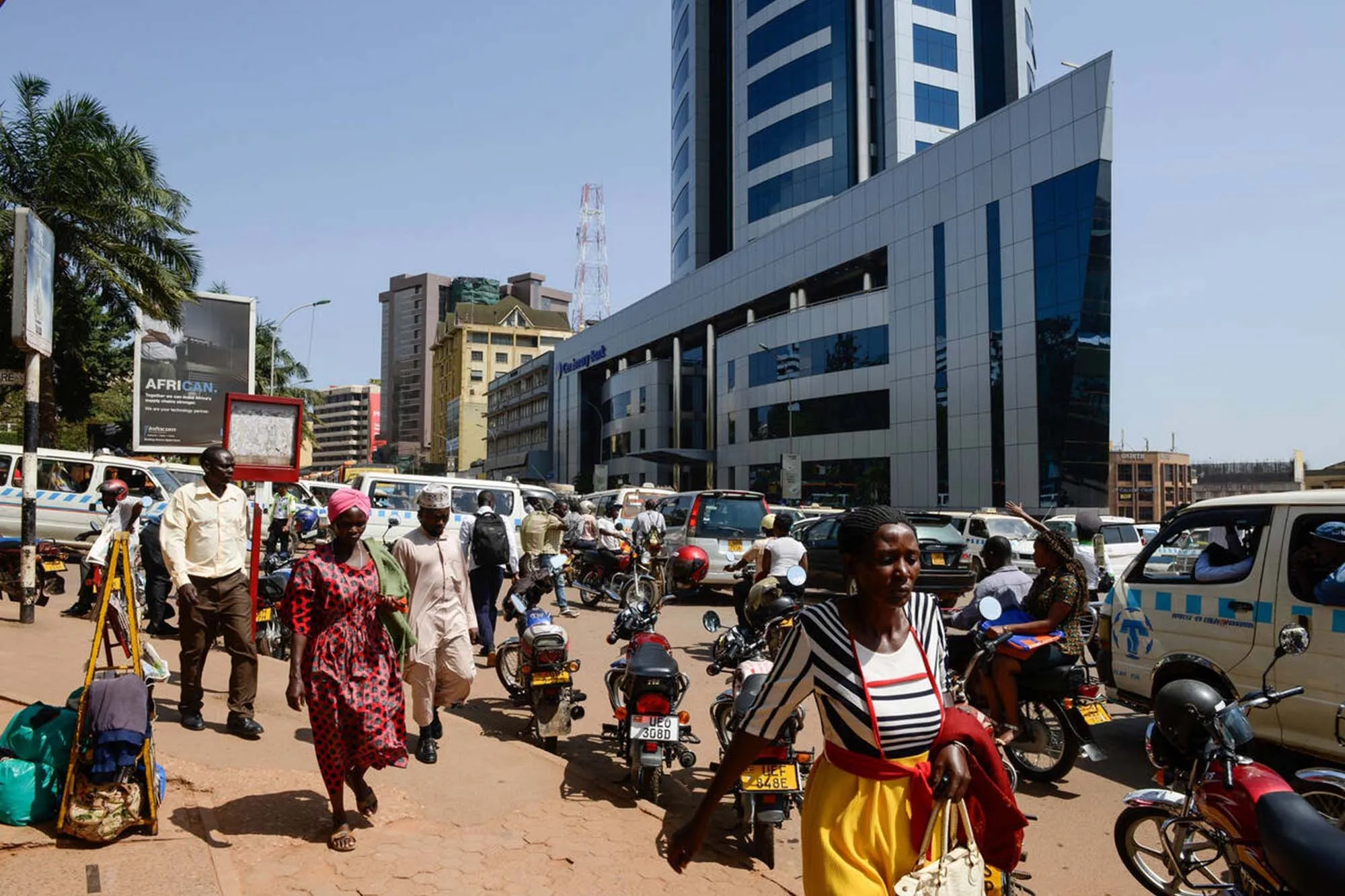
Boda boda fares and matatu fares track fuel prices closely and adjust within days.
For households, transport and cooking fuel are the visible costs. For businesses, generator diesel is the quiet one.
Foreign residents paid in dollars are substantially insulated. Those paid in shillings are not.
Imported goods priced in dollars become more expensive across the board as the shilling falls.
What to Watch
Brent crude. If it retreats, both the fuel bill and the dollar demand ease together.
Bank of Uganda interventions and any further move on the reserve ratio.
The next bureau of statistics inflation release.
And the Shs7,000 mark, which is psychological rather than economic but will set the tone of the argument if it is crossed.
More: Africa news and analysis, every day from The Rio Times.
Frequently Asked Questions
How much has the Ugandan shilling fallen?
From an August average of Shs3,704.51 to the dollar to about Shs3,920 by midday on 15 September 2026, roughly 6%.
What are fuel prices in Uganda now?
Total quoted petrol at Shs6,899 and diesel at Shs6,699 a litre, about US$1.76 and US$1.71.
Is it the currency or the oil price?
Since July it is almost entirely the currency: petrol rose 5.5% in shillings and under 1% in dollars. Over a year it is the oil price.
What is driving it?
Brent crude above US$107 a barrel, Middle East supply risk, and heavy dollar demand from fuel importers.
What has the central bank done?
It raised the cash reserve ratio from 9.5% to 11% in May 2026 and has held the policy rate at 9.75%.
Where do these prices come from?
Forecourt quotes from Total and Shell reported by the Daily Monitor, not a published national average.
Sources: Bank of Uganda, Uganda Bureau of Statistics, Daily Monitor, New Vision, Bloomberg, Reuters.
This article was produced by The Rio Times’ automated newsroom system. How we use AI · Report an error
LatAm Markets: Live Signals → — real-time movers, turnover leaders and FX across Latin America.
Read More from The Rio Times