In May, Brazil witnessed a notable recovery in its oil and gas production, marking the end of a five-month downward trend.
This shift, noted by the National Agency for Petroleum, Natural Gas, and Biofuels (ANP), symbolizes a significant turnaround for the nation’s energy landscape.
Earlier in the year, production faced several challenges, including operational disruptions and shutdowns, both planned and unexpected.
These issues were compounded by a strike at the Brazilian Institute of the Environment and Renewable Natural Resources (Ibama). This strike delayed the issuance of vital operational licenses.
The ANP acknowledged these disruptions but didn’t provide specific data on the strike’s full impact.
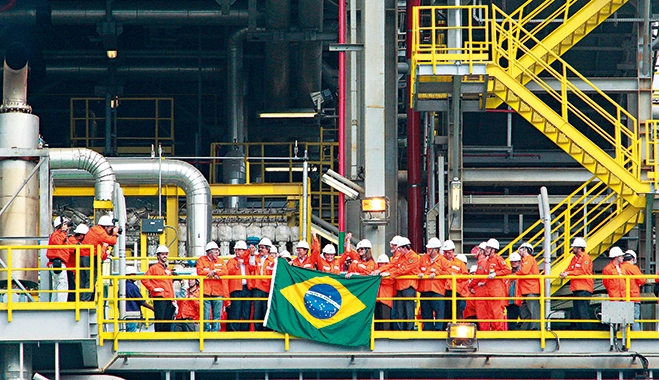
From December 2023 through April 2024, production levels managed to exceed those of the previous year during the same period. This indicates a resilient sector on the path to recovery.
Although the ANP didn’t specify the reasons for May’s production increase, it highlighted a general reversal in the previous downtrends.
Bruno Cordeiro, a market analyst at consultancy StoneX, informed Reuters of a notable output decline in long-standing production fields, beyond regular maintenance pauses.
The full data for May’s production is expected to be published by the ANP in early July.
In terms of production figures, April saw Brazil generate an average of 3.194 million barrels of oil per day, the lowest in a year and a 4.8% decrease from March.
Yet, this was a 1.69% increase from April of the previous year. The recovery in May coincided with intensified actions by Ibama workers.
They have been slow in issuing licenses since the beginning of the year due to disputes over wages and working conditions.
These workers initiated a strike across at least 14 states starting on Monday.
Challenges and Strategic Importance
The Brazilian Petroleum Institute (IBP) recently characterized the concurrent labor movements at Ibama and the ANP as a “perfect storm” for the industry.
The institute estimated that the strike had already reduced oil production by approximately 80,000 barrels per day.
This rebound in May provides a broader context for Brazil’s strategic importance in the global oil market.
As the country navigates operational and bureaucratic challenges, its ability to maintain and increase production levels has significant implications.
It not only affects global oil prices but also plays a crucial role in national economic stability and growth.
Brazil’s oil sector’s resilience underscores its pivotal role in the global energy supply chain.
It highlights the importance of sustainable and efficient management practices in overcoming both internal and external challenges.
This article was produced by The Rio Times’ automated newsroom system. How we use AI · Report an error
LatAm Markets: Live Signals → — real-time movers, turnover leaders and FX across Latin America.
Read More from The Rio Times