Why Trump Has Become a Central Force in Brazil Election
Brazil · Markets
Key Facts
—The race. Brazil votes for president on October 4, with Lula and Flavio Bolsonaro in a dead heat.
—The outsider. Donald Trump has inserted himself into the contest, courting both candidates.
—A gift to the right. Washington labeled two Brazilian gangs terrorist groups, a long-standing Bolsonaro demand.
—A gift to the left. Trump’s tariff threats let Lula rally the country against foreign meddling.
—Double-edged. Even Bolsonaro allies warn the Trump card must be played with care.
—Next flashpoint. Lula and Trump both attend the G7 in France on June 15-17.
Runoff · Sunday, 25 October
Brazil Runoff 2026: Lula vs Flávio
Date, polls, debates, odds and how the runoff works, updated every day.
Read our Brazil election 2026 runoff guide →
Brazil election 2026 · Brazil election polls · Who will win: Brazil election odds · Brazil runoff date and results start · Brazil election results · Brazil election poll data (CSV) · All election stories
Prediction markets · who wins the runoff
Implied chance of winning Brazil’s presidency on 25 October, from traders’ prices.
Polymarket
Flávio Bolsonaro 78.2% · Lula 21.5% (US$191 million traded)
Kalshi (regulated in the US by the CFTC)
Flávio Bolsonaro 79% · Lula 22%
As of 22 October, 8:00 am ET (13:00 Lisbon), updated every 20 minutes. Prices are bets, not polls, and can move fast.
Why we show this: prediction markets turn real-money bets into a live probability that moves within minutes of the news, which is why investors, campaigns and newsrooms in the United States now follow them closely. We show them next to polls and official results, never instead of them.
The 2026 Brazil election is shaping up as the country’s tightest in a generation, and one of its most talked-about figures is not even on the ballot: US President Donald Trump, whose every move toward Brazil now ripples through the campaign.
The cast, for readers far from Brazil
The October 4 vote pits President Luiz Inácio Lula da Silva, the 80-year-old veteran leftist seeking a fourth term, against Senator Flavio Bolsonaro, the right’s standard-bearer. Flavio is the eldest son of former president Jair Bolsonaro, who is serving a 27-year sentence over an attempted coup and barred from running, leaving the son to carry the family banner.
Polls show the two in a statistical tie, a race analysts describe as genuinely open rather than settled. That tightness is exactly what makes outside influence matter so much: in a contest decided at the margins, any nudge can count.
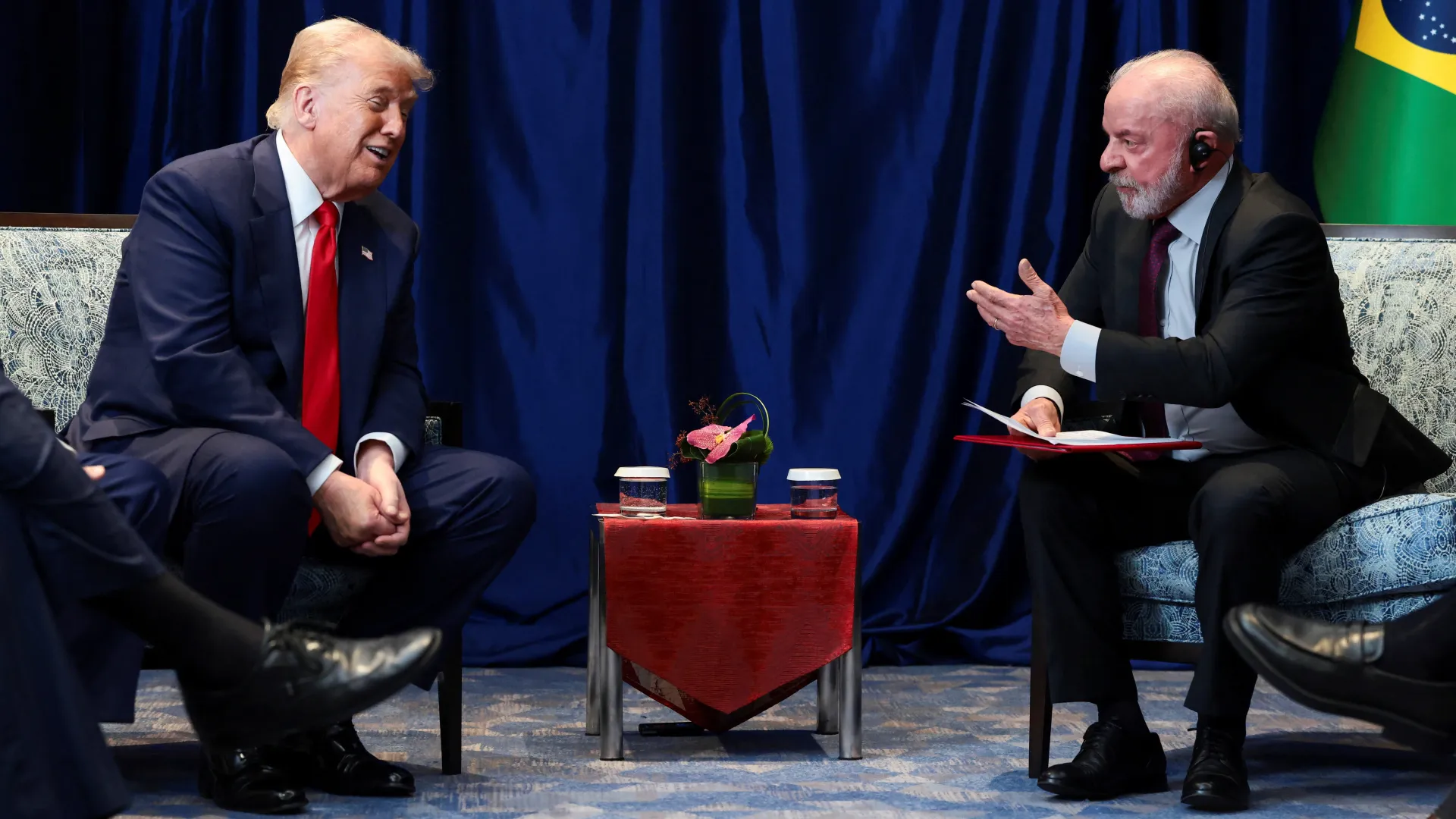
Trump has a track record here. He has intervened in Brazilian politics before on the Bolsonaro family’s behalf, and both Lula and Flavio have made the pilgrimage to the White House in recent weeks.
A gift to the Bolsonaro camp
The clearest boost to the right came on crime. Days after Flavio met Trump, Washington designated two of Brazil’s largest criminal organizations, the Comando Vermelho and the First Capital Command, as foreign terrorist groups.
For the Bolsonaro camp, this was a coup. Flavio had personally pushed for the move and quickly claimed credit, casting himself as the candidate who could deliver results on the security fears that grip tens of millions of working-class Brazilians.
Crime is the issue where the right is strongest, and an endorsement of sorts from Washington played straight to it. As one pro-Bolsonaro lawmaker put it, the US measure helps Flavio and wears down Lula, who had resisted the designation as an intrusion on Brazilian sovereignty.
A gift to Lula, too
Then came the other edge of the blade. Trump floated new tariffs of around 25% on some Brazilian goods, reviving a trade fight that had cooled after a punishing 50% round in 2025 over the prosecution of Jair Bolsonaro.
For Lula, that is a political gift. He can frame himself as the defender of a proud, export-driven nation against foreign bullying, and he wasted no time branding Flavio a “traitor” for allegedly whispering in Washington’s ear to encourage the tariffs.
Analysts see the two moves as roughly cancelling out. The tariff threat, as one Brazilian political scientist put it, erased the advantage Flavio had gained from the terrorist designation, leaving the net effect on the race far from clear.
Why the Trump card is risky to play
This is the bind for the Brazilian right. They believe a Bolsonaro victory needs a warm relationship with Washington, yet Trump himself splits Brazilian opinion sharply, carrying a high rejection rate alongside his appeal.
Even Bolsonaro allies say the Trump card must be played carefully, embracing the benefits without being tarred by association. Lean too hard on the American, and a nationalist backlash could swing toward Lula instead.
Lula, for his part, has managed the rare feat of keeping Trump partly onside despite deep ideological differences. He says he is trying to negotiate directly, while complaining that US Secretary of State Marco Rubio blocks the channel.
What the Brazil election watch list looks like now
The next flashpoint is close. Both Lula and Trump are due at the G7 summit in Évian, France, from June 15 to 17, though it is unclear whether they will hold a one-on-one meeting on the sidelines.
For foreign investors, the takeaway is simpler than the politics. A close election is already a source of uncertainty, and an unpredictable Washington layered on top makes Brazil’s most important vote in years even harder to call.
There is also a market wrinkle worth noting. Many investors had quietly hoped the right would field São Paulo Governor Tarcísio de Freitas, seen as a more moderate, market-friendly figure, rather than a Bolsonaro.
With Flavio carrying the banner instead, the contest has become as much about loyalty and family legacy as economic policy. That keeps the race emotional, polarized and, for now, genuinely too close to call.
Frequently Asked Questions
How is Trump influencing the Brazil election?
Through two opposing moves: a US terrorist designation of Brazilian gangs that helps the Bolsonaro camp on crime, and tariff threats that let Lula campaign against foreign interference. Analysts see them as largely cancelling out.
Who is running in the 2026 race?
President Lula is seeking a fourth term against Senator Flavio Bolsonaro, son of jailed former president Jair Bolsonaro. Polls show the two in a statistical tie ahead of the October 4 vote.
Why does this matter to investors?
A tightly contested election already creates uncertainty for markets, and unpredictable US interventions on trade and security add another layer of risk to one of Latin America’s largest economies.
Connected Coverage
Lula Regains His Lead in a Brazil Race Investors Are Watching
Brazil 2026 Elections: Guide to Candidates, Polls and Key Dates
This article was drafted with automated assistance and reviewed before publication. How we use AI · Report an error · Editorial responsibility: Matthias Camenzind, Editor-in-Chief