The severe economic crisis in Cuba triggers an unprecedented exodus
The worst economic crisis in three decades in Cuba has generated an exodus never seen before on the island.
Although in the more than 60 years since the triumph of the Revolution led by Fidel Castro, many Cubans have sought a better life beyond its borders.
The United States, a traditional destination country for Cuban emigration, has registered a record number of Cuban arrivals at its borders, essentially by land through Mexico.
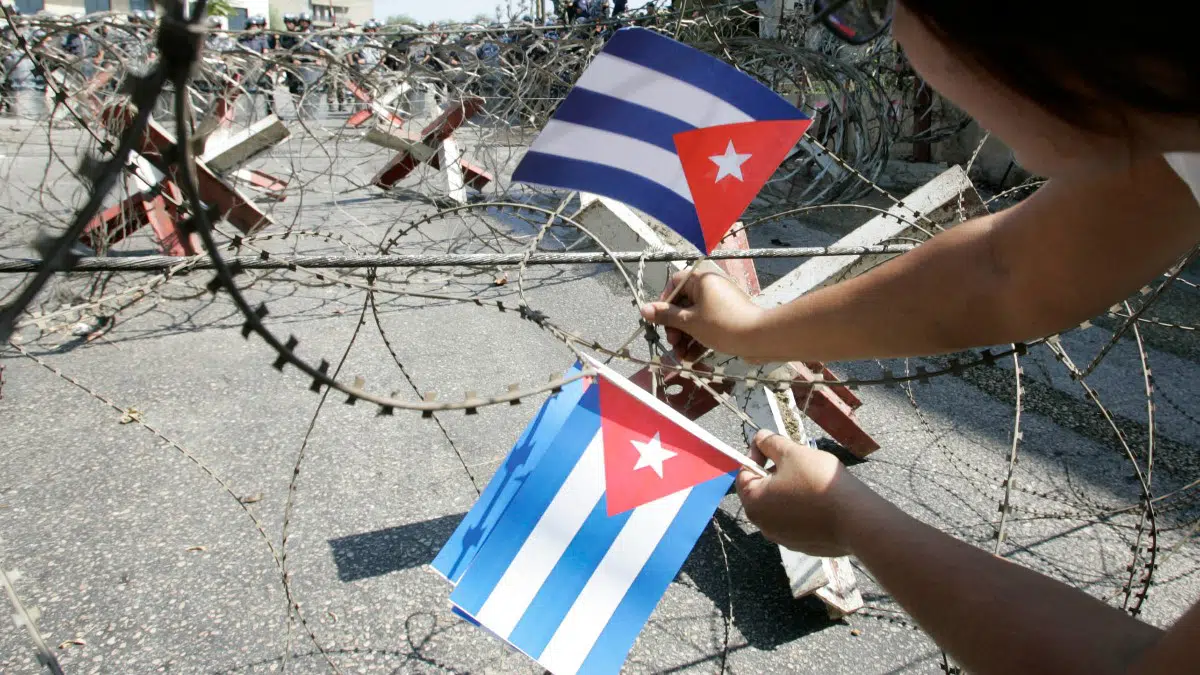
However, some continue to attempt the dangerous crossing from the island to the coasts of Florida.
According to official data, the US Border Patrol registered during the 2021-2022 fiscal year, which runs from October to September, a record 224,000 ‘encounters’ with Cuban immigrants.
This figure does not translate directly to Cuban immigrants since the same person can make several attempts to cross.
The data is maintained in the following months, with more than 44,000 encounters last December.
This figure means that around 2% of Cubans have tried to leave the island in the last year, leading some experts to speak even of “depopulation”.
They also call attention to the impact this may have on the future, given that those who leave are essentially young people and adults of working age, and the island’s population is ancient.
The figure is much higher than that recorded in previous waves of migration from the island due to the short period in which it has occurred.
Thus, after the triumph of the Revolution, an estimated 250,000 Cubans left for exile between 1959 and 1962, while during the so-called Mariel exodus of 1980, there were about 125,000.
During the so-called ‘Freedom Flights’ between 1965 and 1973, some 300,000 people left Cuba, while during the 1994 raft crisis, there were more than 30,000).
INCREASE IN CROSSINGS TO FLORIDA
In addition to those arriving by land from Mexico, there are also those arriving by sea.
Since last October 1, the US Coast Guard has intercepted 5,862 Cubans in vessels of various types in their attempt to reach US shores, a figure that contrasts with the 6,182 interceptions of Cubans in the fiscal year 2022, 838 in 2021 and 49 in 2020.
The number of those setting out to sea to reach Florida has also translated into an increase in the number of deaths.
According to data from the International Organization for Migration (IOM), since 2014, 425 people have died or disappeared from Cuba to the United States, 202 of them in 2022, a record number in contrast to 66 in 2022.
So far this year, there are already 53 dead or missing.
SERIOUS ECONOMIC CRISIS
The reason for this departure is none other than the fact that “Cuba is facing the worst economic crisis since the Special Period”, says economist Carmelo Mesa-Lago in an article published by the Cuban Research Institute of Florida International University referring to the crisis that followed the fall of the Soviet Union in 1991.
Without more updated data, the island’s GDP fell 10.9% in 2020, the worst record after the 14.9% drop in 1993.
For 2022, the Cuban government had set a 4% growth, but in the end, it would have been around 2%, although this is not an official figure, this economist points out.
Among the reasons for this crisis, Mesa-Lago identifies the inefficiency of the island’s economic system and the dire financial situation in Venezuela, on which the Cuban economy depends to a large extent.
Added to this came the impact of the Covid-19 pandemic, which reduced tourism, one of the primary sources of income, and now the war in Ukraine, which has brought a rise in the price of food and oil.
Nor does the political context help.
“The Government continues to repress and punish virtually all forms of dissent and public criticism,” Human Rights Watch (HRW) stresses in its recent annual report.
“Government repression and an apparent unwillingness to address the underlying causes that drove people onto the streets” in July 2021 “have forced Cubans to leave the country in unprecedented numbers,” it stresses.
OTHER DESTINATIONS FOR CUBANS
But although the United States is the leading destination for Cubans leaving the island, it is not the only one.
Since they must cross Mexico on their journey, many have opted to seek asylum in the Aztec country.
In 2022, just over 18,000 Cubans applied for refugee status in the country – the second nationality behind Honduras – a figure with nearly 8,300 in 2021 and 5,700 in 2020, according to data from the Mexican Commission for Refugee Aid (COMAR).
Arrivals to the EU have also doubled, although the figures are much more modest in this case.
Thus, according to data from the EU Asylum Agency, in 2022, there were 3,347 asylum applications compared to 1,765.
Among those who have come to the EU seeking refuge, many have done so via the Western Balkan route, taking advantage of the visa waiver that exists with Serbia and Russia.
According to a survey conducted by the IOM last summer, Cubans accounted for 6.9% of migrants en route through Bosnia, Serbia’s neighboring country.
With information from LGI
More: Cuba news in English, every day from The Rio Times.
Editorial responsibility: Matthias Camenzind, Editor-in-Chief · Editorial standards · Report an error