The paths that could lead to criminal charges or the impeachment of Bolsonaro
RIO DE JANEIRO, BRAZIL – Legal experts interviewed assess that the President’s conduct may constitute common crimes under the Criminal Code, but for there to be a criminal lawsuit before the STF (Supreme Court), a complaint filed by the Prosecutor General of the Republic (PGR) Augusto Aras, and the approval of the Chamber of Deputies are required.
In the case of the pandemic, because there is collective responsibility, it is not possible to file a criminal complaint: this is only valid when there is a person directly affected. According to the specialists, a possible path is that the crisis and the consequent pressure of public opinion provide the missing political element for an impeachment process to be put on the agenda.

On Wednesday, March 31st, after the joint resignation of the commanders of the Armed Forces as a result of the departure of the Minister of Defense, opposition leaders filed a new impeachment request for attempted interference in the institution and “threat to democracy”.
The possible paths for holding the President accountable
What conduct of Bolsonaro in the pandemic points to indications of common crimes foreseen by the Penal Code?
On March 24th, the federal bar association (OAB) filed a petition to the PGR asking for the President to be denounced to the STF for crimes under Articles 132 (danger to the life or health of others), 268 (breach of preventive health measure), 315 (irregular use of public funds or income), and 319 (malfeasance) of the Penal Code.
The same conduct, in addition to Article 257 (subtraction, concealment, or destruction of rescue material), were pointed out in a representation presented by former prosecutors in January. In another, presented by AJD (Association of Judges for Democracy), three of the crimes in the OAB representation are cited.
President of AJD labor judge Valdete Souto Severo says that the representation was based on the collapse of the health network in Manaus and the lack of oxygen in hospitals that led patients to death.
Criminal attorney Marina Coelho Araújo, president of IBCCrim (Brazilian Institute of Criminal Sciences), analyzes that the case in the capital of Amazonas, besides the president’s disregard for social distancing measures and the propaganda of medicines without scientific proof, evidence facts characterized as crimes.
“It is not that the pandemic was created by the government, but the structural condition of Brazil today is the result of omissions and ungoverned actions of the Executive,” he says.

A legal analysis conducted by the Center for Research and Studies in Health Law at the School of Public Health at USP and Conectas, covering 3,049 regulations issued during the pandemic in 2020, concluded that there was an institutional strategy to spread the virus. The document points out the need to discuss the configuration of crimes of accountability, against public health and against humanity.
Full professor at USP and one of the coordinators of the study, Deisy Ventura says that there is evidence of crimes committed not only by the president, but by other federal agents in a set of actions that includes the issuance of rules, obstruction of local responses, delay in transfers, incitement to disrespect and a constant campaign against governors and mayors, and propaganda against public health.
“The study demonstrates the existence of a systematic plan to spread the virus that reflects the option for collective immunity by contagion. It is this option that we consider may constitute a series of crimes,” she says.
How does the process against the president of the Republic for common crimes work?
By the constitutional rules, the president can only be judged by the Supreme Court. It is necessary for the prosecutor general to present an accusation to the court, which also needs the approval of at least 342 federal deputies. If the charge is not accepted, the president can only be prosecuted after leaving office.
Attorney Pierpaolo Bottini explains that it would not be possible to file a criminal complaint against the president for conduct during the pandemic, since the crimes alleged affect the population collectively, so the charges must be made through the Public Ministry. The criminal complaint would fit for cases in which the individual is directly affected – for example, in crimes against honor.
Valdete Severo criticizes the lack of action by Prosecutor Aras in face of the representations already made. “There is a complete alignment in the posture of the PGR with the president. He acts almost like a personal lawyer.”
Augusto Botelho, counselor and founding partner of IDDD (Institute for the Defense of Defense Rights), also does not believe in an accusation from Aras, unless a completely new fact arises. “If he had the initiative he should have, he [Aras] should have already done it,” he says.
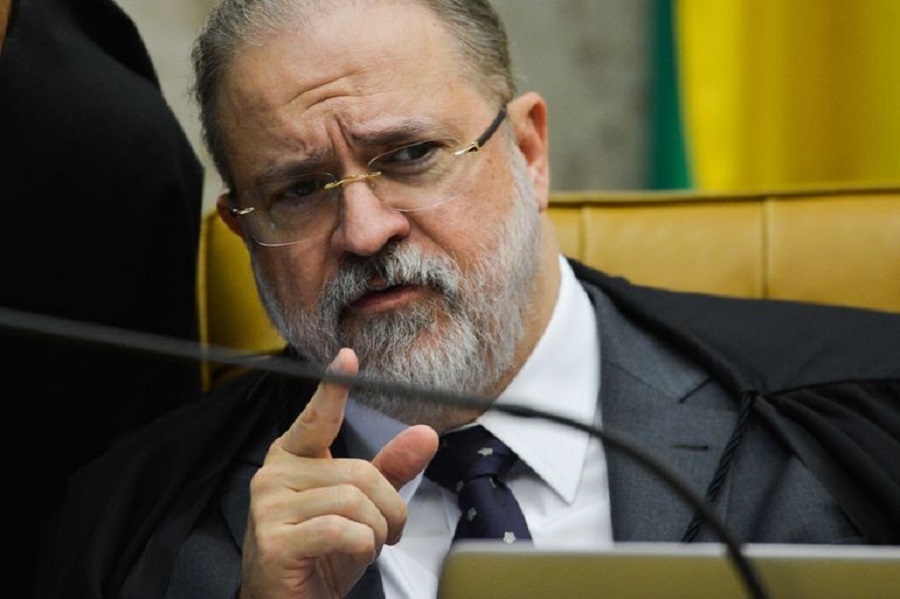
Marina Araújo, from IBCCrim, disagrees that there is omission. In the case of Manaus, the prosecutor general’s office even instituted a preliminary investigation to verify the conduct of Bolsonaro and then Health Minister, Eduardo Pazuello.
“It is logical that his position involves a lot of political issues and that he can understand the best time to do this [denounce], but that he is committed not to do it, I don’t believe it,” he says.
The Lower House is headed by Arthur Lira, now an ally of Bolsonaro, who has the prerogative to open impeachment proceedings. Is this route still possible?
Experts believe that the legal requirements for the impeachment of the president have already been met, i.e., evidence that Bolsonaro violated the Constitution and the Law of Crimes of Accountability (Law #1.079/50).
A survey by the newspaper Folha de S.Paulo showed 23 acts or statements by the president that could be used to support a request for impeachment.
There would still remain, however, the need for a political component to begin the process, which could be given by the worsening of the pandemic.
Augusto Botelho and Valdete Severo evaluate that the pressure from public opinion and the press can reflect on Congress and change the posture of Lira and other members of the so-called Centrão bloc, which supports the president’s base.
“Lira is not oblivious to the desires and pressure from society and the press,” says Botelho. The lawyer highlights financial market pressure, such as the letter in which economists, bankers, and businessmen demand actions in the face of the pandemic.
Besides this, another element came with the crisis in the Armed Forces generated after the resignation of the Minister of Defense, General Fernando Azevedo, last Monday (March 29), which led to the joint departure of the commanders Edson Leal Pujol (Army), Ilques Barbosa (Navy) and Antônio Carlos Bermudez (Air Force).
In filing a new impeachment request against the president, opposition leaders claimed that Bolsonaro is trying to control and politically use the Army, during the pandemic.
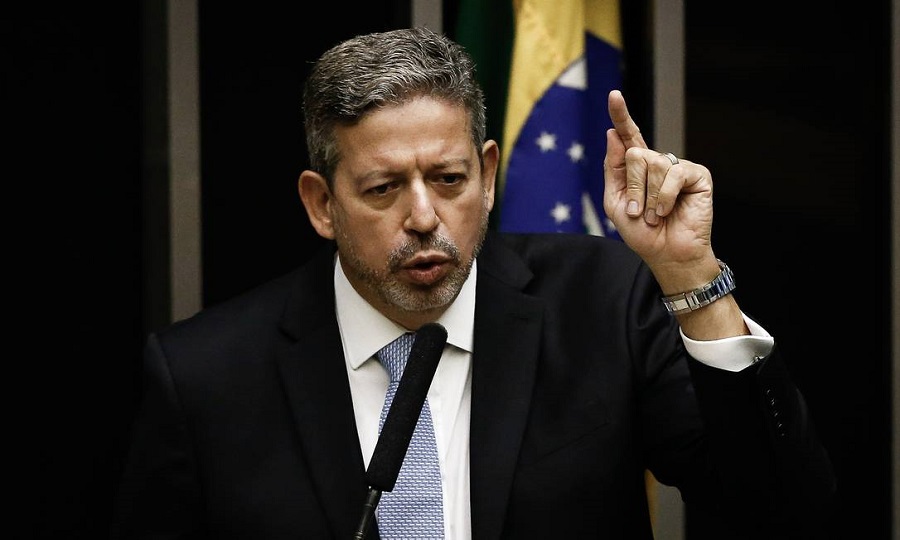
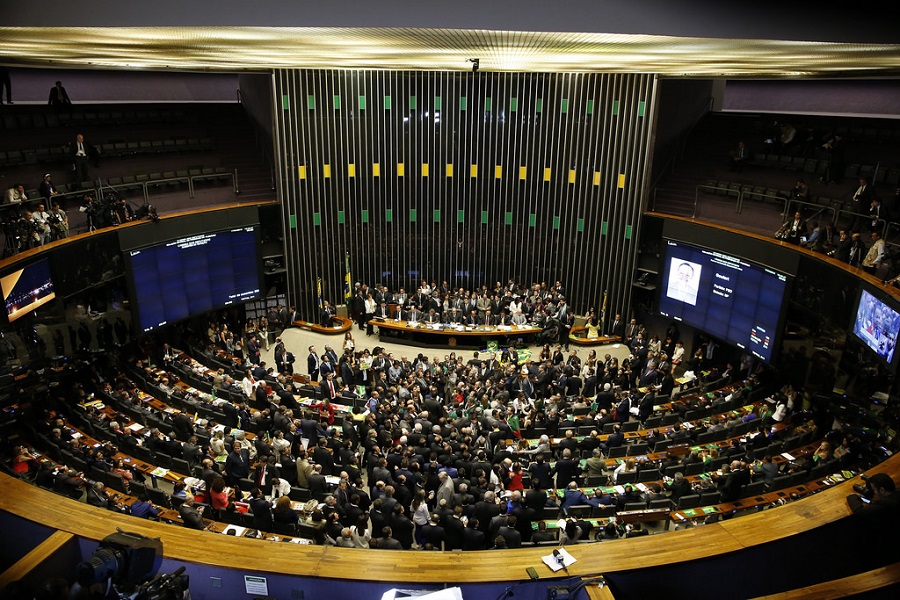
Once the impeachment process is scheduled by the president of the Chamber, it needs the approval of 342 deputies (two-thirds of the total membership). After that, 41 votes in the Senate are needed to have a trial, and 54 votes (two-thirds of the membership) are needed for conviction,when the president would lose his mandate.
Can the president be held responsible in the international sphere? In which instances?
Deisy Ventura explains that Bolsonaro can be sued individually in national and international jurisdiction. This means that if domestic remedies are exhausted or when there is no possibility of trial in the country itself, due to conflicts, the president can only be punished by the International Criminal Court, created to judge crimes of genocide, against humanity and war crimes.
“There is no possibility of investigation of criminal conduct of public officials either in the UN Human Rights Council or in the Inter-American system. What the [international] system will certainly do is investigate the responsibility of the Brazilian State,” he says.
In the case of the ICC, the complaint filed in 2020 was temporarily shelved. Deisy says that this does not mean that there is no crime against humanity or genocide. “It simply means that the court will not continue the investigation because the court has strict criteria about what it has the capacity to investigate or not.”
A Folha de S.Paulo report showed that this international court receives 500 to 900 requests per year, of which more than 90% are summarily dismissed.
Constitutional law professor Pedro Serrano (PUC-SP) says that one obstacle for this to happen is the lack of documentation. He defends the creation of a CPI (Parliamentary Inquest) to gather evidence about misconduct and list those responsible.
“In the political and moral philosophical field, Auschwitz was to the exercise of political power in times of war as Manaus is to the exercise of political power in health issues,” he says.
For Serrano, besides filing complaints with the ICC, it is necessary to mobilize the international media to understand the violations committed in the pandemic, which would influence the judges.
For Botelho, it is unlikely that a denunciation will be accepted by the court, but they can cause boycotts and economic sanctions to Brazil.
Marina Araújo is skeptical about these possibilities of criminalization and pressure, something that she says should only be sought when resources are exhausted in the country.
Common crimes in the Penal Code:
Art. 132: Danger to the life or health of others; penalty: detention, from three months to one year, if the fact does not constitute a more serious crime.
Art. 257: Subversion, concealment or destruction of rescue material; penalty: confinement, from two to five years, and fine
Art. 268: Violation of preventive sanitation measure; penalty: detention, from one month to one year, and fine
Art. 315: Irregular use of public funds or revenues; penalty: detention, from one to three months, or a fine
Art. 319: official malfeasance; penalty: detention, from three months to one year, and a fine.
Impeachment
The impeachment proceeding must be approved by the president of the Chamber of Deputies. It requires 342 votes to impeach, and to forward the case to the Senate for a trial. There, 41 votes are needed to open the trial proceedings, and 54 votes to convict.
More: Brazil news in English, every day from The Rio Times.
This article was produced by The Rio Times’ automated newsroom system. How we use AI · Report an error · Editorial responsibility: Matthias Camenzind, Editor-in-Chief