
RIO DE JANEIRO, BRAZIL – Each South American nation faces challenges in common areas such as the economy and polarization. Some with greater urgency than others. Such is the outlook for the region.
The entire region is preparing to face a common challenge in 2022: Omicron and any new COVID-19 variants feared to again threaten hospital networks. However, each South American country faces, some more urgently than others, challenges in other common areas such as the economy and polarization.
The economy is terrible throughout South America, but Argentina is the one that is committed to reaching an agreement with the International Monetary Fund as soon as possible.
While polarization is felt throughout the continent, in countries such as Colombia and Brazil, it becomes a more critical issue considering their electoral processes in 2022.
Thus we see that each nation carries a greater weight in a specific area. Here is the South American outlook for the year ahead.
ARGENTINA
Argentina has the major challenge of reaching an agreement with the International Monetary Fund (IMF) as soon as possible to refinance millionaire debts, a pact on which the country will largely depend to consolidate its economic recovery process and seek to solve substantial imbalances, such as high inflation.

A refinancing agreement will give oxygen to the country to consolidate its recovery process and provide certainty to investors and companies. Still, if the deal does not materialize or if its signature is delayed, the outlook for the Argentine economy will be very bleak.
The consolidation of the recovery process will depend not only on an agreement with the IMF and an improvement in the epidemiological situation but also on political factors that ensure a climate of stability, investment incentives, and, particularly, concrete signals aimed at solving the country’s severe fiscal, exchange rate, and inflationary imbalances.
Inflation, poverty, and formal employment
The country closes 2021 with accumulated inflation close to 51% and, for 2022, the Government projects a moderation to 33%. Still, private experts consulted monthly by the Central Bank for its expectations report forecast that prices will grow 52.1% next year.
The recession, the economic blow from the pandemic, and high inflation have taken their toll on social conditions in Argentina, where four out of ten inhabitants are poor, and 10% are flat broke.
Argentina also faces the challenge in 2022 of continuing to lower the current unemployment rate (8.2 %) and improving labor market conditions, where informal and self-employment have grown.
In addition to the economic challenges Argentina’s political leaders will face in 2022, there is the challenge of dialogue to reach consensus in a scenario that has changed after the legislative elections of 2021.
The new Parliament is evidence of the defeat of the ruling party in those elections: the Peronist “Frente de Todos” lost its majority in the Senate and reduced its block in the Chamber of Deputies, where it almost equals “Juntos por el Cambio,” the most prominent opposition front, so it will be forced to reach agreements if it wants to move forward with its initiatives.
BOLIVIA
Bolivia faces among its main challenges the consolidation of a social reconciliation process, a pending aspect since the 2019 crisis, but without this implying impunity for the deaths that occurred or turning that search into a tool for political use.
The judicial processes promoted by the ruling party for the 2019 crisis, which it considers was a “coup d’état,” are a pending issue and a permanent demand of the sectors related to the ruling “Movimiento al Socialismo” (Movement Towards Socialism – MAS).
The justice system determined the arrest of former interim president Jeanine Áñez, of some former police and military chiefs, but has not advanced with other accused. It must also be defined if the former president will face trials of responsibilities, which the Parliament must still discuss.
The polarization that emerged after the 2019 crisis has been kept alive between the Government and the opposition, leaving on hold a necessary reconciliation process that, according to the MAS, passes first by doing justice and establishing punishments for the deaths and imprisonments of that time.
This confrontation between those who, like the Government, consider that in 2019 there was a “coup d’état” and the opposition, which continues to demonstrate against fraud, has moved to the streets where both sides have sought to measure forces through protests or massive rallies.
Macho violence and the economy
Bolivian Executive authorities have announced that 2022 will be the Year of the Cultural Revolution for Depatriarchalization as a “structural” response to the persistent cases of male violence and femicides, which also provides for the reform of a law in force since 2013 that punishes this crime.
The Government’s economic projections estimate that the country will have a growth of 5.1%, inflation of 3.4%, a fiscal deficit of -8%, and that the administration of President Luis Arce will seek to materialize the electoral promise of industrialization with import substitution. For this, the country will have to bet on the agricultural and industrial sector, which in 2021 contributed 18% to the Gross Domestic Product, and improve the gas business.
BRAZIL
Brazil’s main challenge in 2022 is to reduce the current polarization and radicalism before the presidential elections in October, since the enormous political uncertainty affects all other challenges in the country, such as inflation, recession, unemployment, pandemic, and even a possible blackout.
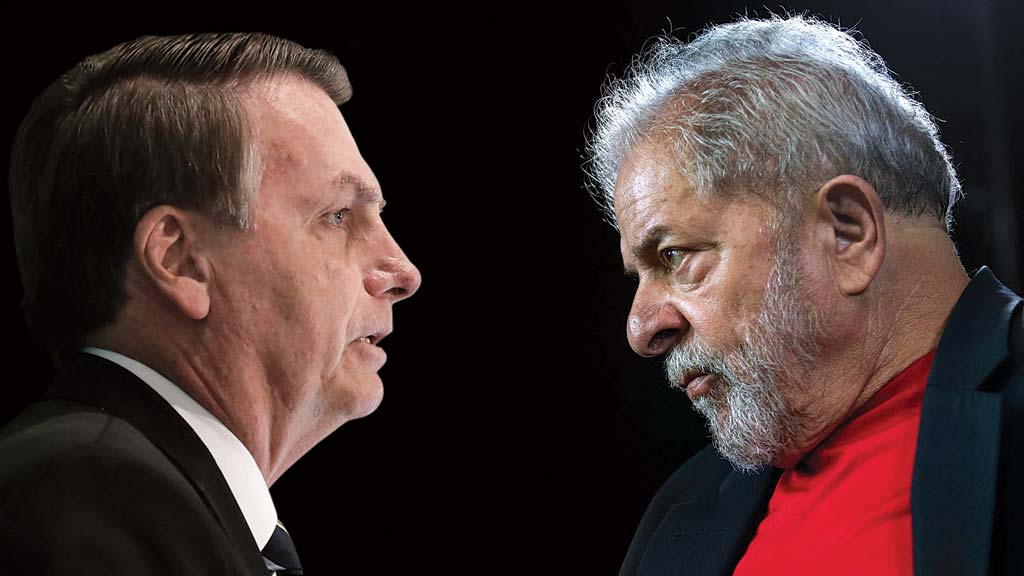
Brazil begins 2022 totally and dangerously polarized ahead of the October presidential elections, for which former president Luiz Inácio Lula da Silva is indicated as the favorite by the polls (42%), followed by the current head of State, Jair Bolsonaro (25%), being the main challenge to prevent the radicalization of the poles.
Economists forecast that growth in Latin America’s largest economy will be limited to 0.5% in 2022. Some analysts, however, such as those at Itaú bank, are already predicting that Brazil will suffer a new recession next year and that the country will still not recover from the historic recession it suffered in 2015 and 2016.
With inflation still pressured by the increase in gasoline prices, which jumped 50.7% in the last year, and energy tariffs, one of the biggest challenges for Brazil in 2022 is to curb the rate, make it converge with the target already outlined by the Issuer and which allows it to vary between 2% and 5%, and prevent its escalation from continuing to reduce the population’s purchasing power.
Although the generation of employment depends on the economy’s recovery, the Latin American giant needs alternative tools to stimulate the creation of jobs and attend to the approximately 13.5 million Brazilians who were unemployed as of September.
Environment and health, another key
The risk of a blackout remains as dams continue with their waters at minimum levels. Hence, a significant challenge for Brazil in 2022 is to adopt new measures to raise generation from alternative energy sources and avoid overloads.
Brazil was one of the most questioned countries at the COP26 climate change conference for the lack of control in the destruction of the Amazon, which has also led some European countries to threaten to veto the ratification of the free trade agreement between the European Union and Mercosur. The Latin American giant must begin to demonstrate its capacity to preserve the Amazon in 2022.
Another challenge is to finally control the pandemic, which requires expanding the vaccination campaign, even though 66% of the population is already fully immunized; vaccinating children under 12 years of age, something that still depends on the approval of President Jair Bolsonaro; and adopting measures to prevent new variants of covid from leaving the pandemic out of control again.
CHILE
Chile bids farewell to another particularly convulsive year with important tasks pending for 2022, such as taking care of and completing the constituent process, facing the migratory crisis on the northern border, and tackling the growing inflation.
A large part of the population has placed its hopes for change towards a fairer model in the constituent process; hence taking care of it and promoting broad agreements that recognize Chile’s diversity is one of the main challenges.
The leftist Gabriel Boric won the Chilean Presidency last December 19 with 55.8% of the votes. After promising a profound schedule of changes to expand the State’s role towards a welfare model similar to Europe’s, with an ecological, feminist, and regionalist accent. However, he will not have it easy and will have to deal with a highly fragmented parliament, where progressive and conservative forces are tied.
The UN estimates that close to 500 Venezuelan migrants cross daily through irregular border crossings between Bolivia and Chile, an Andean area at more than 3,600 meters above sea level with extreme temperatures. At least 21 people have died this year. Tackling this humanitarian crisis will be one of Boric’s greatest challenges.
The drought, now in its 13th consecutive year, is a consequence of the climate crisis. Still, environmental organizations denounce that the Chilean water management model – whose origins go back to the neoliberal economy established during the dictatorship – has aggravated it. Increasing aid for farmers and ranchers, preventing fires, and guaranteeing water supply is a pending task for 2022.
COLOMBIA
Colombia experienced in 2021 an unprecedented social outburst detonated by the problems brought about by the covid-19 pandemic, such as a six-point increase in monetary poverty, which stood at 42.5%, compared to 2019, meaning that the number of poor people rose from 17.4 to 21 million people.
The end of the demonstrations did not mean the solution to these problems, so the country will have among its challenges in 2022 the reduction of inequality and poverty to address popular claims and avoid new protests.
The elections will be essential to know which direction the country will take on violence reduction, unemployment, the peace agreement implementation with the FARC, and relations with Venezuela.
Since the Government and the FARC guerrillas signed the peace agreement, violence against defenders has not ceased. The authorities are challenged to stop this bloodshed, especially during the election season when violence usually increases, and to reduce citizen participation insecurity that grew due to the pandemic.
Colombia must control inflation in 2022, for which the Bank of the Republic (Issuer) increased interest rates by half a point to 3%. The rise of the dollar is already being felt in the basic food basket so that the economy will be at the top of the agenda of the electoral debates.
ECUADOR
Substantially reducing poverty after three years of severe economic crisis is becoming one of Ecuador’s most significant challenges in 2022.
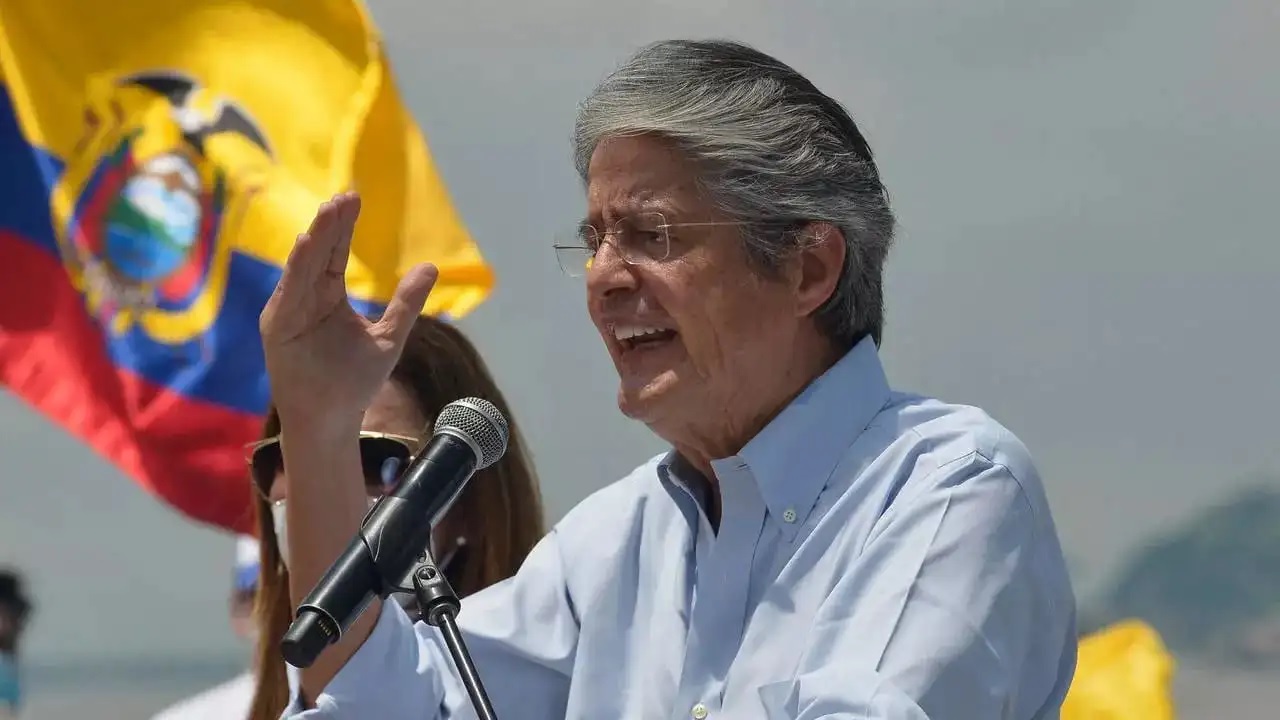
President Guillermo Lasso must disarm the social time bomb, a front formed by unions and organizations, including the influential Confederation of Indigenous Nationalities of Ecuador (Conaie), threatening to take their followers to the streets again this January to block what they consider to be neoliberal measures.
In 2021, according to the Government, 275,000 “adequate” jobs have been created (more than 40 hours and paid above the minimum wage), but this is, according to experts, a sort of readjustment due to the consequences of the fateful 2020 and not a real improvement, which will only be confirmed throughout 2022.
Along with social, economic, and health issues, Ecuador’s other major challenge in 2022 will be to curb the phenomenon of drug trafficking and the insecurity crisis that has sown the streets of some cities with worrying levels of crime and murders and left in its prisons more than 300 deaths in violent massacres between gangs.
The Government has taken measures to control prisons and dismantle the criminal situation that has turned Ecuador into a corridor for Peruvian and Colombian drugs, but this is a problem with social, economic, and judicial ramifications: 2022 will be crucial for a clear definition of objectives to solve the problem in the longer term.
PARAGUAY
When in 2017 Paraguay committed to organizing the XII South American Games for the first half of October 2022, the country imagined that the congregation in Asunción of more than 4,500 athletes from the fifteen nations that make up the South American Sports Organization (Odesur) would be a magnificent opportunity to showcase the progress achieved by the country in the sporting, economic, and social spheres.
However, with 275 days to go until the start of the third most important Olympic Games in the world, Paraguay could be forced to give up the organization of the Games due to the lack of US$70 million initially earmarked for this event and which have subsequently been reallocated to other items. The Minister of Sports, Fatima Morales, has assured that she will fight to get the resources returned to their original budget line.
PERU
Peru‘s main challenge for the year 2022 will be to find political stability and a path to smooth governance, both ingredients that have been lacking in the country for several years now and which, unfortunately, do not seem likely to be found at least in the short or medium term.
Peru has a president, Pedro Castillo, who is not recognized as legitimate by a large part of the opposition, and a Congress that is widely discredited and dominated by forces that are enemies of the Executive and that, at the very least, do not want to facilitate the work of the Government.
Whatever happens, Peruvian children must return to the classrooms in 2022, which they have not attended since December 2019. Peru is the country in the entire region that is furthest behind in incorporating classrooms, where there have been hardly any attempts to even push for semi-presence. Only by March 2022 are schools in cities expected to function four hours a day at most.
Five years after the world learned of the extremes of corruption unleashed by the Brazilian construction company Odebrecht throughout Latin America, the first legal consequences of the scandal should be seen in Peru in 2022.
In the coming year, Peru will almost certainly see former president Alejandro Toledo extradited from the U.S. to stand trial; Ollanta Humala and his wife, Nadine Heredia, will formally face trial; and Keiko Fujimori will have to find out whether she will also be prosecuted, which looks very likely.
VENEZUELA
With 2021 full of pauses and limitations due to the pandemic, together with the economic crisis that Venezuela is going through, 2022 looks like a year of enormous challenges for the nation that will have to face from the possibility of activating a recall of Nicolás Maduro’s mandate, to the option of obtaining glory in the Caribbean Series.

Nicolás Maduro reaches half of his term at the head of the Government (2019-2025), and several opposition factions have considered the possibility of requesting a referendum to revoke his mandate, following the Constitution, which establishes that 20% of the voters may activate the mechanism after the half of the term is completed.
Those who bet on this formula will have to overcome the hurdles that may be imposed by the Supreme Court of Justice (TSJ), which, already in 2016, during Maduro’s first term, prevented the call alleging fraud in the collection of signatures.
Many hopes are still placed on an agreement between the Government and the opposition. Still, it will be quite a feat to resume the talks that began last August in Mexico, and which the Executive suspended in October, as a sign of rejection to the extradition from Cape Verde to the U.S. of Alex Saab – alleged frontman of Nicolás Maduro – to face a judicial process for money laundering.
The Venezuelan opposition has as its main challenge for 2022 to reinvent itself and propose new leaderships capable of facing the Government and being a real alternative, something that anti-Chavism with Juan Guaidó at the forefront has not achieved.
Return to the homeland? Bringing “all Venezuelans” who want to return to Venezuela was one of the promises made by Nicolás Maduro in the last quarter of 2021. For this purpose, he reinforced the so-called “Return to the Homeland Plan,” with which, according to data from the Foreign Ministry, 27,537 Venezuelans from 19 countries have been voluntarily repatriated.
The Government assumes this promise amid a deep migratory crisis, which has led more than six million Venezuelans to leave the country, according to the latest update of the Interagency Coordination Platform for Refugees and Migrants of Venezuela (R4V).
According to the Central Bank of Venezuela, accumulated inflation reached 631.1% in December, while inter-annual inflation was 1,197.5%. With these data, the Government of Maduro has reiterated that 2021 “is the first year of growth since this economic war began” and that 2022 will be of “greater recovery”.
With information from EFE
More: Argentina news in English, every day from The Rio Times.
Editorial responsibility: Matthias Camenzind, Editor-in-Chief · Editorial standards · Report an error