Nigeria Stocks Near Record on Mostly Short-Term Inflows
Key Facts
- —The country Nigeria is Africa’s most populous nation, with about 230 million people, roughly two-thirds of the US population. It is a major oil exporter and one of Africa’s largest economies.
- —Why it matters Its Lagos bourse, the Nigerian Exchange (NGX), is among Africa’s biggest. Foreign funds fled after 2023, when currency shortages stopped them taking money home; reforms have since drawn them back.
- —Why now Index provider FTSE Russell, whose benchmarks guide global funds, restored Nigeria to its Frontier index on 21 September. The Central Bank of Nigeria cut its main interest rate the next day.
- —What happened The NGX All-Share Index, the main share gauge, ended September at 251,211.67 points, up 2.87% in the month. It slipped 0.52% in the holiday-shortened week to 2 October.
- —The numbers Listed shares were worth ₦162.8 trillion (about US$122 billion) on 2 October. In the first quarter, 95.1% of US$10.37 billion in foreign inflows was short-term portfolio money.
- —What it means for you Foreign investors now have easier access, but they buy after a huge run-up. Money that arrived fast can leave fast, and a weaker naira would add currency losses.
- —Still open Whether profits catch up with prices, whether the naira holds after the rate cut, and how big new listings such as Dangote’s refinery absorb cash.
The Nigerian stock market is trading near record highs after an interest-rate cut and a return to a major global index. Yet most of the foreign money behind the rally can leave as fast as it came.
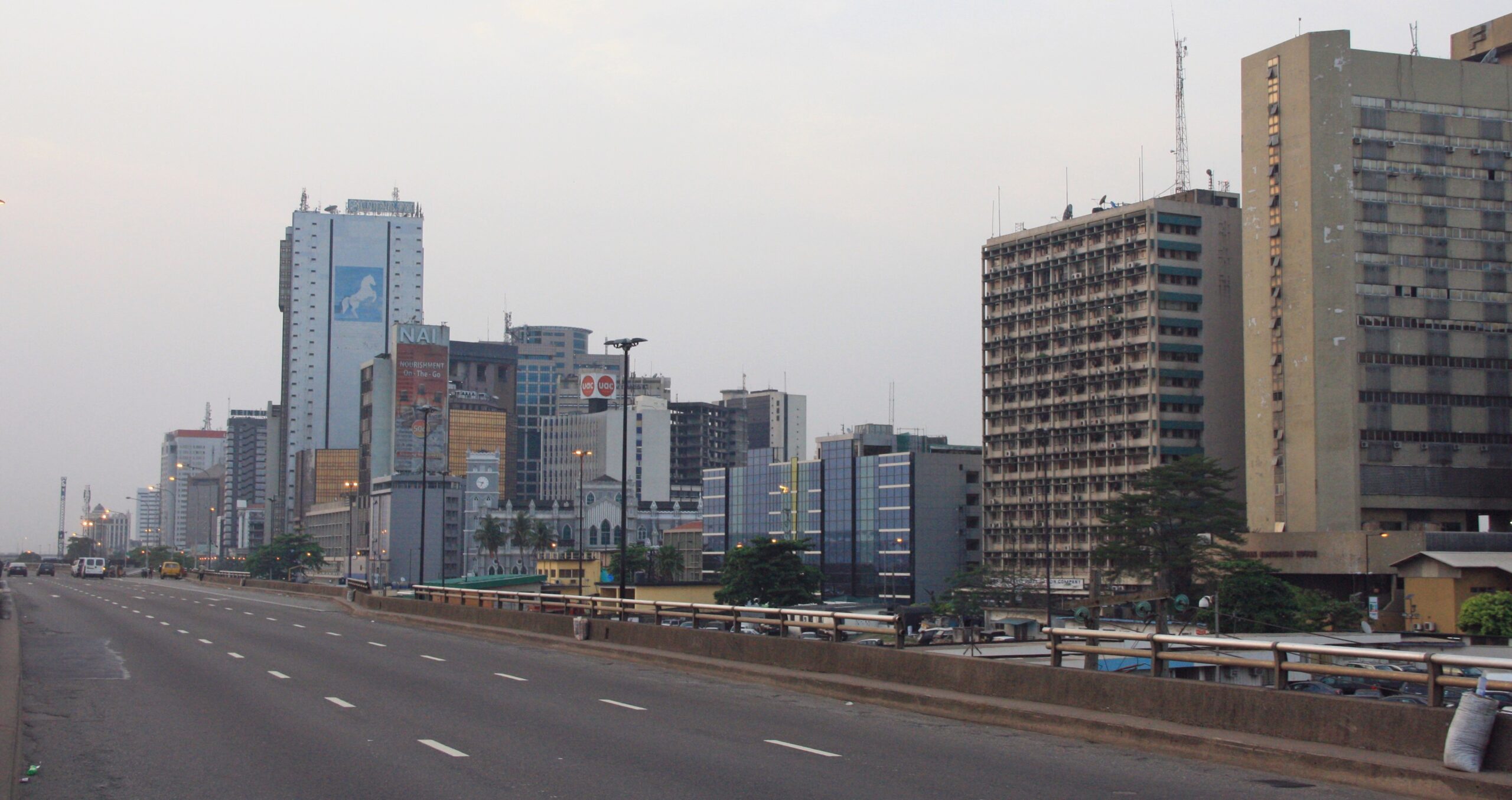
Nigeria, Africa’s most populous country, runs one of the continent’s largest stock exchanges from Lagos, its commercial capital. The Nigerian Exchange’s All-Share Index closed at 250,808.27 points on Friday, 2 October 2026.
That is more than three times its level of about 74,800 at the end of 2023. The question for foreign investors is whether profits can now catch up with prices.
Two September decisions lifted the market
On Monday, 21 September, index provider FTSE Russell restored Nigeria to its Frontier market index. Global funds that track those benchmarks can now buy Nigerian shares again as part of their normal allocations.
Nigeria had been dropped about three years earlier, when a shortage of dollars stopped foreign investors taking their money home. FTSE Russell has named 31 Nigerian stocks for the index, according to the Lagos daily Leadership.
A day later, on Tuesday, 22 September, the Central Bank of Nigeria cut its Monetary Policy Rate from 26.5% to 23%. Governor Olayemi Cardoso announced the cut after a two-day meeting in Abuja.
The bank kept the share of deposits that banks must park with it at 45%. Official statistics showed inflation easing to 15.39% in August from 15.43% in July.
A record month, then profit-taking
The index rose 2.87% in September, ending the month at 251,211.67 points, according to market data reported by Investors King. Listed companies added about ₦5.37 trillion (about US$4 billion) in value during the month.
The rally has been long and steep. In the first nine months of 2026, shares gained about ₦63.7 trillion (about US$48 billion) in value, the Lagos daily Leadership reported.
The first days of October brought a pause. The 1 October Independence Day holiday shortened the week. Over the four-day week to 2 October the index fell 0.52%, and investors lost about ₦812 billion (about US$610 million).
Total market value stood at ₦162.84 trillion (about US$122 billion) on 2 October. Naira figures here use a rate of ₦1,330 to the US dollar, the Friday close on 2 October.
Why the gains look fragile
The main risk lies in who is buying. Nigeria drew US$10.37 billion in foreign capital in the first quarter of 2026, the National Bureau of Statistics (NBS) said in June.
Of that, US$9.86 billion, or 95.1%, was portfolio investment in shares, bonds and money-market paper. Foreign direct investment in factories and other long-term assets came to only about US$135 million.
Portfolio money can be sold and withdrawn within days. Direct investment, by contrast, is tied up in plants, offices and equipment for years.
The rate cut sharpens this risk. Lower Nigerian interest rates make naira assets less rewarding for foreign holders who compare them with US Treasury yields.
Analysts quoted by the Nigerian Tribune on 28 September said the cut raises the risk of capital flight. They added that Nigeria’s larger foreign-currency reserves give it a cushion against sudden outflows.
Prices have outrun the economy
Nigeria’s economy is growing, but far more slowly than its share prices. Official data released on 31 August showed growth of 4.43% in the second quarter of 2026.
An index that has more than tripled since 2023 therefore assumes strong profit growth ahead. Part of the earlier rise reflected high inflation and the naira’s steep fall in 2023 and 2024, which lifted local share prices.
Since then, foreign buyers have returned on the back of reforms. These include ending the fuel subsidy and letting the currency trade more freely.
Those reforms are real, but they are now largely reflected in prices. Further gains will depend on earnings rather than on the return of investors who stayed away for years.
New listings will compete for cash
The market also faces a test of depth. In mid-September, Dangote Petroleum Refinery launched what Reuters called Africa’s biggest initial public offering, aimed partly at ordinary Nigerian savers.
Large new listings can pull money away from existing shares, as investors sell older holdings to buy the new paper. Leadership reported that analysts expect listings by Dangote and the state oil firm NNPC to reshape the exchange.
What foreign investors should watch
For investors in the United States, Britain or Europe, the next weeks bring three signals. The first is third-quarter company results, which show whether profits are growing into higher prices.
The second is the naira after the rate cut, since a weaker currency erodes returns in dollars. The third is global risk appetite, because frontier-market money is usually the first to leave when it falls.
The Nigerian stock market has rewarded patient investors handsomely since 2023. After the September boost, its next move depends on earnings and on whether foreign money stays.
Frequently Asked Questions
How much has the Nigerian stock market risen?
The NGX All-Share Index closed at 250,808.27 points on 2 October 2026. That is more than three times its level of about 74,800 at the end of 2023.
Why did the Central Bank of Nigeria cut interest rates?
On 22 September 2026 it cut its policy rate from 26.5% to 23% as inflation eased. Official data put August inflation at 15.39%.
What did FTSE Russell decide about Nigeria?
FTSE Russell restored Nigeria to its Frontier market index on 21 September 2026. It had removed Nigeria about three years earlier over dollar shortages.
Why could foreign money leave Nigerian shares quickly?
Of US$10.37 billion in foreign inflows in early 2026, 95.1% was portfolio money. Such money can be sold and withdrawn within days.
Connected Coverage
Sources
- Investors King: NGX gains 2.87% in September (2 Oct 2026)
- Investors King: NGX opens October lower (2 Oct 2026)
- PM News: NGX week to 2 October 2026
- Business Post: CBN cuts rate to 23% (22 Sep 2026)
This article was produced by The Rio Times’ automated newsroom system. How we use AI · Report an error · Editorial responsibility: Matthias Camenzind, Editor-in-Chief
LatAm Markets: Live Signals → — real-time movers, turnover leaders and FX across Latin America.