Ruto Orders Tata Chemicals Out of Kenya, Ending 115 Years of Mining at Lake Magadi
KENYA · MINING
Key Facts
- —What happened President William Ruto has ordered Tata Chemicals to end its operations in Kenya, speaking at Oloiren in Kajiado County on Thursday. Mining at the site was already suspended with effect from 28 July 2026.
- —How old The Magadi operation has worked Lake Magadi since 1911, extracting trona and processing it into natural soda ash. Tata Chemicals has owned it since 2005.
- —The charge Ruto’s argument is that more than a century of extraction produced too few factories, too few jobs and too little local value addition for Kajiado.
- —How big Business Daily values the soda ash trade now at risk at Sh7.4 billion (about US$57 million). Conversions in this report use this week’s rate of roughly 129 Kenyan shillings to the US dollar.
- —What comes next The government says it will look for a new investor, with binding conditions to build a glass manufacturing plant and a chemicals plant in Kajiado rather than export the raw material.
Tata Chemicals Kenya has been ordered to wind up its operations at Lake Magadi, ending a mining operation that has run since 1911, after President William Ruto said 115 years of soda ash extraction never produced the factories or the jobs that Kajiado was owed. Mining at the site had already been suspended from 28 July.
What Tata Chemicals Kenya was actually doing at Magadi
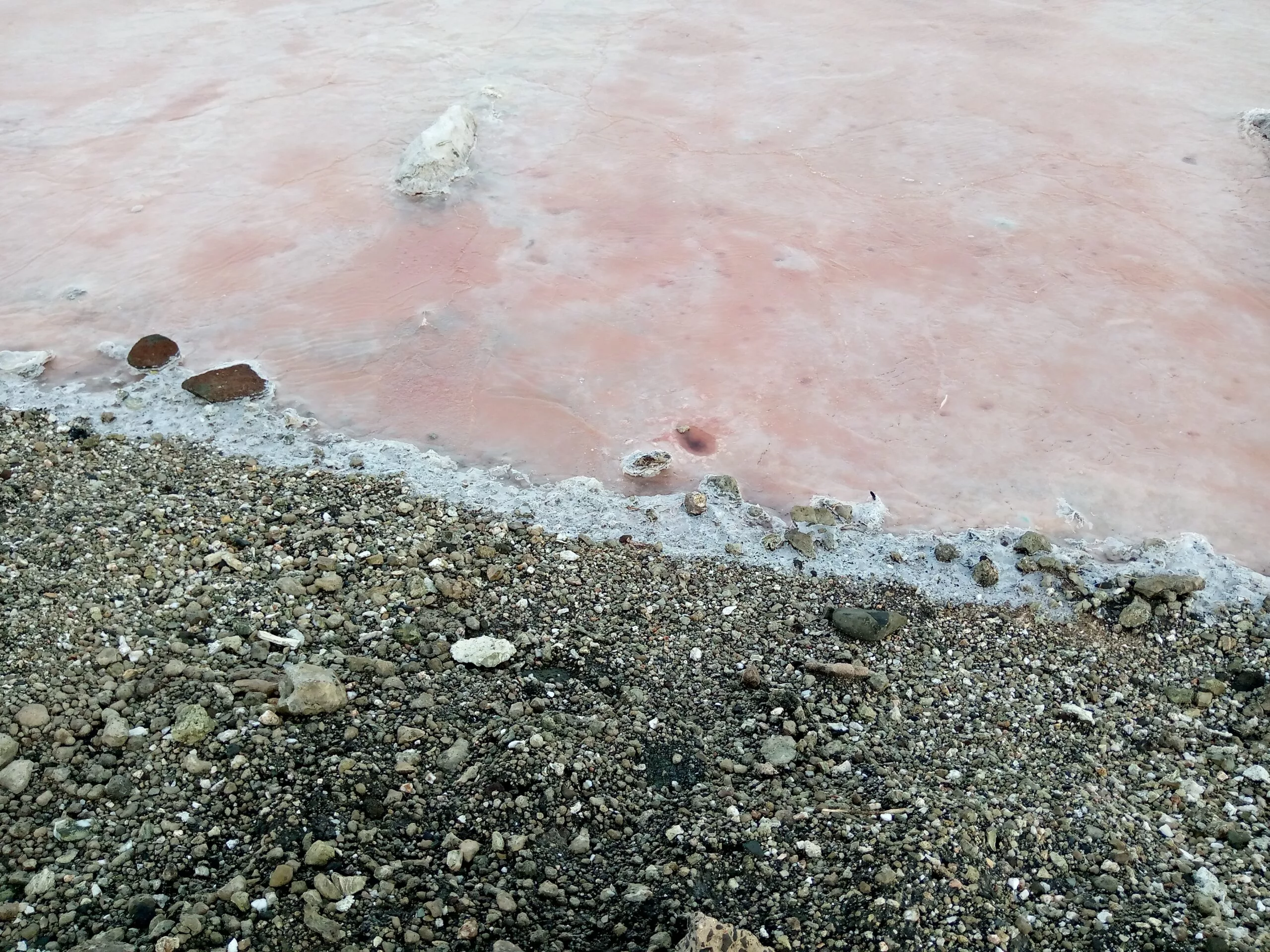
Lake Magadi is a saline, alkaline lake in the Rift Valley that yields trona, the mineral from which natural soda ash is made. The deposit replenishes, which is why one operation could work it for more than a century.
The corporate history is worth stating precisely. The site began as the Magadi Soda Company in 1911, passed through several owners and became part of Britain’s Brunner Mond group, which India’s Tata Chemicals acquired in 2005. The Kenyan operation has carried the Tata name since 2011 — so the company has owned the lake works for 21 of their 115 years.
Soda ash is not a marginal product. It is a base input for glass and detergents, and Kenya has long been among Africa’s larger exporters of it. Business Daily estimates the trade now at risk at Sh7.4 billion (about US$57 million).
The complaint is not that the resource was worthless. It is that almost all of the value added to it happened somewhere else.
The argument the government is making
Ruto’s case is a value-addition case. Raw soda ash leaves the country cheaply, is turned into glass and chemicals elsewhere, and the margin is booked abroad. “I told them to pack up their things and leave,” he said in Kajiado on Thursday. “These people come here, take our resources and transport them to India and other countries.”
The government says any replacement investor will face binding conditions to build a major glass manufacturing plant and a chemicals facility in Kajiado. That is the substance of the policy, and it is where it will succeed or fail.
Kajiado county leaders have pressed the same demand for years, asking for a larger share of what the lake produces.
What has not been published
No compensation framework has been made public, and no legal basis for the termination has been set out in detail. Concessions of this age usually carry contractual protections.
The company, for its part, says it has complied. Mining Cabinet Secretary Hassan Joho suspended its operations on 28 July, citing the Mining Act, and Tata Chemicals Magadi said on 19 August that it had submitted all information and documentation the ministry had requested.
Nor has the government named a replacement investor or a timetable. Until it does, the workforce and the county are being asked to accept a plan rather than an outcome.
This matters for anyone reading it as an investment signal. The policy goal is defensible; the execution risk is entirely unaddressed so far.
The uncomfortable pairing with the trader crackdown
On the same footing, Ruto has ordered enforcement against foreign nationals operating small businesses. Officials have framed both as protecting Kenyan livelihoods.
They are not the same argument. Requiring a multinational to process minerals locally is industrial policy; arresting foreign hawkers is something else, and it sits inside a regional pattern that has already turned violent elsewhere.
We have covered that pattern in South Africa at length this year. Reading the two Kenyan announcements as one policy would flatten a distinction worth keeping.
What to watch next
The first real test is whether a replacement investor accepts a local-processing condition, and at what price. Bulk mineral projects are financed on export certainty.
The second is whether Magadi’s workforce is carried through the transition. A suspension that began in July has already been running for weeks.
The wider resource-nationalism moment
Kenya is not acting alone. Across the continent governments have spent the past two years tightening the terms on which raw minerals may leave.
The Democratic Republic of Congo has pushed for domestic processing and Congolese ownership in mining. Ghana has restructured how its gold is bought and refined.
The common argument is that exporting unprocessed material exports the jobs with it. The common obstacle is that processing requires reliable power, skilled labour and capital that the same countries are short of.
Magadi is a sharper case than most because the operation is so old. A works that opened in 1911 predates the independent state that is now revoking its access.
That history cuts both ways in a negotiation. It strengthens the political case for change and complicates the legal one.
Investors will read the outcome as a signal about Kenyan contract risk, whatever the merits of the underlying complaint.
Magadi is also a company town in the literal sense. The settlement grew around the works, and housing, water and schooling have been tied to the operation for generations.
Winding up an employer in that position is not the same as closing a factory in a city. There is no adjacent labour market to absorb the workforce.
The government has not said what happens to those services during a transition. That is the most immediate question for the people who live there, and it is unanswered.
Kenya has handled a version of this before with its sugar sector, where state-linked mills were repeatedly restructured with mixed results for the surrounding towns.
The lesson from those episodes was that transition costs land locally while the policy argument is made nationally. Magadi is small enough to be forgotten in exactly that way.
More: Kenya news in English, every day from The Rio Times.
Frequently asked questions
Why did Ruto order Tata Chemicals out of Kenya?
He said the company extracted Kajiado’s mineral wealth for decades without doing enough to create jobs, build factories or add value locally. Mining had already been suspended from 28 July 2026.
How long has Tata Chemicals been at Lake Magadi?
The operation has worked Lake Magadi since 1911, extracting trona and processing it into natural soda ash. Tata Chemicals has owned it since 2005, when it acquired the Brunner Mond group; the site took the Tata name in 2011.
What is soda ash used for?
It is a core input for glass, detergents and a range of industrial chemicals. Most of its value is added after the raw material leaves the mine.
Will another company take over the concession?
The government says it will seek a new investor with strict conditions requiring manufacturing plants in Kajiado, including a glass plant and a chemicals facility. No investor and no timetable have been named.
Is this connected to the crackdown on foreign traders?
The government has framed both as protecting Kenyan livelihoods, but they are separate measures. One is industrial policy on mineral processing; the other is enforcement against foreign nationals in small-scale trade.
Sources
The Standard (Nairobi), “Ruto orders Tata Chemicals out, sets conditions for new investor”, 3 September 2026; Business Daily (Nairobi), report on the Sh7.4 billion (about US$57 million) in soda ash trade at risk from the exit order, 4 September 2026; Kenyans.co.ke and The Kenya Times, reporting on the Kajiado announcement, 3 September 2026. Exchange-rate basis: roughly 129 Kenyan shillings to the US dollar (Revolut converter, 3 September 2026).
Connected Coverage
We have also reported on the job market this policy is meant to serve, and on the regional pattern the trader crackdown sits inside. Both sit inside Africa: The New Scramble, our running account of the contest for the continent.
This article was produced by The Rio Times’ automated newsroom system. How we use AI · Report an error · Editorial responsibility: Matthias Camenzind, Editor-in-Chief