The Hand-Planted Forest That Keeps Rio de Janeiro Alive
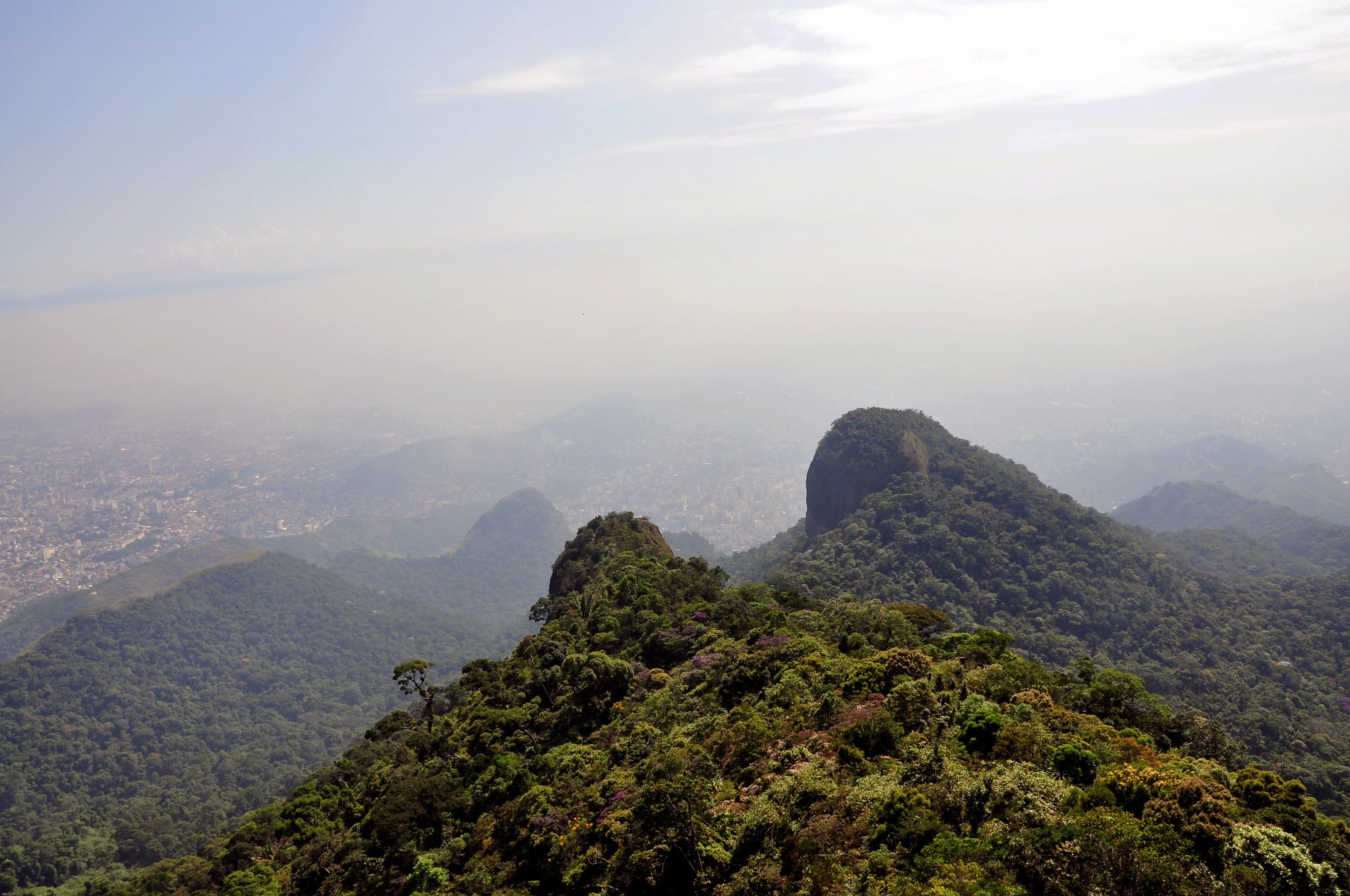
Brazil · Cities
Key Facts
—The forest. Tijuca National Park covers nearly 4,000 hectares inside Rio de Janeiro.
—The claim to fame. It is widely regarded as the world’s largest urban forest.
—The origin. It was replanted by hand from the 1860s after coffee farming stripped the hills bare.
—The reason. Deforestation had threatened the city’s water supply, forcing a rescue.
—The wildlife. The park shelters hundreds of species of birds and animals today.
—The status. It forms part of a UNESCO-listed landscape and an Atlantic Forest reserve.
Rio de Janeiro is wrapped around the world’s largest urban forest, a rainforest planted by hand more than a century ago that still cools the city and guards its water.
Most great cities push nature to their edges. Rio de Janeiro did the opposite, and grew up around a rainforest at its very heart.
That rainforest is the Tijuca, and it is no ordinary park. For a reader abroad, it is the green carpet you see draped over the hills in almost every postcard of the city.
Covering close to four thousand hectares within the city limits, it is widely called the largest urban forest in the world. The statue of Christ the Redeemer rises from one of its peaks.
Yet the most remarkable thing about it is hidden in plain sight. Almost none of this forest is truly wild, because people planted it.
How an urban forest was rebuilt by hand
The story begins with a near-disaster. In the nineteenth century the hills around Rio were cleared for coffee plantations, stripping the slopes of their native cover.
The consequences were severe. Without forest to hold the rains, the springs that fed the city began to fail, and Rio faced a genuine crisis over its water supply.
The response, ordered in the 1860s, was strikingly modern. The emperor of the day commanded that the hills be replanted, and small teams set about restoring the forest tree by tree.
It was painstaking work. Crews gathered seeds from surviving patches of forest and planted well over a hundred thousand trees across the bare slopes in the decades that followed.
The labour history is sobering. Much of the early planting was carried out by enslaved workers, a detail that sits uneasily beneath the forest’s green serenity today.
The richness of what grew back is striking. Researchers once counted hundreds of tree species in a single hectare of this forest, more than are found along the entire eastern seaboard of the United States.
What the forest does for the city
The gamble worked, and then some. The replanted slopes stabilised, moisture returned, and the springs began to flow reliably into the reservoirs below once more.
Today the forest still earns its keep. Its canopy shades the ground, cools the neighbourhoods around it and helps temper the fierce heat of a tropical city.
It is also a genuine refuge for wildlife. Hundreds of species of birds and animals live within sight of the skyscrapers, from monkeys to brilliantly coloured hummingbirds.
All of this sits within a globally important ecosystem. The Tijuca is a surviving fragment of the Atlantic Forest, one of the most biodiverse and most threatened habitats on Earth.
A city learning to lean on its history
The forest’s status reflects its importance. It forms part of a UNESCO-listed cultural landscape and sits inside a recognised biosphere reserve.
That sense of stewardship is spreading into the city below. Rio has begun leaning into its heritage rather than paving over it, a shift visitors increasingly notice.
The signs are everywhere for those who look. Mid-century modern homes are being protected, and boutique hotels are opening inside carefully restored older buildings.
Travellers have started to follow that thread. A quieter strand of tourism now seeks out the city’s architecture and green spaces, not just its beaches and nightlife.
For a foreign reader, the forest offers a lesson as much as a view. A city that once nearly destroyed its own lifeline chose to rebuild it, and is still living off that decision today.
In an age of warming cities, that story feels newly relevant. Rio’s hand-planted forest is, in effect, a nineteenth-century answer to a very twenty-first-century problem.
More: Brazil news in English, every day from The Rio Times.
Frequently Asked Questions
What is the Tijuca urban forest?
It is a rainforest of nearly four thousand hectares inside the city of Rio de Janeiro, widely regarded as the world’s largest urban forest. The Christ the Redeemer statue stands on one of its peaks.
Why was it replanted?
Coffee plantations had cleared the hills in the nineteenth century, threatening Rio’s water supply. From the 1860s the forest was replanted by hand, with more than a hundred thousand trees set over several decades.
What does the forest do for Rio today?
It helps protect the city’s water sources, cools surrounding neighbourhoods and shelters hundreds of animal species. It is also part of a UNESCO-listed landscape and an Atlantic Forest reserve.
Connected Coverage
How Europe’s deforestation rule is reshaping Latin American farming
This article was produced by The Rio Times’ automated newsroom system. How we use AI · Report an error · Editorial responsibility: Matthias Camenzind, Editor-in-Chief