Colombia Palm Oil Boom Faces a Looming EU Deforestation Deadline
Colombia · Trade
Key Facts
—The boom. Colombian palm oil exports jumped about 44% in the first quarter of 2026, with bananas and coffee also surging.
—The producer. Colombia is Latin America’s largest palm oil producer and ranks fourth in the world.
—The deadline. A new EU deforestation rule applies from December 30, 2026, for large operators.
—The rule. Palm oil and coffee may enter the EU only with proof they are not linked to land cleared after 2020.
—The catch. Exporters must supply precise location data tracing each shipment to a specific plot of land.
—Why it matters. Europe is a key buyer, so the rule turns a booming export into a compliance race.
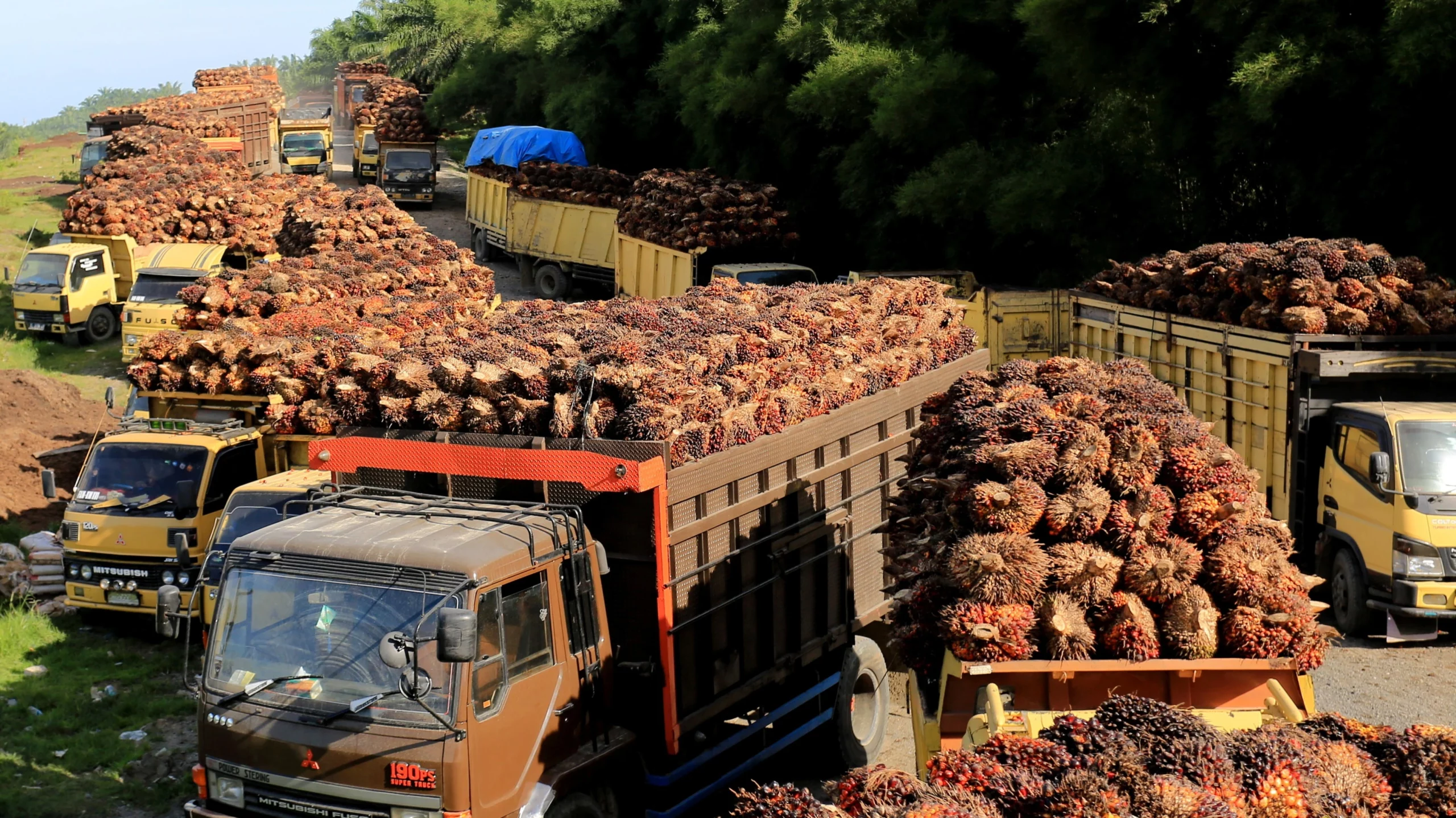
Colombia palm oil is enjoying a remarkable export boom, but a new European deforestation rule taking effect at the end of this year could decide how much of that growth keeps flowing to one of its most important markets.
A booming export
Colombia’s farm exports are on a tear. In the first quarter of this year, palm oil shipments abroad rose by more than forty percent, while bananas and coffee also posted strong gains.
This is part of a bigger shift. As Colombia’s oil and coal sales have slipped, farm goods have stepped in, reshaping what the country sells to the world and reducing its old dependence on fossil fuels.
Palm oil sits at the heart of that change. Colombia is the largest producer in Latin America and the fourth largest in the world, and its plantations increasingly grow for export rather than the home market.
The scale is striking for a country better known abroad for coffee. Colombia produced close to two million tonnes of palm oil last year, and that output now leans heavily on foreign buyers to keep growing.
That export tilt is both a strength and a vulnerability. It lifts rural incomes and earns hard currency, but it also leaves the sector exposed to the rules and moods of distant markets.
The rule that could slow Colombia palm oil
Here is where the good news meets a complication. The European Union has a new law, its deforestation regulation, that takes effect for large companies at the end of this year.
In plain terms, it bars a set of commodities from being sold in or exported to the EU unless sellers can prove the goods are not linked to land that was cleared of forest after the end of 2020. Palm oil and coffee are both on that list.
The proof required is demanding. Companies must hand over precise geographic coordinates tracing each consignment back to the specific plot of land where it was grown.
Why it matters for a foreign reader
For a buyer or investor in Europe, this is not a distant technicality. Europe is a significant market for Colombian palm oil and coffee, so the rule directly affects whether those shipments can keep arriving smoothly.
It also changes the nature of the export business. Growth used to depend mainly on price and demand; now it also depends on traceability, paperwork and the ability to map a supply chain in fine detail.
For smaller farmers in particular, that is a tall order. Building the systems to track every batch to its origin takes money and expertise that many producers do not yet have.
A moving target
The deadline has shifted before. Brussels has twice delayed the rule under pressure from industry and exporting countries, and it has continued to tweak the fine print this year.
Smaller operators have been given longer, with their obligations starting in mid-2027. But the core requirement, proving that goods are deforestation-free, is not going away.
That uncertainty is its own burden. Exporters must prepare for a rule whose details keep moving, investing now for a deadline that could yet slide again.
The bigger picture
The episode captures a wider tension. Colombia has worked hard to turn its farms into an engine of growth, yet that very success now runs into Europe’s tightening environmental standards.
Handled well, compliance could become a selling point, letting Colombia market clean, traceable produce at a premium. Handled badly, it risks pricing some producers out of a market they have only just begun to win.
For investors weighing Colombian agribusiness, that is the balance to watch. The export story is genuinely strong, but its next chapter will be written as much in Brussels as on the plantations.
Why is Colombia palm oil booming?
Exports surged more than forty percent in early 2026 as Colombia shifts away from oil and coal toward farm goods. The country is Latin America’s biggest palm oil producer and the fourth largest in the world.
What is the EU deforestation rule?
It is a European law that, from the end of 2026 for large firms, bars certain commodities from the EU unless sellers prove they are not tied to land cleared after 2020. Palm oil and coffee are both covered.
How does it affect Colombian exporters?
They must trace each shipment to a specific plot of land using precise location data. That is costly and complex, especially for smaller farmers, and could limit access to the European market.
Connected Coverage
Colombia Agro Exports Jump from 20% to 30% of the Total
Colombia Lifts Deficit Target, Leaving a Fiscal Mess for Next Leader
This article was produced by The Rio Times’ automated newsroom system. How we use AI · Report an error · Editorial responsibility: Matthias Camenzind, Editor-in-Chief