Marriott Is Building a $2.1bn Resort on Rio’s Coast Before the Court Has Ruled
Property
Key Facts
—The money. R$11bn ($2.1bn) of private investment over fourteen years, with R$4.5bn ($870m) committed to the first three.
—The site. 845 hectares of restinga, a fragile coastal scrub ecosystem, inside a designated environmental protection area 45km from central Rio.
—The hotels. South America’s first Ritz-Carlton Reserve, Brazil’s first all-inclusive JW Marriott, and a hotel themed on the Rock in Rio festival.
—The ruling. Brazil’s superior court lifted a two-year suspension in August 2025 without judging the environmental merits, which remain before a lower court.
—The opposition. Artisanal fishermen and a Guarani Mbyá indigenous village have contested the project. Campaigners call it a potential environmental crime.
—The developer’s case. Built area of under seven percent, 81 percent preserved or regenerated, and a new 440-hectare private nature reserve.
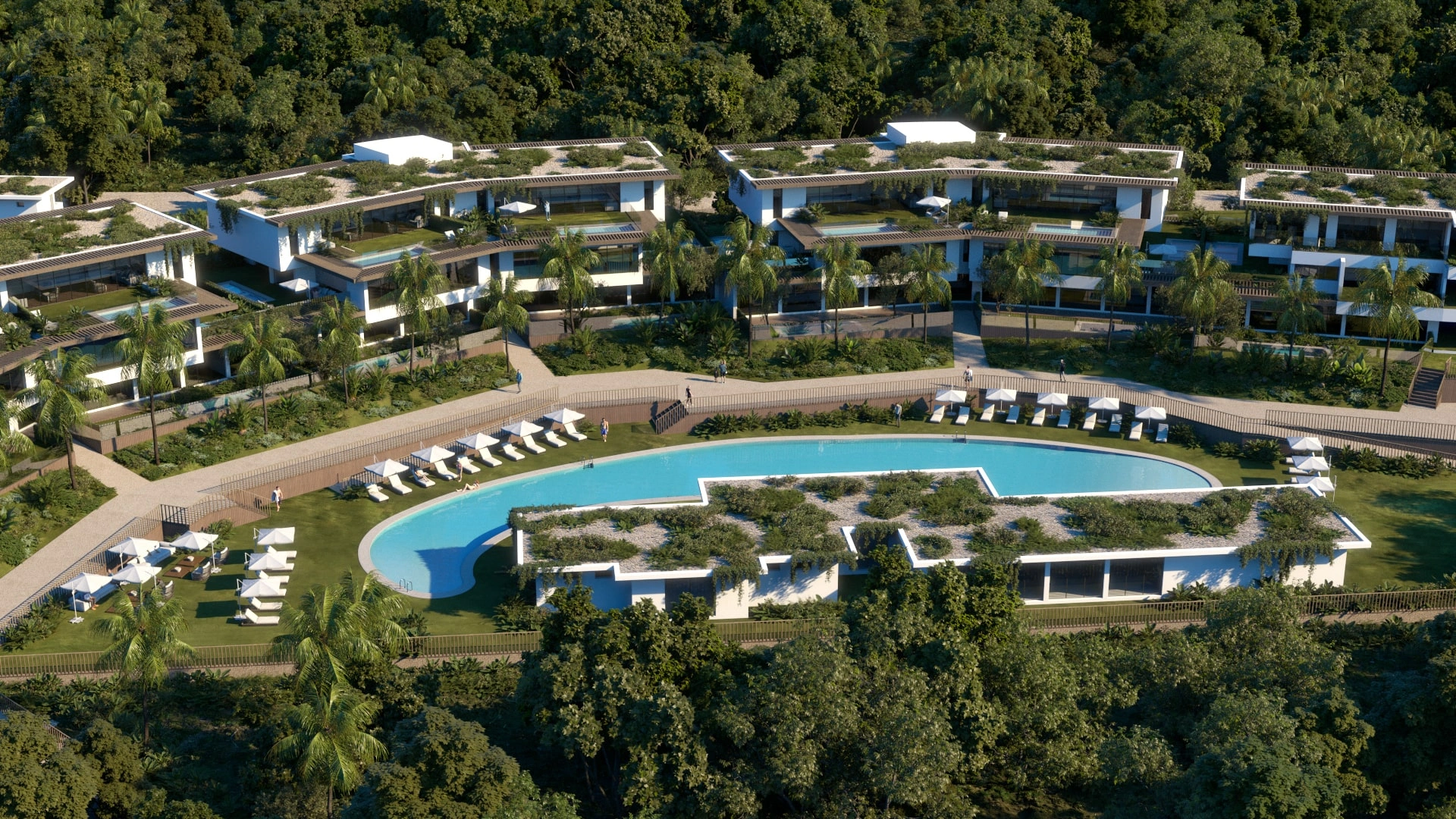
Diggers have moved onto the Maraey resort Maricá site, where Marriott will build three luxury hotels. The court that let them start expressly declined to say whether the project is lawful.
Sixty workers are preparing the ground on a strip of coastal scrub east of Rio de Janeiro. By September there will be 260, laying roads, drainage, power and sewerage across 845 hectares.
When it is finished in 2029, the complex will hold South America’s first Ritz-Carlton Reserve. The land it sits on has been fought over in Brazilian courts for more than a decade.
Ground was broken on the infrastructure phase last month. Construction of the hotels themselves is scheduled to begin at the end of this year.
What the Maraey resort Maricá actually is
The developer, IDB Brasil, is putting eleven billion reais into the site across fourteen years. The first phase alone carries four and a half billion, roughly eight hundred and seventy million dollars.
Three Marriott hotels anchor it. Alongside the Ritz-Carlton Reserve come Brazil’s first all-inclusive JW Marriott and an Autograph Collection property themed on Rock in Rio, the music festival.
There are 392 branded residences, a hospitality school backed by the Lausanne hotel institute, an equestrian centre and a tennis club. The town of Maricá expects around half a million visitors a year.
Its mayor puts the projected municipal tax take at four hundred and eighty-five million reais annually. The developer commits three hundred and sixty million to public infrastructure.
The employment case is the political one. The project promises 2,300 vocational training places this year, run with the state industry federation, and around nine thousand construction jobs by 2030.
Some four and a half thousand permanent posts are forecast once the complex operates. The mayor frames the works as the town’s route to becoming a major tourist destination.
What the court did, and did not, decide
The state environment institute granted a preliminary licence in 2015. State prosecutors challenged it immediately, arguing the project was incompatible with the local ecosystem and posed risks to a protected area.
What followed was a decade of contradictory rulings. The project was embargoed, released, and embargoed again, until a superior court justice suspended the environmental licences outright in May 2023.
In August 2025 a panel of that same court lifted the suspension by majority. The distinction matters enormously and has been widely missed.
The judges did not rule that the project is environmentally sound. They ruled that this was not the appropriate moment or procedure to decide that, and sent the substance back to a first-instance court where it remains pending.
Who is opposing the Maraey resort Maricá
Artisanal fishermen from the hamlet of Zacarias have protested against the development. So have Guarani Mbyá residents of the Mata Verde Bonita village nearby.
The Baía Viva campaign group has described the case as potentially the largest environmental crime in the state in recent times. Those groups remain in court.
The developer answers with numbers. Built structures will cover under seven percent of the land, 81 percent will be preserved or regenerated, and a new private reserve of 440 hectares of restinga will be created.
It also promises to regenerate more than 270 hectares of native vegetation, an increase it puts at 32 percent on the pre-construction baseline. The city hall has consistently defended the legality of the licences.
The risk a foreign investor is actually taking
This newspaper reported this week that Marriott intends to add around 110 hotels in Brazil by 2030. Maraey is the luxury showpiece of that plan.
Marriott operates asset-light, meaning it manages and brands rather than owns, so the construction risk sits with the developer and its financiers rather than the American group.
That is the point worth holding. Capital is going into the ground on a site whose environmental case has not been resolved, on the strength of a ruling that declined to resolve it.
Brazil is entering a hotel-building boom on genuinely strong tourism demand. Maraey is a reminder that in Brazil the permit and the judgment are not the same document, and only one of them has arrived.
Is the Maraey project legally cleared?
Not conclusively. Brazil’s superior court lifted the suspension of its environmental licences in August 2025 and construction has begun, but the judges explicitly declined to rule on whether the project harms the environment, remitting that question to a first-instance court where it is still pending.
What is a restinga?
It is the sandy coastal scrub that grows between beach and lagoon along much of Brazil’s Atlantic shore, and it supports species found nowhere else. The Maraey site occupies 845 hectares of it within a designated environmental protection area, which is the reason prosecutors challenged the licences.
What does Marriott actually risk here?
Less than the headline suggests, because the group runs an asset-light model in which it brands and manages hotels rather than owning the real estate. The eleven billion reais of construction exposure sits with the Brazilian developer and its financing partners, while Marriott’s exposure is reputational and contractual.
Frequently Asked Questions
What hotels are planned for the Maraey resort in Maricá?
The Maraey resort will include South America's first Ritz-Carlton Reserve, Brazil's first all-inclusive JW Marriott, and a hotel themed on the Rock in Rio festival. Construction of the hotels is scheduled to begin at the end of 2025, with the complex expected to be finished by 2029.
What is the current legal status of the Maraey development?
Brazil's superior court lifted a two-year suspension on the project in August 2025, allowing construction to proceed. However, the court expressly declined to judge the environmental merits of the project, which remain before a lower court.
How large is the Maraey site and what environmental concerns have been raised?
The site covers 845 hectares of restinga, a fragile coastal scrub ecosystem, located inside a designated environmental protection area 45km from central Rio de Janeiro. Artisanal fishermen and a Guarani Mbyá indigenous village have contested the project, and campaigners have called it a potential environmental crime.
Connected Coverage
Marriott Bets Big on Brazil With Plans for 110 More Hotels
Global Hotel Brands Are Pouring Into Brazil as Tourism Hits Records
This article was produced by The Rio Times’ automated newsroom system. How we use AI · Report an error · Editorial responsibility: Matthias Camenzind, Editor-in-Chief
Living in or visiting Rio de Janeiro? See this month's events and our Rio de Janeiro city guide with rents, safety and upcoming concerts.